Achaleshwar Mahadev Temple
During an invasion, this temple faced an overwhelming force, but an unexpected defense materialized from the very air.
Full story unlocks in the tour
 Andreas Kleemann / CC BY-SA 3.0 de, via Wikimedia Commons
“A mountain refuge in the desert, where ancient lore meets cool, clear air.”
Not the postcards. The stories even locals don't know — whispered in your ear, right where they happened.
During an invasion, this temple faced an overwhelming force, but an unexpected defense materialized from the very air.
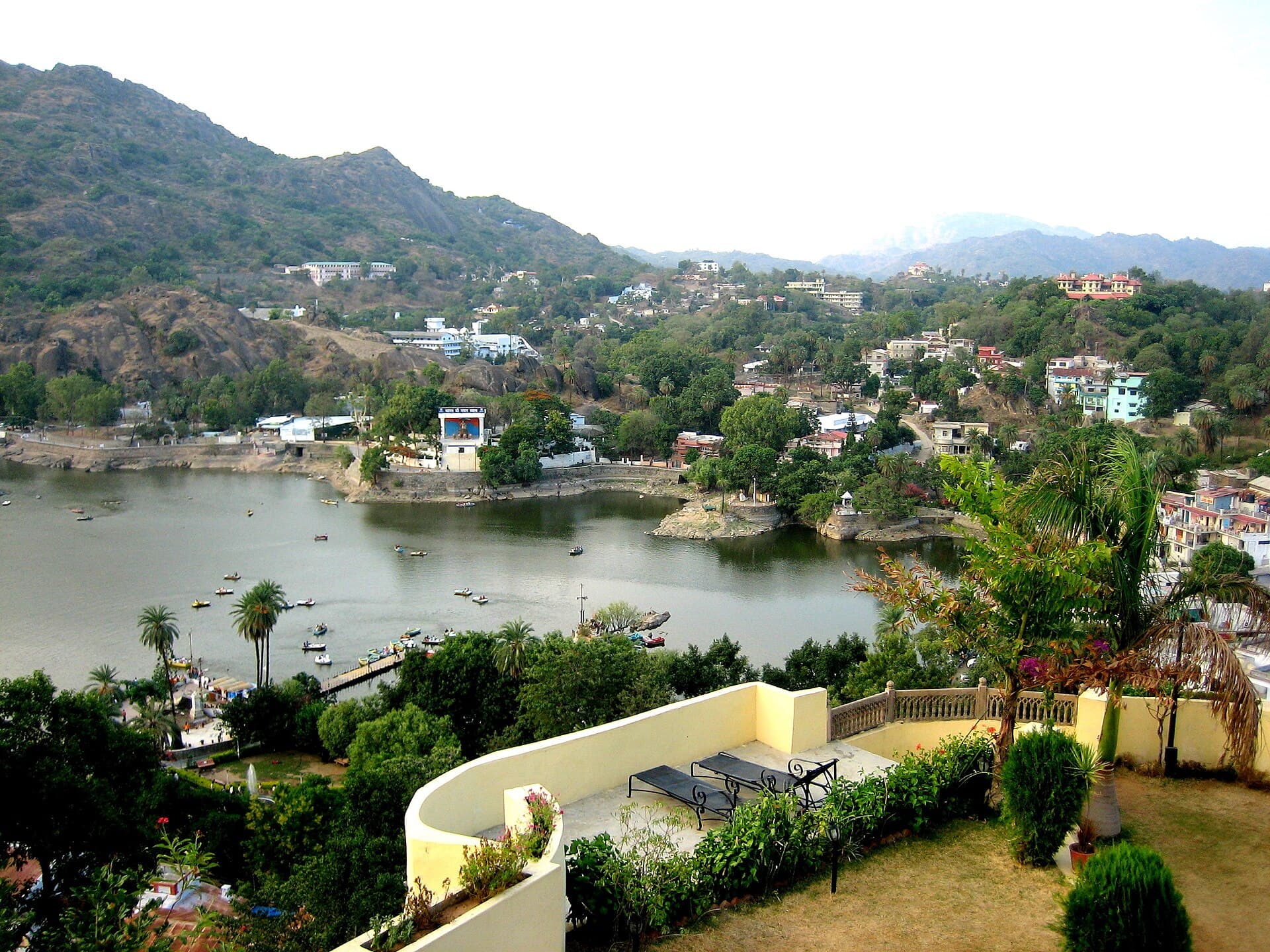
This calm lake, a favored spot for boating, is said to have a most unusual origin story.
The intricate marble carvings of these temples are celebrated, but for a period, much of their detail was concealed from view.
Discover every secret of Mount Abu
Every address, every reveal in full — in your ear, right where it happened.
You pick your stops. You walk. The voice reveals what the others miss.
No tours available yet. Check back soon — we're preparing them.
Mount Abu, Rajasthan's sole hill station, offers a refreshing reprieve from the state's arid plains. Situated at an elevation of 1,220 meters within the Aravalli Range, it reveals a distinctive landscape of rivers, lakes, waterfalls, and evergreen forests, earning it the designation 'an oasis in the desert.' This rocky plateau, approximately 22 kilometers long and 9 kilometers wide, serves as a significant retreat for those seeking cooler climates and a fusion of natural splendor with spiritual heritage.
The town is a prominent pilgrimage center for both Hindus and Jains, dotted with ancient temples and sacred sites. Its story is interwoven with myths and legends, tracing back to the Puranic age when it was known as Arbudaranya, meaning 'forest of Arbuda.' Beyond its religious importance, Mount Abu has been a cherished leisure destination for centuries, drawing travelers with its agreeable weather and varied attractions.
## Ancient Origins and Legends Mount Abu's history extends into antiquity, with its ancient name being Arbuda. In the Puranas, it is referred to as Arbudaranya, or 'forest of Arbuda.' The name 'Abu' is a shortened version of this ancient designation. One popular legend attributes the name to a serpent named Arbuda, said to have rescued Nandi, Lord Shiva's sacred bull, from a chasm on the mountain.
The region also holds profound spiritual significance, believed to be the retreat of Sage Vashistha after his conflict with Sage Vishwamitra. According to another legend, Sage Vashistha performed a yajna (fire sacrifice) at the peak of Mount Abu to seek divine intervention for the defense of righteousness. From this Agnikunda (fire-altar), four Rajput clans, known as the Agnivansha, are believed to have originated.
## Medieval and Colonial Eras Historically, the Mount Abu region was home to the Gurjaras, as evidenced by inscriptions and literary works like Dhanpala's Tilakmanjari. The area saw the rule of the Parmar kings, who constructed the Achalgarh Fort. The Solankis, known for their architectural skill, also had a presence, with the Dilwara Jain Temples standing as a testament to their craftsmanship, built between the 11th and 13th centuries. In 1311 CE, Rao Lumba of the Deora-Chauhan dynasty conquered Mount Abu, later relocating his capital to Chandravati.
During the Mughal era, Mount Abu's importance diminished, but it regained prominence with the rise of the British Empire. Colonel Todd 'rediscovered' the hill station, and it became the summer capital of the Rajputana state. The British leased the area from the Maharaja of Sirohi and utilized it as a headquarters and a sanatorium for troops until 1947. Many Rajput maharajas also built palaces here, transforming Mount Abu into a lively social center during the summer months.
## Modern Developments After India's independence in 1947, Mount Abu was officially assigned to the state of Rajasthan in 1956. In 1950, the Brahma Kumaris World Spiritual University moved its headquarters to Mount Abu, establishing it as an international center for spiritual practices. The Indian government designated the region as an Eco-Sensitive Zone in 2009 to safeguard its unique mountain environment. Today, Mount Abu continues to be a significant tourist and pilgrimage destination, recognized for its natural allure and historical sites.
Begin your exploration at Nakki Lake, a central attraction where you can enjoy calm boat rides and witness captivating sunsets against a backdrop of forested hills. Overlooking the lake is Toad Rock, a distinctive igneous rock formation resembling a toad, offering wide views of the lake and surrounding greenery.
A short drive away are the Dilwara Jain Temples, celebrated for their intricate marble carvings and considered architectural masterpieces from the 11th to 13th centuries. For the highest vantage point, trek to Guru Shikhar, the highest peak in the Aravalli Range, which houses a temple dedicated to Dattatreya and provides expansive views.
Explore the historical Achalgarh Fort, originally constructed by the Parmar dynasty and later renovated by Maharana Kumbha. Nearby, visit the Achaleshwar Mahadev Temple, known for its naturally occurring Shiva lingam and a toe print of Lord Shiva. Other notable sites include the Adhar Devi Temple, carved out of solid rock, and the serene Peace Park, part of the Brahma Kumaris' establishment, offering a tranquil ambiance amidst diverse flora. For nature enthusiasts, the Mount Abu Wildlife Sanctuary covers a significant area, protecting a variety of flora and fauna.
Mount Abu offers a pleasant climate throughout the year, but the most opportune time to visit is from November to February (winter season) when the weather is cool and ideal for sightseeing and outdoor activities. Temperatures during winter range from 10°C to 30°C. The monsoon season (July to September) transforms the hills into a lush green landscape with seasonal waterfalls, appealing to those who appreciate verdant greenery and fewer crowds. While summers (March to June) are warmer, Mount Abu still provides a comfortable escape compared to the scorching plains of Rajasthan, with evenings being particularly agreeable.
Mount Abu is well-connected by road, with excellent highway access from cities like Udaipur (165-170 km) and Ahmedabad (225-235 km). The nearest railway station is Abu Road (ABR), located approximately 27-28 km from the town, with a scenic 28 km uphill taxi ride to reach Mount Abu. The closest airport is Maharana Pratap Airport (UDR) in Udaipur, about 176-185 km away, with Sardar Vallabhbhai Patel International Airport (AMD) in Ahmedabad (220-222 km) offering wider connectivity.
Accommodation options range from budget-friendly guesthouses to luxury resorts and heritage hotels. While Mount Abu is generally considered safe with low crime rates, it's always advisable to be mindful of your valuables. Hindi, Marwadi (a local Rajasthani dialect), Gujarati, and English are commonly spoken. Mount Abu typically experiences no power cuts, though carrying a flashlight for occasional faults is recommended.