Hôtel Vaste Horizon, Mougins village
In the summer of 1936, Picasso rented a room in a small village hotel and left something behind that the owners immediately destroyed — and no one has ever seen it since.
Full story unlocks in the tour
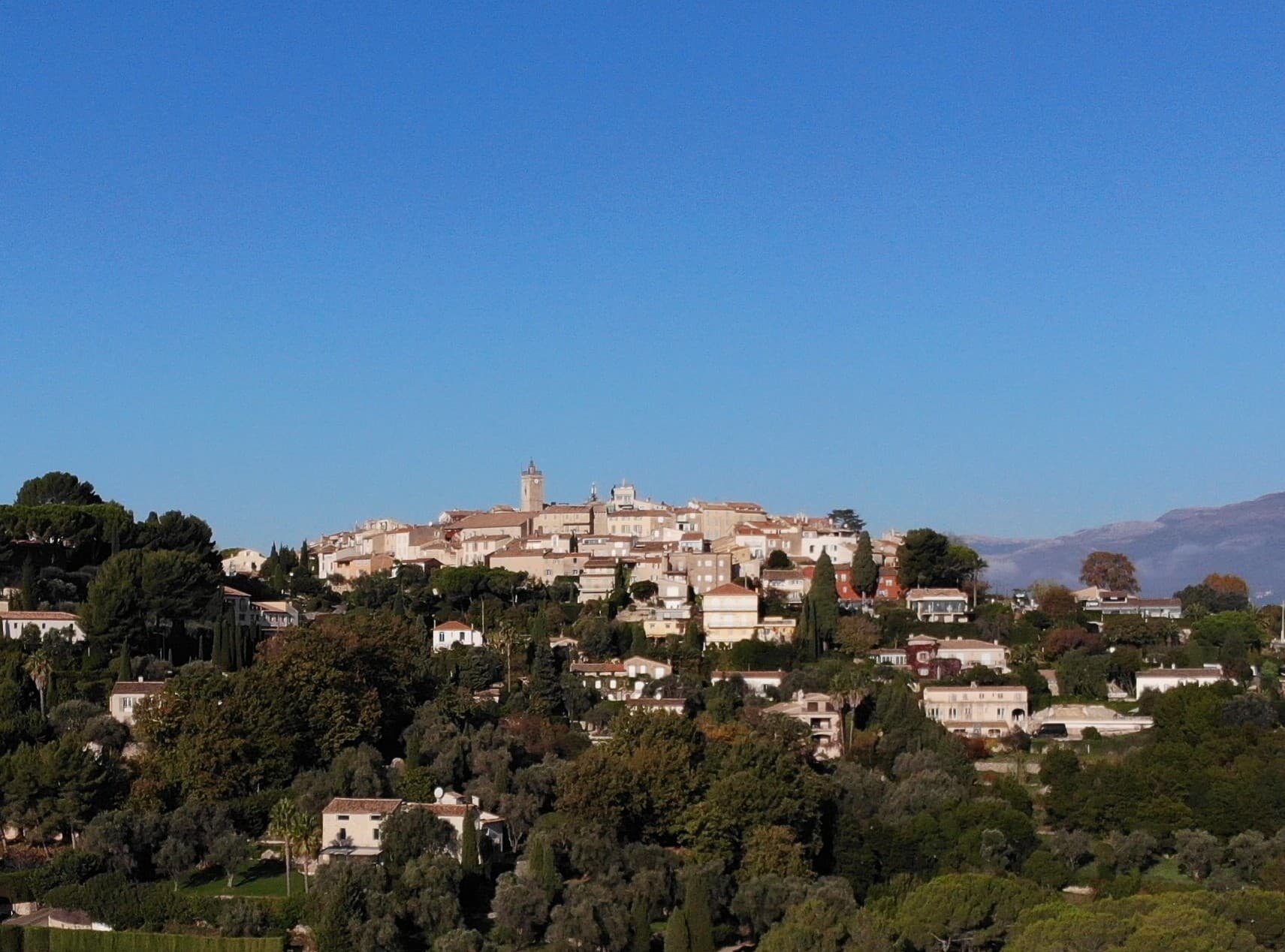 Olivier Cleynen / CC BY 4.0, via Wikimedia Commons
“The village that fed a genius and buried one”
Not the postcards. The stories even locals don't know — whispered in your ear, right where they happened.
In the summer of 1936, Picasso rented a room in a small village hotel and left something behind that the owners immediately destroyed — and no one has ever seen it since.
Picasso called it 'the home of his dreams' — but after he died there in 1973, his widow kept every room exactly as he'd left it for thirteen years, until she could no longer bear to stay away from it.
For five centuries, families carried their stillborn babies to a 12th-century chapel on this hillside — and the same stone walls that witnessed that ritual also stopped Winston Churchill cold in his tracks with a paintbrush.
Discover every secret of Mougins
Every address, every reveal in full — in your ear, right where it happened.
You pick your stops. You walk. The voice reveals what the others miss.
No tours available yet. Check back soon — we're preparing them.
Mougins sits on a wooded hilltop 260 metres above sea level, ten kilometres from Cannes and roughly equidistant from Nice and Antibes. Its medieval core spirals inward like a nautilus shell — a concentric defensive design laid down by the monks of the Abbaye de Lérins, who ran this village from 1056 until the eve of the French Revolution. The same lanes that once frustrated cavalry still disorient first-time visitors in the best possible way. Beyond the ramparts, modern Mougins spreads across 25 square kilometres of pine and olive forest. Since 2012 it holds the only 'Ville et Métier d'Art' designation for gastronomy in France — a label reflecting a density of culinary ambition that peaked in 1992, when this single village carried 7 Michelin stars.
The site was inhabited in the pre-Roman era by Ligurian tribes who valued the hilltop's natural defences and its sight-lines over the Bay of Cannes. By the 1st century BC, the Roman settlement of Muginum had taken root along the Via Aurelia, the highway connecting Rome to Arles.
In 1056, the Count of Antibes transferred the hillside to the monks of Saint-Honorat on the Îles de Lérins. The monks spent centuries shaping Mougins: they built the concentric ramparts, established the three gates (of which only the 12th-century Porte Sarrazine remains), and administered local justice from what is now the ground floor of the restaurant L'Amandier — the Salle des Moines, or Monks' Hall. Their authority ended with the Revolution in 1789.
In the 18th century, during the War of the Austrian Succession, Austro-Sardinian armies sacked and partially burned the village. Sections of the ramparts came down; early 19th-century houses filled the gaps.
Mougins' modern identity took shape in two waves. The first was artistic: Francis Picabia arrived around 1925 and built a villa, drawing Fernand Léger, Jean Cocteau, Man Ray, Paul Éluard, Isadora Duncan and eventually Picasso into the village. Picasso summered here three consecutive years (1936–1938) before purchasing Mas Notre-Dame-de-Vie in 1961, where he spent his final twelve years and died on April 8, 1973.
The second wave was gastronomic. Roger Vergé opened Le Moulin de Mougins in 1969, earned three Michelin stars by 1974, and invented 'La Cuisine du Soleil' — a lighter, vegetable-forward interpretation of Provençal cooking. His protégés include Alain Ducasse, Daniel Boulud and David Bouley. At its peak in 1992, Mougins collectively held 7 Michelin stars, more than any other French village.
### The medieval village Enter through the Porte Sarrazine, a 12th-century gate whose wooden harrow closure gives it its name. The spiral of lanes inside requires no map — follow the bell tower upward and the village reveals itself. The old washing basin, Le Lavoir (built 1894), now hosts temporary exhibitions.
### Chapelle Notre-Dame-de-Vie A 12th-century chapel (reconstructed 1654, listed monument since 1927) that served until 1730 as a sanctuaire à répit — a respite sanctuary where families brought stillborn babies for baptism. Its walls carry ex-votos spanning centuries, including one documenting a 1755 pilgrimage by the Pénitents blancs of Grasse. An adjacent hermitage museum traces this history alongside photographs of Picasso by Lucien Clergue.
### FAMM — Female Artists of Mougins Museum Opened June 2024 in the building that housed the former Mougins Museum of Classical Art (MACM), itself notable for containing the world's largest private collection of ancient arms and armour. FAMM is Europe's first fine arts museum dedicated to women artists, with works by Berthe Morisot, Frida Kahlo, Lee Krasner, Helen Frankenthaler, Leonora Carrington and nearly 90 others across four floors of a former village prison.
### L'Amandier Roger Vergé's second restaurant, whose ground floor occupies the monks' former courthouse. Chef Sébastien Zunino continues a Provençal menu grounded in the Cuisine du Soleil tradition.
### Mougins School of Photography Housed in a restored presbytery, the Centre de la Photographie de Mougins hosts rotating exhibitions and an annual photography festival.
### Mas Notre-Dame-de-Vie (exterior) Picasso's final home is private property and not open to visitors, but the estate — three hectares with views of Cannes bay and the Esterel — can be appreciated from the lane beside the chapel.
Spring (April–May) is the calmest period: the village is navigable without crowds, the surrounding forest is green, and the light is clear without the July–August haze.
Summer (June–August) brings the fullest calendar. The Notre-Dame-de-Vie Music Festival runs in early July in the chapel setting. The Saint-Barthélémy patronal festival happens at the end of August. The village also runs free outdoor events most weekends.
September is arguably the best single month: the Les Étoiles de Mougins international gastronomy festival (usually mid-September) brings guest chefs from across France and abroad for two days of demonstrations, competitions and tastings in the village streets and squares. The crowds thin after the festival closes.
October offers the annual Organ Festival with concerts in village churches. The village empties considerably and the restaurants become easier to book.
Avoid late July–early August if you want to move freely through the medieval lanes — the combination of Cannes proximity and the village's reputation draws significant crowds in peak summer.
From Cannes: Bus line 600 (Lignes d'Azur, direction Grasse) or Palm Express B from Cannes station stops at Val de Mougins. Journey time approximately 14 minutes. From Val de Mougins, take Palm Bus line 26 or 28 to the 'Mougins village' stop, or walk up via Chemin de la Calade (12 minutes on foot). The bus fare is around €3.
By car: Mougins is 10 km from Cannes via the A8 or D35. Several free or blue-zone car parks sit below the village; the Sainte-Anne car park is the most convenient for the old village. The medieval lanes themselves are pedestrian-only.
By taxi or rideshare: Readily available from Cannes (roughly €20–25 one way). Nice airport is about 35 minutes by car.
On foot in the village: The medieval core is small — you can cover the main lanes in 45 minutes at a relaxed pace. Wear comfortable shoes; the cobblestones are uneven.