Monza Cathedral
The Iron Crown of Lombardy, housed within the Duomo, holds a secret that connects it to one of Christianity's most sacred events.
Full story unlocks in the tour
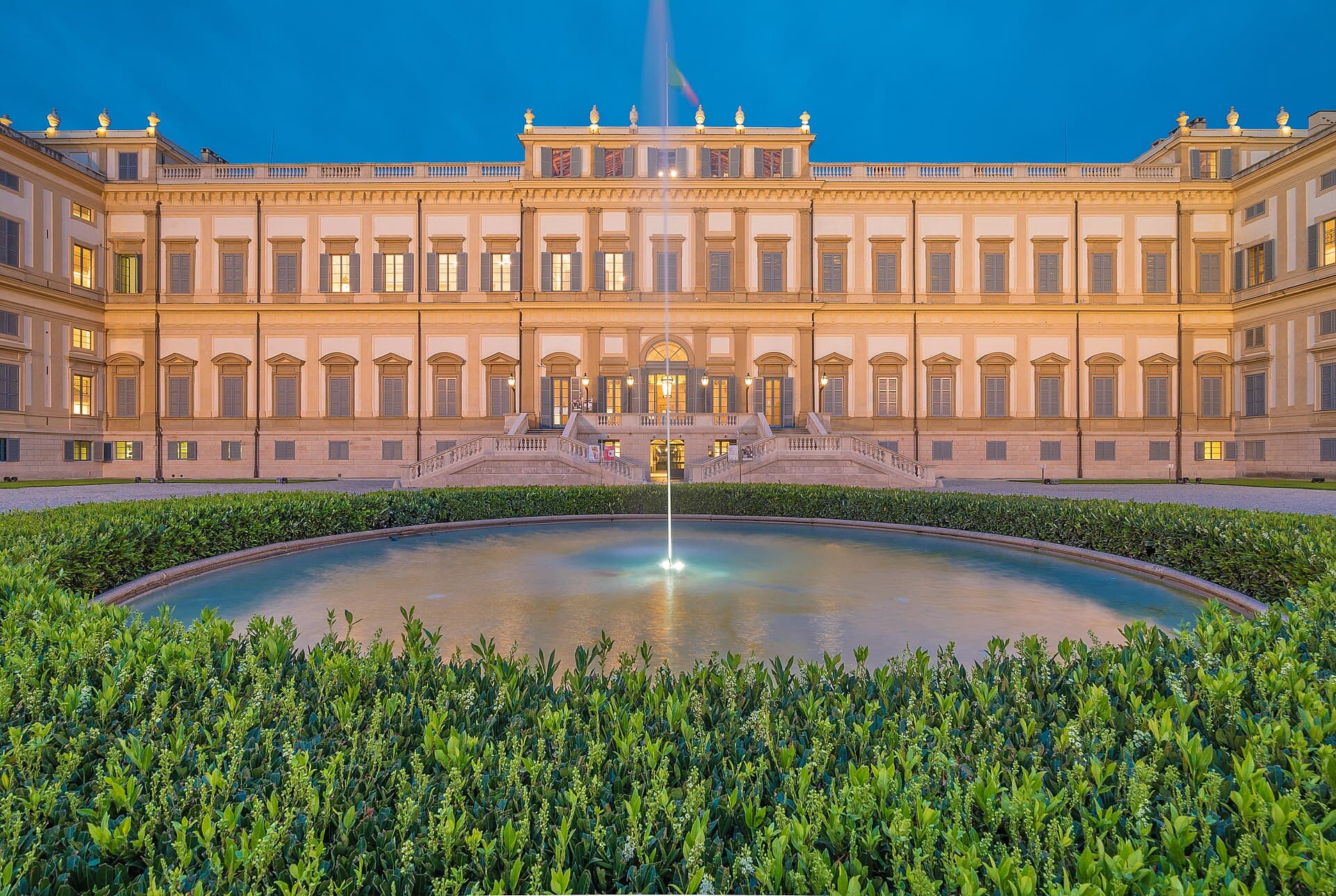 Diego Bonacina / CC BY-SA 4.0, via Wikimedia Commons
“Where ancient crowns meet the roar of modern speed.”
Not the postcards. The stories even locals don't know — whispered in your ear, right where they happened.
The Iron Crown of Lombardy, housed within the Duomo, holds a secret that connects it to one of Christianity's most sacred events.
Beyond the sleek modern track, a ghostly relic of Monza's racing past lies within the park, a testament to a more perilous era of motorsport.
Europe's largest walled park, the Parco di Monza, holds a surprising scale when compared to a world-famous urban green space.
Discover every secret of Monza
Every address, every reveal in full — in your ear, right where it happened.
You pick your stops. You walk. The voice reveals what the others miss.
No tours available yet. Check back soon — we're preparing them.
Monza, a city in the Lombardy region of northern Italy, offers a compelling blend of ancient history, royal grandeur, and adrenaline-fueled motorsport. Located approximately 15 kilometers north-northeast of Milan, it's a destination that often surprises visitors who venture beyond its more famous neighbor. From its Roman origins to its pivotal role during the Lombard period under Queen Theodelinda, Monza has long been a significant political and religious center.
The city is perhaps best known internationally for the Autodromo Nazionale Monza, a legendary motor racing circuit that has hosted the Formula One Italian Grand Prix since 1922. Yet, Monza's appeal extends far beyond the "Temple of Speed." It is home to the majestic Royal Villa of Monza, a neoclassical masterpiece surrounded by one of Europe's largest enclosed urban parks. With its charming historic center, significant religious treasures, and expansive green spaces, Monza invites exploration and promises a rewarding experience.
## From Roman Settlement to Lombard Capital Monza's origins trace back to at least the Bronze Age, with archaeological evidence indicating early habitation. It began as a Roman settlement, known as Modicia, and gained considerable importance due to its religious institutions and its strategic position as a key station for changing horses along the road from Milan to the north. Some theories suggest the name "Monza" may have derived from "Magonza," linking it to veterans from Mainz who settled there.
The city truly flourished during the Lombard period, particularly under Queen Theodelinda in the 6th century AD. She established a royal residence and founded an early basilica dedicated to John the Baptist around 595 AD, which became the nucleus of the present Monza Cathedral. Theodelinda's patronage elevated Monza to a significant place in the religious history of the Lombard kingdom.
## Medieval Splendor and Austrian Influence During the 12th century, Monza briefly gained independence from Milan with the help of Emperor Frederick Barbarossa, prospering through crafts and wool production. The Arengario, Monza's 14th-century town hall, was built during this period as a symbol of political power. However, Monza eventually fell back under Milanese control after Barbarossa's death.
Later, under Austrian and French rule, Monza saw development in its craft industry and agriculture. The 18th century brought the construction of numerous villas, including the grand Royal Villa. This neoclassical summer palace was commissioned by Empress Maria Theresa of Austria. During the Napoleonic period, it became a Royal Palace, and in 1861, with the establishment of the Kingdom of Italy, it became a palace of the Italian Royal House of Savoy.
## The Dawn of Speed and Modernity The early 20th century saw Monza develop into an industrial center, with a focus on textile manufacturing and mechanical production. A pivotal moment in the city's modern history occurred in 1922 with the inauguration of the Autodromo Nazionale Monza within the Royal Park. This legendary circuit quickly earned the nickname "Temple of Speed" and became the long-standing host of the Formula One Italian Grand Prix, cementing Monza's place on the international stage. Tragically, King Umberto I of Italy was assassinated in Monza in 1900 during a public parade, leading the royal family to abandon the Royal Villa. Today, Monza continues to blend its enduring historical character with the excitement of modern motorsport and a lively city life.
Begin your exploration at the Monza Cathedral (Duomo di Monza), a striking Romanesque-Gothic edifice with a distinctive white and green marble facade. Inside, discover the Chapel of Theodelinda, adorned with 45 frescoes depicting the queen's life, and the renowned Iron Crown of Lombardy, a priceless artifact used in the coronations of European royalty, including Charlemagne and Napoleon. The Cathedral Museum also houses a collection of medieval manuscripts and sacred art.
A short walk from the Cathedral leads to the Arengario, Monza's 14th-century town hall, a medieval masterpiece with an open gallery that once served as a public assembly space. Cross the Ponte dei Leoni (Bridge of Lions), an elegant 19th-century bridge guarded by four carved marble lions, offering picturesque river views.
No visit to Monza is complete without experiencing the Royal Villa of Monza (Villa Reale), an 18th-century neoclassical palace surrounded by formal gardens. Adjacent to the villa is the expansive Parco di Monza, one of Europe's largest walled parks, offering extensive green spaces for walking, cycling, and relaxation. Within the park, motor racing enthusiasts can visit the Autodromo Nazionale Monza, the legendary "Temple of Speed" and home to the Formula 1 Italian Grand Prix.
The ideal times to visit Monza are during the spring (April to June) and autumn (September to October). These shoulder seasons offer pleasant weather for exploring the city's attractions and the Royal Villa's gardens, which are in full bloom in spring. Autumn brings mild temperatures and beautiful fall colors to the park. While summer (June to August) is warm and generally sunny, it can be hot and humid, with a chance of afternoon thunderstorms. Early September hosts the Formula 1 Italian Grand Prix, which makes the city extremely crowded and drives up accommodation prices; it is best avoided unless you are specifically attending the race.
Monza is easily accessible, particularly from Milan, with direct train connections from Milano Centrale or Milano Porta Garibaldi taking approximately 15-20 minutes. The Monza train station is centrally located, a short walk from the historic center. The city is not served by a subway, but an extensive network of urban and suburban buses (Autoguidovie and Nord Est Trasporti - NET) connects various parts of Monza and the surrounding Brianza area. Taxis are also available.
The official currency in Monza, and throughout Italy, is the Euro (€, EUR). While credit cards are widely accepted in larger establishments, it's advisable to carry some cash, especially for smaller shops or cafes. ATMs are readily available. Italian is the official language.
For those arriving by air, Milan Linate Airport (LIN) is the closest, approximately 14-18 km away. Milan Bergamo Airport (BGY) and Milan Malpensa Airport (MXP) are also within reasonable distance, with convenient bus and train connections to Monza.