Chiesa di Santa Maria del Suffragio detta del Purgatorio
Observe the entrance of this 17th-century church; its decorative elements are strikingly unusual.
Full story unlocks in the tour
 The original uploader was Monopoli91 at Italian Wikipedia. / CC BY 3.0, via Wikimedia Commons
“Where the Adriatic murmurs against sun-bleached walls.”
Not the postcards. The stories even locals don't know — whispered in your ear, right where they happened.
Observe the entrance of this 17th-century church; its decorative elements are strikingly unusual.
The very timbers supporting the roof of Monopoli's grand cathedral recount a miraculous arrival.
The distinctive blue and red fishing boats in Monopoli's old port are not merely picturesque; they embody a long legacy of craftsmanship.
Discover every secret of Monopoli
Every address, every reveal in full — in your ear, right where it happened.
You pick your stops. You walk. The voice reveals what the others miss.
No tours available yet. Check back soon — we're preparing them.
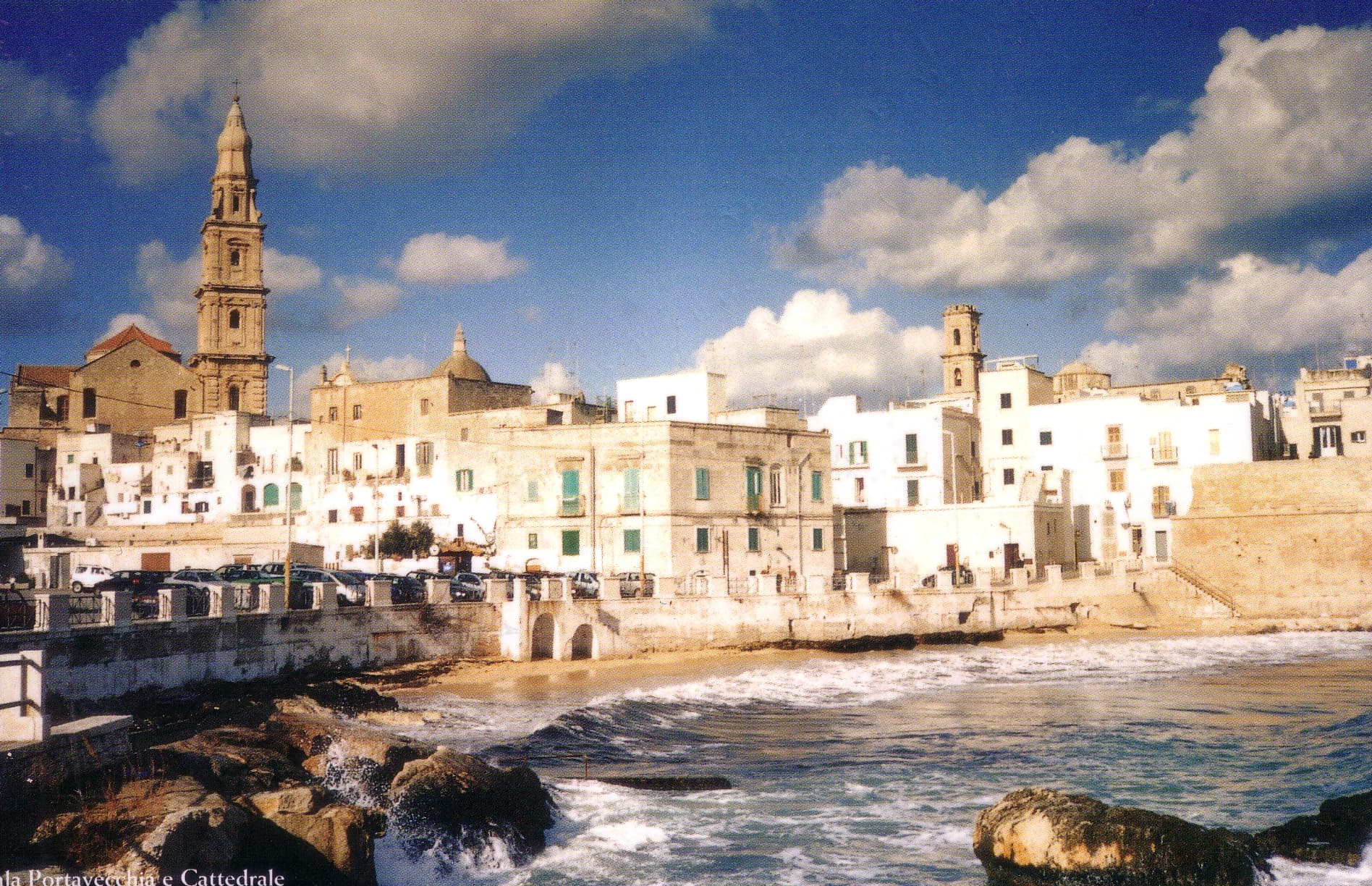
Monopoli, a coastal town in Puglia, Italy, offers an authentic glimpse into southern Italian life. Its name, derived from the Greek words 'monos polis' meaning 'unique city,' hints at its distinctive character. Unlike some of its more overtly tourist-focused neighbors, Monopoli maintains a lived-in ambiance, where the rhythms of sea, food, and community blend seamlessly. White-washed buildings with green shutters line winding alleyways, opening onto small piazzas and the daily scenes of local life.
This town on the Adriatic coast is a blend of enduring character and accessible beaches, making it an excellent base for exploring the wider Puglia region. From its active old port, where fishermen still mend their nets, to its serene seafront promenade, Monopoli invites a slower pace of travel. It's a place where ancient history is palpable in its architecture, and the scent of freshly hung laundry mingles with the aroma of authentic cooking.
Monopoli's origins extend into ancient times, beginning as a fortified Messapian city around 500 BC. It later came under Roman dominion, and after the Roman Empire's decline, it changed hands numerous times, experiencing periods under the Goths, Byzantines, and Normans. The town's strategic position on the Adriatic Sea was crucial, establishing it as an important trading post throughout the centuries.
In the 15th century, Monopoli was claimed by the Republic of Venice, initiating a century of prosperity. Its port, Porto Vecchio, became an active hub, comparable to other powerful maritime centers like Venice, Amalfi, and Genoa. During this period, many of its fortifications were constructed to defend against frequent attacks by Saracens and Turkish pirate fleets. The city successfully withstood a three-month siege by the Spanish imperials under Charles V in 1529.
Monopoli regained free port status in 1545, fueling rapid economic growth and further development as an agricultural trading port. The town's coat of arms, featuring three white roses in a red field, was bestowed by Frederick II of Svevia; the white roses represent fidelity, and the red symbolizes blood spilled in defense of the city during a 1207 siege. Monopoli was also a significant point of departure for the Holy Land during the Crusades. Today, Monopoli retains its historical roots as an active port and agricultural center, while also embracing tourism.
Begin your exploration in the Centro Storico, Monopoli's old town, a labyrinth of whitewashed streets, archways, and small piazzas. Here you'll discover the Cattedrale Maria Santissima della Madia, a Baroque cathedral with a miraculous origin story. Do not overlook the Chiesa di Santa Maria del Suffragio detta del Purgatorio, with its striking skeletal decorations and mummified remains.
A walk along the Lungomare, the seafront promenade, offers views of the Adriatic Sea and leads to historical landmarks like Castello Carlo V. This 16th-century fortress, once a jail, now hosts cultural events and provides expansive views. The Porto Antico (Old Port) is a picturesque spot where blue and red 'gozzo' fishing boats gently rise and fall in the clear waters, and fishermen continue their daily routines. For a refreshing dip, Cala Porta Vecchia is a popular beach right at the edge of the old town, offering views of the historic backdrop.
The most pleasant time to visit Monopoli is during the shoulder seasons: late May/early June or late September/early October. During these months, the weather is agreeable, the sea is warm enough for swimming, and the crowds are more modest than during peak summer. July and August bring hot temperatures, higher prices, and larger crowds. While Monopoli is quieter in the off-season, many establishments in the old town may be closed during winter. Spring and fall are ideal for exploring the region without the intense summer heat.
Monopoli is well-connected and easily accessible. The closest major airport is Bari International Airport (BRI), about a 40-minute drive away. From Bari, you can reach Monopoli by regional train in 30-50 minutes, costing around €3.30. The train station is in the new town, a 10-12 minute walk from the old town.
Within the Centro Storico, everything is walkable, as it is a pedestrian-only zone. For exploring the surrounding Puglia region, renting a car is highly recommended, as many delightful towns and beaches are not easily accessible by public transport. Paid parking lots are available on the edge of the old town. Monopoli serves as an excellent base for day trips to places like Polignano a Mare (15 minutes), Alberobello (30 minutes), and Ostuni (40 minutes).