Fuente Pública
The Fuente Pública is more than a water source; it marks a dramatic turning point in Mojácar's story.
Full story unlocks in the tour
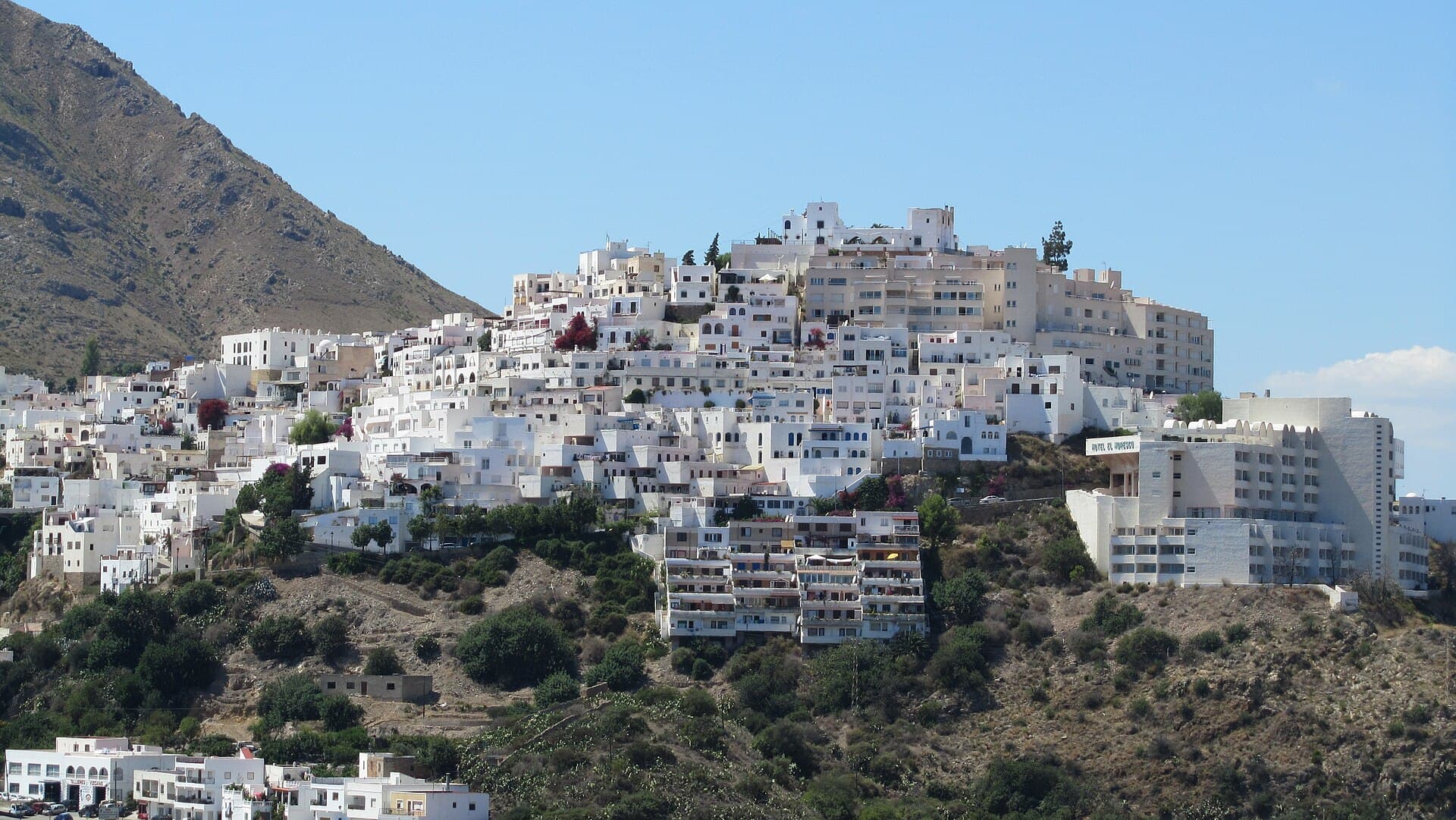 INDALOMANIA / CC BY-SA 3.0, via Wikimedia Commons
“Where sun-drenched walls meet the Mediterranean breeze, and the past echoes through winding alleys.”
Not the postcards. The stories even locals don't know — whispered in your ear, right where they happened.
The Fuente Pública is more than a water source; it marks a dramatic turning point in Mojácar's story.
Beyond the sweeping views, this elevated spot once served a surprising dual purpose.
The very name 'Mojácar' hints at a sacred secret from its ancient past.
Discover every secret of Mojácar
Every address, every reveal in full — in your ear, right where it happened.
You pick your stops. You walk. The voice reveals what the others miss.
No tours available yet. Check back soon — we're preparing them.
Mojácar, an enchanting town in the province of Almería, Andalusia, presents a study in contrasts. It divides into two distinct areas: Mojácar Pueblo, the historic whitewashed village clinging to a hillside, and Mojácar Playa, a contemporary resort area with 17 kilometers of coastline. The Pueblo, with its intricate network of narrow, winding streets and traditional Moorish-style architecture, offers a window into a profound past, while the Playa provides sun-drenched beaches and modern comforts.
Often recognized as one of Spain's most appealing white villages, Mojácar Pueblo's allure rests in its preserved character, where colorful blossoms adorn white facades and expansive views of the sea, mountains, and plains unfold at every turn. The town's singular microclimate, with over 3,000 hours of sunshine annually, enhances its appeal, offering mild winters and hot, sea-breeze-tempered summers. This fusion of historical charm and coastal relaxation establishes Mojácar as a distinct destination in southern Spain.
## Ancient Origins and Moorish Rule Mojácar's story reaches back approximately 4,000 years, with evidence of human settlement since the Bronze Age around 2000 BC. Phoenicians, Carthaginians, Greeks, and Romans all left their imprint on the region. Under Greek influence, the settlement was known as Murgis-Akra, which evolved through Latinized Moxacar and Arabic Muxacra to its current name, Mojácar. The North African Moors established themselves in Spain in the 8th century, and Mojácar thrived under their governance, becoming a strategic outpost and a center for trade and cultural exchange. The town's architectural style, with its intricate arches and whitewashed buildings, still reflects this enduring Moorish heritage.
## The Reconquista and Decline Mojácar found itself on the frontier with Christian forces during the Nasrid sultanate. Watchtowers and fortresses were strengthened in the 14th century, though conflicts and Christian incursions persisted. On June 10, 1488, Mojácar was incorporated into the Kingdom of Castile. A significant event during this period was the meeting at the Fuente Pública, where Mojácar's Moorish mayor, Alavez, negotiated with the Catholic Monarchs' envoy for his people to remain in the town. Despite initial agreements, historical accounts suggest the Muslim population was later expelled. The town was then repopulated with Christian families from Murcia.
Mojácar experienced a period of growth until the early 18th century, with a census recording 10,000 inhabitants. However, the mid-19th century brought a downturn due to severe droughts, leading to significant emigration to other parts of Spain, Europe, and the Americas. The Spanish Civil War further exacerbated economic problems, and by the 1960s, the population had dwindled considerably.
## Revival and Modernity The town's fortunes began to shift in the 1960s, largely due to the efforts of Mayor Jacinto Alarcón. He devised a plan to offer land or houses for free to those willing to restore the dilapidated town. This initiative drew artists and foreign investors, leading to a revival and the development of Mojácar Playa as a tourist destination. Today, Mojácar continues to safeguard its Moorish past while embracing modern tourism, offering a singular atmosphere where history and contemporary life intertwine.
Mojácar Pueblo, the old town, invites exploration with its intricate streets and whitewashed buildings. Begin at the Plaza Nueva, a lively main square offering expansive views of the Valley of the Pyramids, the Sierra Cabrera mountains, and the Mediterranean Sea. From here, you can also see the conical mountain of Mojácar la Vieja, an ancient settlement. The Mirador del Castillo provides even higher panoramic views over the town and coastline.
Descend to the Fuente Pública, a historic fountain with 13 spouts, a significant landmark where a plaque commemorates the 1488 meeting for the town's surrender. The Iglesia de Santa María, a 16th-century church-fortress built on the foundations of a Moorish mosque, is also worth visiting. Wander through the Barrio del Arrabal, the old Jewish quarter, with its appealing, cool streets. Do not miss touching the statue of La Mojaquera in front of the church; local lore says it ensures your return to Mojácar.
Beyond the village, Mojácar Playa offers 17 kilometers of beaches, many with Blue Flag status. For outdoor enthusiasts, consider hiking the La Mena Footpath along the rugged coastline of Cabo de Gata Natural Park, or try sea kayaking, quad biking, or diving in the clear waters.
Mojácar enjoys a Mediterranean climate with over 3,000 hours of sunshine annually. The ideal time to visit is during the shoulder seasons of May to June and September to October. During these months, temperatures are pleasant (18°C to 25°C in spring, 20°C to 25°C in autumn), rainfall is low, and the crowds are sparser than in peak summer. This period is perfect for exploring the village, hiking, and enjoying the beaches with comfortable swimming temperatures.
Summer (June to August) brings warmer temperatures, often reaching 30°C and above, excellent for beach activities, though it is also peak tourist season with more crowds and higher prices. Winters (December to February) are mild, with temperatures around 12°C to 15°C, but this is also the season with the most rainfall.
Mojácar is located in the southeast of the Province of Almería, Andalusia, approximately 90 km from Almería city. While Mojácar Pueblo is the historic village, most tourist accommodations are found in Mojácar Playa, about 2 km away. Almería Airport (LEI) is the nearest airport, about 35 miles from Mojácar. Renting a car from the airport is often more economical than in the city.
Navigating Mojácar Pueblo is best done on foot due to its narrow, winding streets. For travel between the Pueblo and Mojácar Playa, local buses are available. Many restaurants in Mojácar offer seasonal dishes with fresh, local produce. Consider staying at least three days to fully experience both the historic village and the coastal attractions.