Panagsama Beach
The legendary sardine run here isn't a seasonal event you chase.
Full story unlocks in the tour
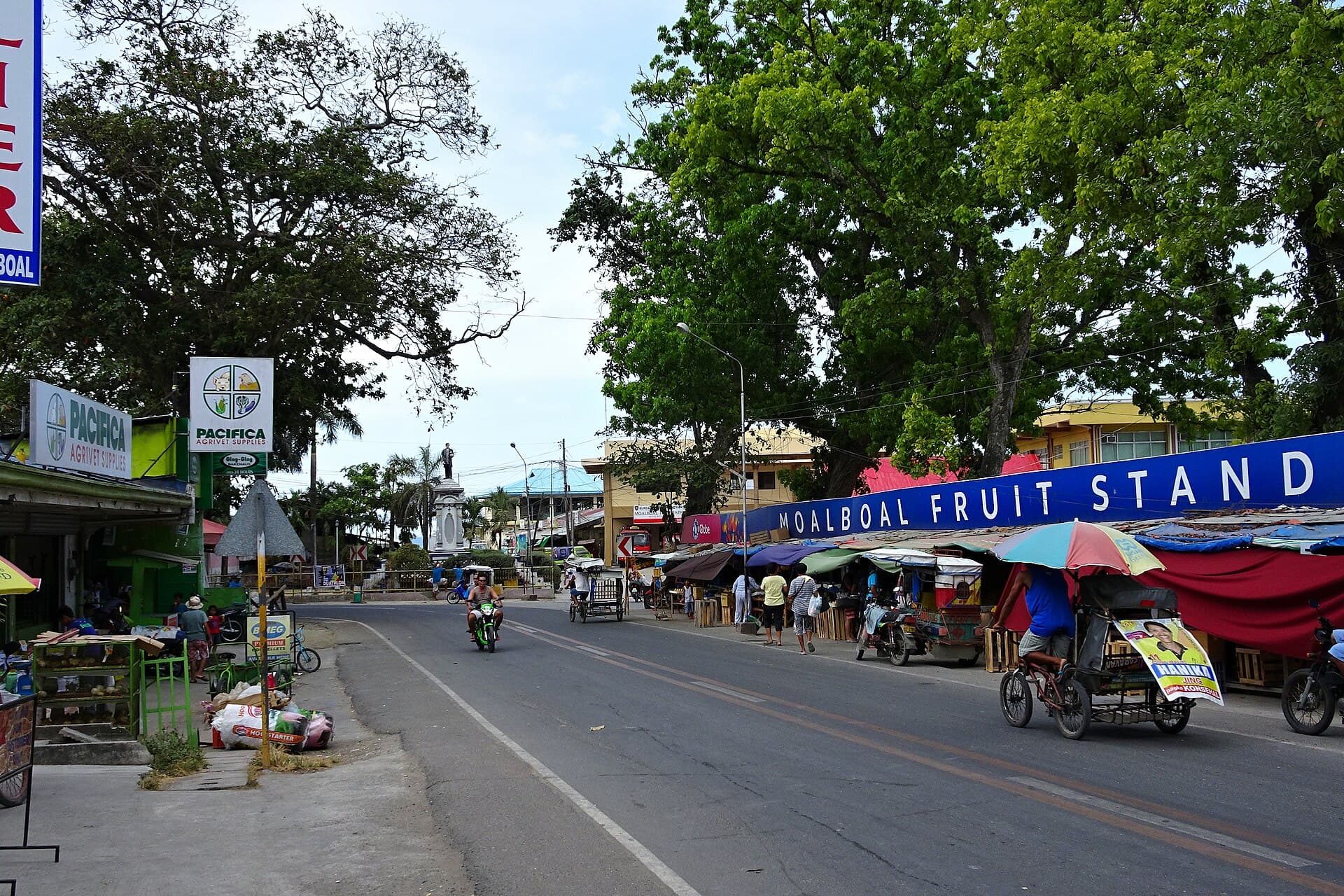 P199 / CC BY-SA 4.0, via Wikimedia Commons
“Where a million sardines dance and ancient tales echo.”
Not the postcards. The stories even locals don't know — whispered in your ear, right where they happened.
The legendary sardine run here isn't a seasonal event you chase.
This uninhabited island is known for its marine life, but it wasn't always the primary location for Moalboal's most famous underwater phenomenon.
The name 'Moalboal' itself holds two distinct, intriguing origin stories.
Discover every secret of Moalboal
Every address, every reveal in full — in your ear, right where it happened.
You pick your stops. You walk. The voice reveals what the others miss.
No tours available yet. Check back soon — we're preparing them.
Moalboal, a coastal town on the southwestern tip of Cebu, Philippines, draws visitors with its clear waters and abundant marine life. It is celebrated for its remarkable sardine run, a spectacle of millions of sardines moving in unison just meters from the shore. This natural event, a permanent resident of the local waters, offers an unparalleled opportunity for snorkelers and divers to witness a vast, shimmering school of fish.
Beyond the underwater marvels, Moalboal presents a relaxed atmosphere. The town's two main areas, Panagsama Beach and White Beach, offer distinct experiences. Panagsama is the hub for divers and snorkelers, with numerous dive shops and eateries lining its narrow streets. White Beach, a short tricycle ride away, provides a stretch of soft, light sand ideal for sunbathing and swimming. The rhythm of life here is slow, inviting a deeper connection with the ocean and the local culture.
## Early Beginnings Moalboal's origins are rooted in a small fishing village, its people sustained by the generous bounty of the sea. For centuries, the rhythms of daily life were dictated by the tides and the catch, with families passing down traditional fishing techniques through generations. The town's name itself, 'Moalboal,' carries echoes of this past, with one theory suggesting it derives from 'bocalbocal,' a Cebuano word describing the bubbling sound of a local spring—a vital water source in earlier times. Another account links it to 'Bol-anons,' referring to early settlers who migrated from the nearby island of Bohol, bringing their customs and agricultural practices to this coastal strip.
## Spanish Colonial Influence During the Spanish colonial era, like many towns in the Philippines, Moalboal experienced the introduction of new governance structures and religious practices. While its remote location might have shielded it from some of the more intense colonial impositions, the influence of Catholicism took root, and churches became central to community life. The Spanish also mapped and documented the area, integrating it into the larger colonial administration of Cebu. Trade routes began to connect Moalboal with other coastal settlements, slowly expanding its horizons beyond subsistence living.
## World War II and Modern Development The mid-20th century brought significant changes, particularly during World War II. Moalboal, like much of the Philippines, felt the impact of the conflict. Following the war, the town began a slow but steady path toward modernization. The development of infrastructure, including roads and communication networks, gradually opened Moalboal to the wider world. In the latter half of the 20th century, its clear waters and marine biodiversity started to draw the attention of intrepid divers. The discovery and subsequent popularization of dive sites, particularly around Pescador Island and later Panagsama Beach, transformed Moalboal from a quiet fishing village into a recognized destination for underwater exploration. This shift brought new livelihoods and a blend of local tradition with an international diving culture, shaping the Moalboal we experience today.
The primary draw of Moalboal is its underwater world. Near Panagsama Beach, a short swim from the shore reveals the famous sardine run, a dense, swirling cloud of millions of fish. This phenomenon is a daily occurrence, offering an accessible spectacle for snorkelers and divers alike. Nearby Pescador Island, a short boat ride away, provides lively coral gardens and a chance to encounter sea turtles and various reef fish. For those seeking relaxation above water, White Beach offers a long stretch of soft, light sand, perfect for sunbathing or a gentle swim in calm waters. Away from the coast, the nearby Kawasan Falls, though requiring a short journey, presents a series of cascading turquoise pools ideal for canyoneering adventures or a refreshing dip.
The dry season, from November to May, offers the most favorable conditions with minimal rainfall and calmer seas, ideal for diving and snorkeling. Temperatures are warm and consistent. The rainy season, from June to October, can bring occasional typhoons and rougher waters, though diving is still possible on most days. Marine life, including the sardine run, is present year-round.
Getting to Moalboal typically involves flying into Mactan-Cebu International Airport (CEB), then taking a bus or private transfer south. Buses depart regularly from Cebu City's South Bus Terminal. Within Moalboal, tricycles are the main mode of transport, readily available for short distances between Panagsama Beach, White Beach, and the town center. Most establishments accept Philippine Pesos (PHP), and ATMs are available in town. Sunscreen, insect repellent, and a reusable water bottle are advisable. Respect local customs and dress modestly when visiting religious sites.