Canada Hill
Miri's iconic 'Grand Old Lady' isn't a person, but a relic that shaped the city's destiny.
Full story unlocks in the tour
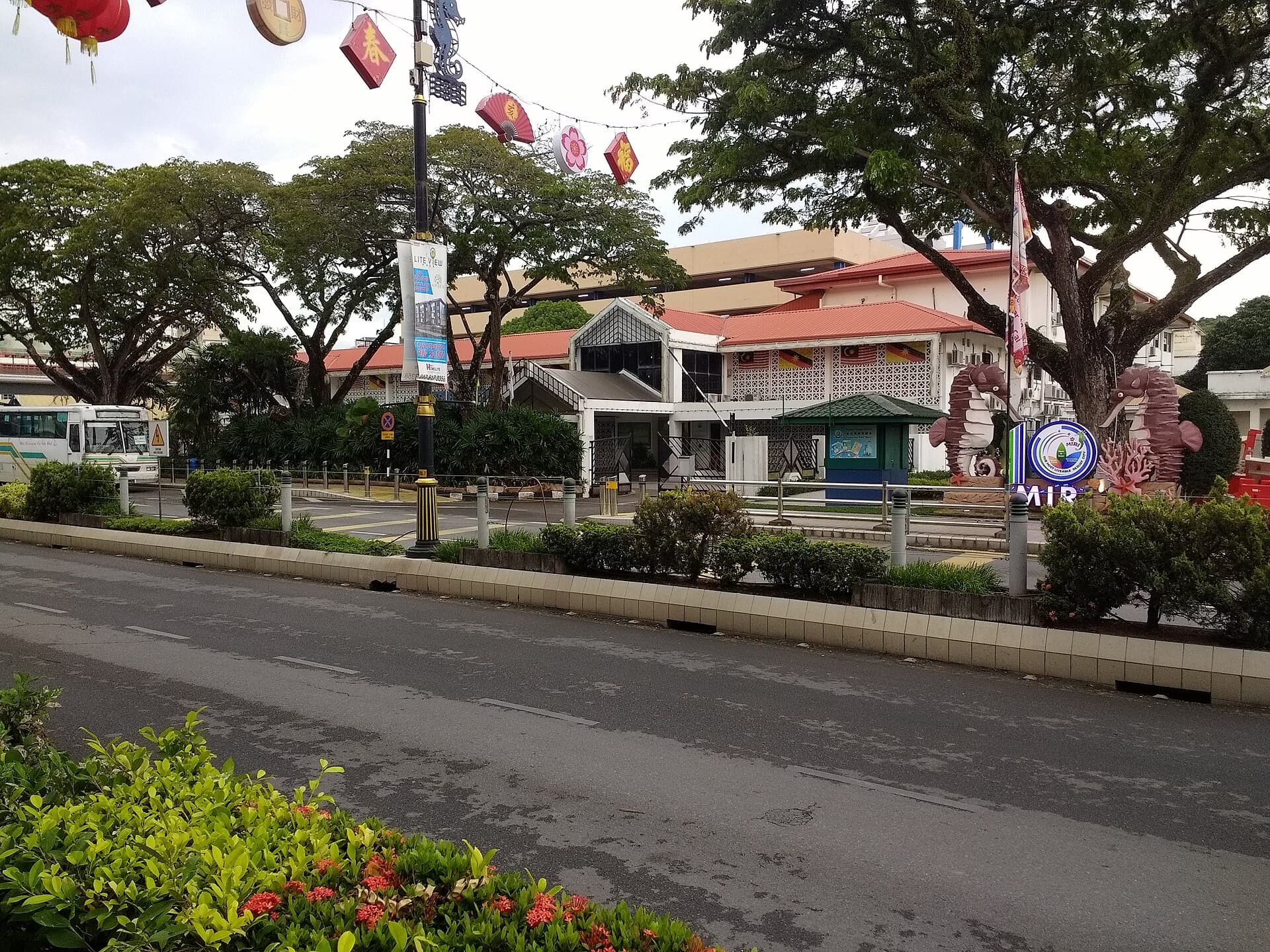 Mx. Granger / CC0, via Wikimedia Commons
“Where ancient rainforests meet a pioneering spirit.”
Not the postcards. The stories even locals don't know — whispered in your ear, right where they happened.
Miri's iconic 'Grand Old Lady' isn't a person, but a relic that shaped the city's destiny.
This lively temple holds a secret to Miri's survival during a devastating early 20th-century epidemic.
The name of this village hints at a forgotten infrastructure that once connected Miri's land to the open sea.
Discover every secret of Miri
Every address, every reveal in full — in your ear, right where it happened.
You pick your stops. You walk. The voice reveals what the others miss.
No tours available yet. Check back soon — we're preparing them.
Miri, the second-largest city in Sarawak, Malaysia, serves as a dynamic entryway to the natural wonders of Borneo. Situated on the island's northwestern coast, close to the Brunei border, it seamlessly blends its industrial heritage with a growing reputation as an ecotourism center. Once a small fishing settlement, Miri's trajectory changed dramatically with the discovery of oil in 1910, leading to rapid development and a diverse, multicultural population.
Today, Miri is often called the 'Resort City' or 'Oil Town,' a testament to its evolution. Visitors often use Miri as a transit point to explore nearby UNESCO World Heritage Sites like Gunung Mulu National Park and the ancient Niah Caves, both offering unparalleled natural beauty and historical significance. Beyond its role as a launchpad for jungle adventures, Miri itself offers a relaxed atmosphere, coastal charm, and a glimpse into Malaysia's pioneering spirit.
Before the 20th century, Miri was a modest fishing village. The region's history, however, extends much further back, with evidence of Paleolithic cavemen and hunter-gatherer tribes, and Chinese and Malay traders visiting as early as 900 A.D. The modern story of Miri began in 1910 when Royal Dutch Shell drilled the first oil well on Canada Hill. This pivotal event, marking the birth of Malaysia's petroleum industry, transformed the small settlement almost overnight.
By 1912, the Resident Office moved from Marudi to Miri, and by 1914, the first oil refinery and submarine pipeline were constructed. The town's infrastructure rapidly expanded, with roads built by 1920 and Miri becoming the administrative center of the northern Sarawak region by 1929. Oil production peaked in 1929, reaching 15,211 barrels per day.
During World War II, the Miri oil fields were strategically important. The Brooke government attempted to sabotage Japanese operations by destroying the fields, but Miri was still the first landing point for Japanese troops in Borneo. The city and its oil fields became a strategic target, enduring occupation until Australian forces liberated it in June 1945. The 'Grand Old Lady' oil well survived the wartime bombings.
After the war, Miri continued to develop, with oil production shifting largely offshore by the late 1950s. In 1963, Sarawak, including Miri, became part of the independent Federation of Malaysia. The original Miri Well No. 1, the 'Grand Old Lady,' ceased operations in 1972 after producing over 650,000 barrels of oil. In 1973, it was handed over to the state government as a historical monument.
The late 20th century saw Miri diversify its economy beyond oil and gas, with a focus on tourism and logistics. The opening of a new airport helped position it as a gateway to national parks like Gunung Mulu and Niah. Miri was officially granted city status on May 20, 2005, becoming Malaysia's tenth city and the first outside a state capital to receive this designation. Today, it continues to grow, attracting visitors with its blend of natural attractions, cultural experiences, and modern amenities.
Begin your exploration at Canada Hill, home to the iconic 'Grand Old Lady' (Miri Well No. 1), Malaysia's first oil well. Here, you'll find the Petroleum Museum, offering insights into the region's oil and gas history, alongside expansive views of the city and coastline.
For a dose of culture, visit the Tua Pek Kong Temple, Miri's oldest Chinese temple, known for its intricate architecture and bright colors. Wander through the Miri City Fan Recreation Park, a landscaped area featuring various themed gardens and a musical fountain.
Nature enthusiasts have a wealth of options. Lambir Hills National Park, a short drive from the city, offers diverse ecosystems, hiking trails, and picturesque waterfalls. Niah National Park is a significant destination for its massive limestone caves, prehistoric drawings, and archaeological importance, including the discovery of some of Southeast Asia's oldest human remains. Further afield, and typically accessed by a short flight, is the UNESCO World Heritage Site of Gunung Mulu National Park, renowned for its dramatic cave systems and extensive biodiversity.
Relax at one of Miri's beaches, such as Tanjong Lobang Beach (also known as Brighton Beach) for sunset views, or Tusan Beach, known for its dramatic cliffs and, occasionally, bioluminescent plankton.
Miri experiences a tropical climate with warm temperatures and high humidity year-round. The ideal time to visit is between March and October, during the drier season, which is perfect for outdoor activities and exploring national parks. Average temperatures during this period hover around 30°C. While June to August also offers warm, dry weather, it's best to avoid December and January, which are typically the rainiest months.
Miri International Airport (MYY) is a significant hub for central Borneo, with frequent flights from major Malaysian cities like Kuala Lumpur and Kuching, as well as an international connection to Singapore. Once in Miri, taxis and ride-hailing services like Grab are readily available. Renting a car is also an option for exploring at your own pace, with daily rates around RM120 within Miri and RM250 for travel beyond the city.
Malaysian Ringgit (RM) is the local currency. While Malay is the national language, English is widely spoken, especially by service staff. Dress in lightweight, cool, and casual clothing suitable for the tropical climate. Modest attire is recommended when visiting religious sites. Sarawak has its own immigration control, so even arrivals from Peninsular Malaysia or Sabah will undergo clearance.