Sforza Castle
Beneath the imposing walls of Sforza Castle, Leonardo da Vinci's sketches hint at more than meets the eye.
Full story unlocks in the tour
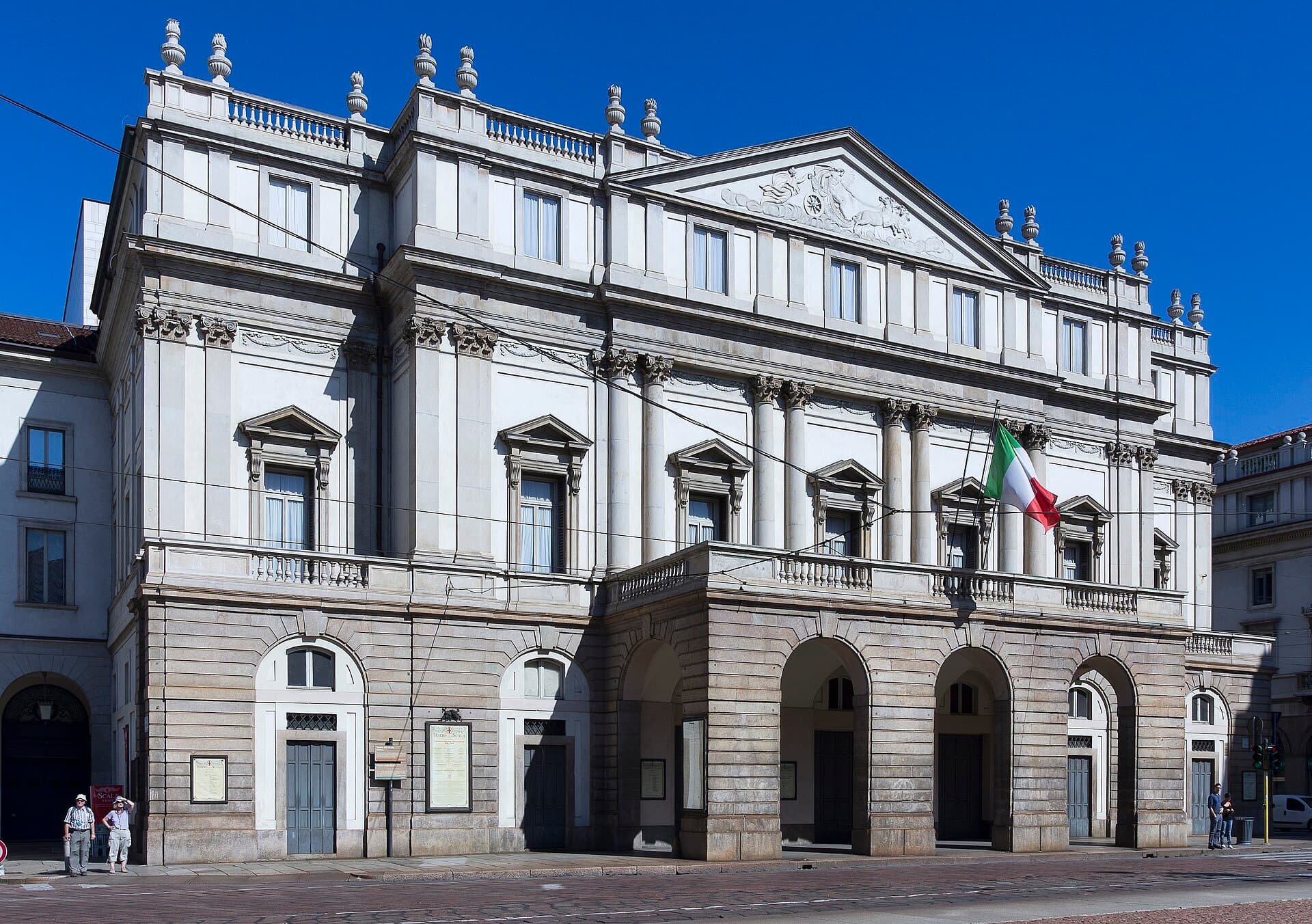 Jean-Christophe BENOIST / CC BY 3.0, via Wikimedia Commons
“Beyond the runway, Milan reveals centuries of quiet grandeur and unexpected artistry.”
Not the postcards. The stories even locals don't know — whispered in your ear, right where they happened.
Beneath the imposing walls of Sforza Castle, Leonardo da Vinci's sketches hint at more than meets the eye.
In the heart of one of Europe's busiest cities, a private palazzo garden hosts an exotic, feathered surprise.
Milan's status as a fashion capital is built on more than just seasonal trends and haute couture.
Discover every secret of Milan
Every address, every reveal in full — in your ear, right where it happened.
You pick your stops. You walk. The voice reveals what the others miss.
No tours available yet. Check back soon — we're preparing them.
Milan, a city of quiet power, moves with a rhythm all its own. While its name often conjures images of high fashion and sleek design, a deeper exploration reveals layers of artistic mastery, architectural ambition, and a profound appreciation for beauty in all its forms. The city's pulse quickens during fashion week and design fairs, yet beneath this contemporary veneer lies a soul shaped by centuries of innovation, from Leonardo da Vinci's engineering marvels to the grandeur of its opera house.
Walk through its avenues and discover a city that values both the ephemeral trend and the enduring masterpiece. From the soaring spires of its Duomo to the quiet courtyards of its palazzi, Milan invites a curious gaze, promising discoveries that extend far beyond the storefronts and showrooms. It is a place where the past informs the present, where ancient stones stand alongside modern glass, creating a dialogue between eras that is uniquely Milanese.
Milan's story begins as Mediolanum, a significant Roman city established around 600 BC. Its strategic location in the Po Valley made it a crucial administrative and economic center, even serving as the capital of the Western Roman Empire from 286 to 402 AD. Evidence of its Roman past can still be seen in remnants like the Colonne di San Lorenzo, ancient columns standing before the Basilica of San Lorenzo Maggiore.
Following the fall of the Roman Empire, Milan endured periods of strife and rule by various invaders. However, it re-emerged as a powerful independent commune during the Middle Ages, developing a robust economy based on agriculture, trade, and craftsmanship, particularly in textiles and armor production. This period saw the construction of significant civic and religious buildings, laying foundations for the city's future.
The Renaissance brought Milan under the sway of powerful families, most notably the Visconti and later the Sforza. Under their patronage, the city flourished as a center of art and learning. Ludovico Sforza, Duke of Milan, famously invited Leonardo da Vinci to his court in the late 15th century, leading to masterpieces like The Last Supper and groundbreaking engineering projects. The Duomo di Milano, a colossal undertaking, also saw significant progress during these centuries, becoming a symbol of Milanese ambition and devotion.
For centuries after the Renaissance, Milan experienced a succession of foreign rulers, including the Spanish, Austrians, and French under Napoleon. Each period left its mark on the city's architecture, culture, and administration. The Austrian Habsburg rule, in particular, saw significant urban development and the establishment of important cultural institutions like the Teatro alla Scala.
The 19th century was a period of fervent nationalism, and Milan played a central role in the Italian Risorgimento, the movement for Italian unification. The city was a hotbed of revolutionary activity, culminating in the 'Five Days of Milan' in 1848, an uprising against Austrian rule. After unification in 1861, Milan quickly cemented its position as Italy's leading industrial and financial center, a role it maintains today.
The 20th century presented Milan with new challenges, including the devastation of World War II, which heavily damaged many of its historic buildings. However, the city demonstrated remarkable resilience, rebuilding and modernizing with a focus on design, fashion, and commerce. This post-war period saw Milan become a global capital for these industries, attracting talent and innovation from around the world. Today, Milan continues to evolve, balancing its deep historical roots with a forward-looking spirit, a city where ancient traditions and cutting-edge trends coexist.
Begin your exploration at the Duomo di Milano, an architectural marvel of white marble. Ascend to its rooftop for sweeping views of the city. A short walk away, the Galleria Vittorio Emanuele II offers a grand 19th-century shopping arcade, an elegant space for a stroll.
Visit the Castello Sforzesco, a vast medieval fortress that now houses several museums, including art collections and ancient artifacts. For art enthusiasts, a visit to Santa Maria delle Grazie is essential to see Leonardo da Vinci's The Last Supper (book tickets well in advance).
Experience the grandeur of opera at the Teatro alla Scala, one of the world's leading opera houses. Even without attending a performance, its museum offers a look into its storied past. Explore the Brera District, known for its charming streets, art galleries, and the Pinacoteca di Brera, home to a significant collection of Italian Renaissance art. For a taste of modern Milan, the Porta Nuova district showcases contemporary architecture and green spaces.
Spring (April-May) and autumn (September-October) offer the most pleasant weather, with comfortable temperatures for walking and outdoor dining. These seasons also coincide with Milan's major fashion and design events, bringing a lively atmosphere. Summer (June-August) can be hot and humid, with many locals leaving for vacation, while winter (November-March) is cooler, often foggy, but provides a quieter experience for museum visits and indoor activities.
Milan's public transportation system is efficient, comprising metro, tram, and bus lines. Purchasing a daily or multi-day travel card is recommended for extensive sightseeing. Taxis and ride-sharing services are also readily available. The city center is largely walkable, allowing for leisurely exploration of many key attractions. While Italian is the official language, English is widely spoken in tourist areas, hotels, and major shops. Tipping is customary in restaurants and for services, usually a few euros or rounding up the bill. Be mindful of pickpockets in crowded tourist areas and on public transport.