Promenade du Soleil, every February
Once a year the seafront fills with ten-metre sculptures, and not a single one is made of stone, metal or papier-mâché.
Full story unlocks in the tour
 Le poulpe ambidextre / CC BY-SA 4.0, via Wikimedia Commons
“The last French town before Italy, ruled by lemons.”
Not the postcards. The stories even locals don't know — whispered in your ear, right where they happened.
Once a year the seafront fills with ten-metre sculptures, and not a single one is made of stone, metal or papier-mâché.
Couples sign their marriage register under a leopard-print carpet and lovers from Greek myth — and the room is open to anyone who buys a ticket.
Cocteau spotted a derelict 17th-century sea fort on Menton's harbour and asked the town for it — but he never saw what he turned it into.
Discover every secret of Menton
Every address, every reveal in full — in your ear, right where it happened.
You pick your stops. You walk. The voice reveals what the others miss.
No tours available yet. Check back soon — we're preparing them.
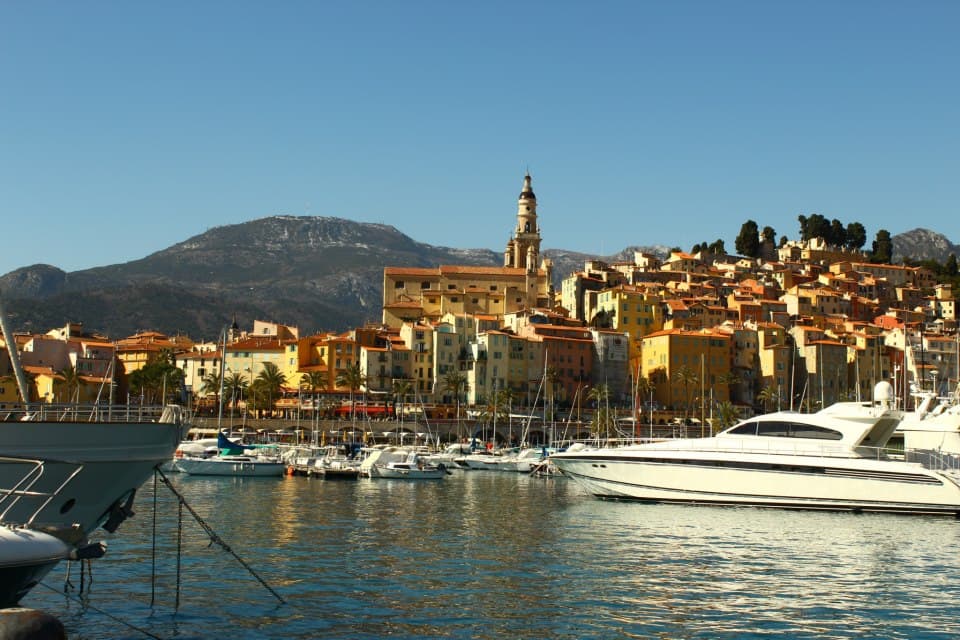
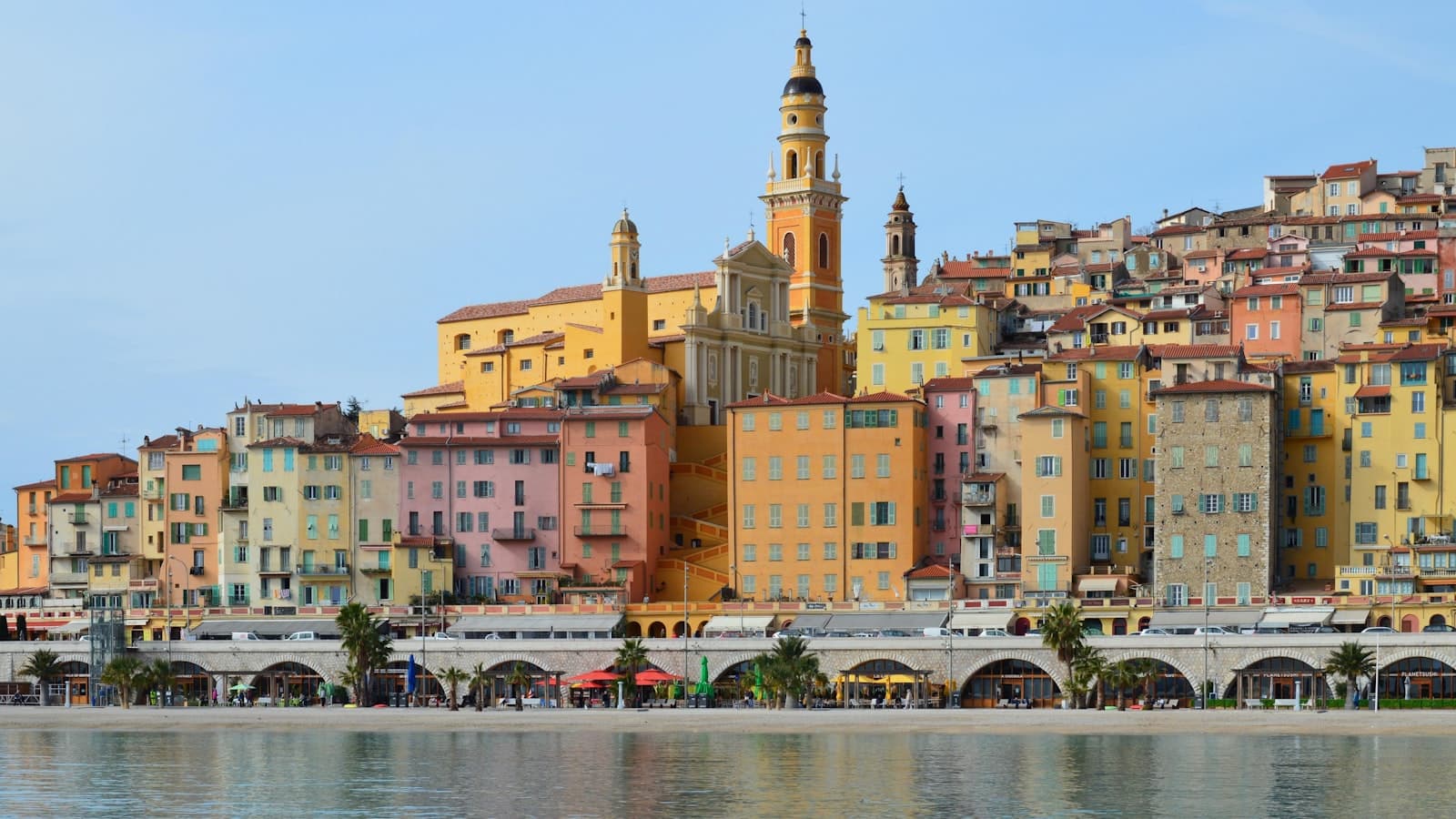
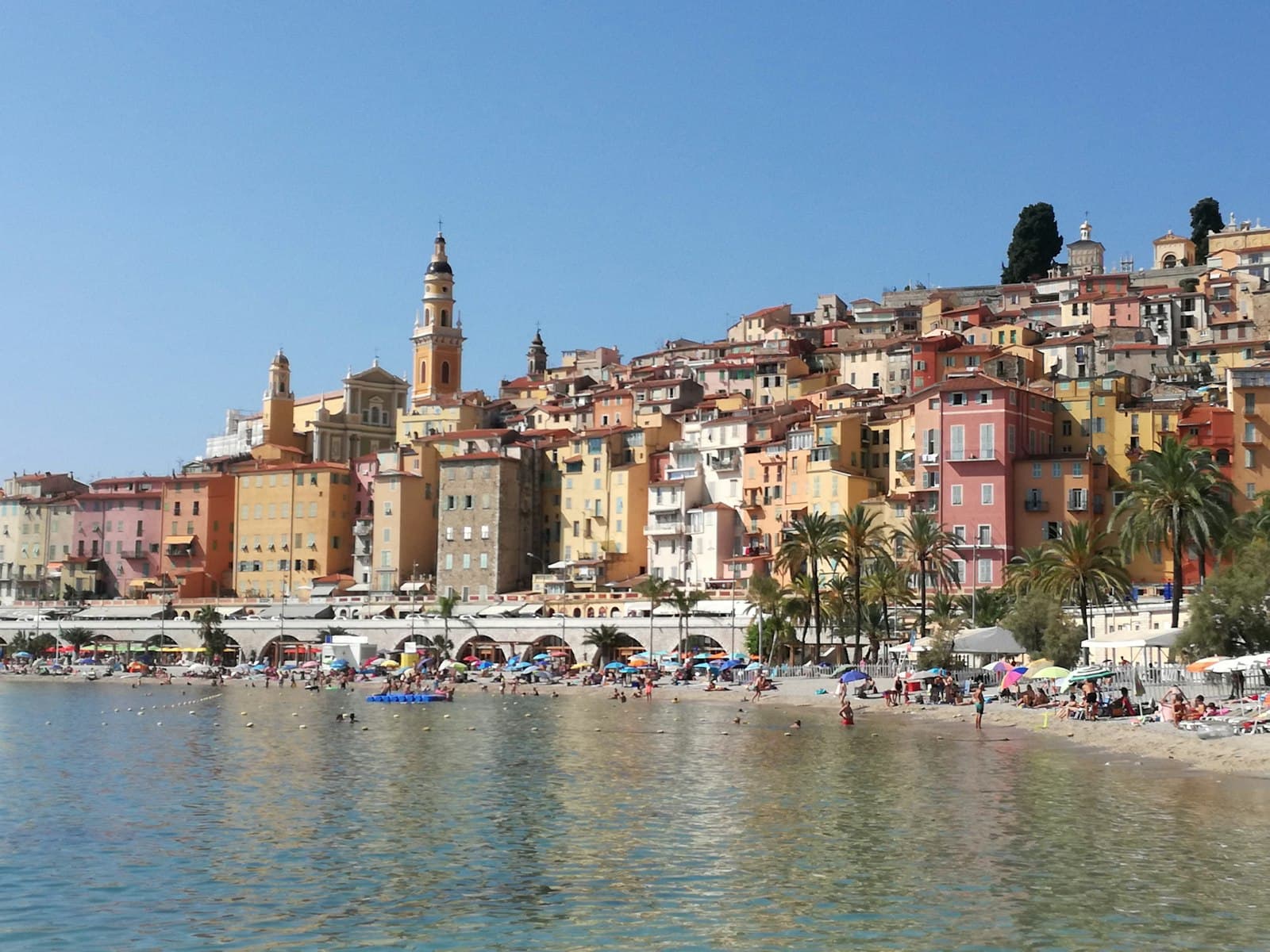
Menton is the last French town before Italy, and it knows it. Walk east along the seafront and within twenty minutes you're at the Pont Saint-Louis, one boot in France and one in the Ligurian town of Ventimiglia. The old quarter rising behind the harbour is washed in ochre and apricot, its lanes climbing in covered staircases toward a baroque basilica — it looks and sounds more Genoese than Provençal, and there's a reason for that.
This is the warmest corner of the French Mediterranean coast, with over 300 days of sun a year and mountains at its back to block the cold. That microclimate is the whole story here: it's why lemons grow on the terraces, why winter-pale aristocrats came to convalesce, and why a botanical garden in the Garavan hills can keep alive a tree that's extinct everywhere else on Earth. Menton wears its quiet, and gives up its secrets to anyone willing to climb its stairs.
Menton was bought in 1346 by Charles Grimaldi, Lord of Monaco, and ruled by the princes of Monaco for the better part of five centuries. That long Monégasque-and-Italian orbit is stamped on the place: the Basilique Saint-Michel-Archange, begun in 1619 at the wish of a Monaco prince and built by a Genoese architect, anchors an old town that feels Italian to the bone, its forecourt paved in black-and-white pebbles arranged as the Grimaldi arms.
After the Treaty of Turin, a plebiscite on 15–16 April 1860 folded Menton into France — the vote was 833 to 54. Almost at once the town reinvented itself as a winter cure. A British doctor's 1861 book praising the Mediterranean shore turned Menton into a haven for tuberculosis sufferers, and British and Russian aristocrats built villas, churches and hotels across the hillsides. Many of them never left: the cosmopolitan graves in the Cimetière du Vieux-Château, with the sea below, hold the British and Russian winterers who came for the air and stayed for good — among them William Webb Ellis, credited with inventing rugby.
The same mildness that drew the invalids built the town's other identity. Citrus had grown around Menton since the 14th century; by 1860 it was shipping 35 million lemons a year. When a hotelier turned the harvest into a parade in 1934, the Fête du Citron was born. The English and the foreign gardeners came too, planting the terraced gardens — Serre de la Madone, Val Rahmeh — that still climb the slopes.
Start at the harbour and climb. The lanes of the vieille ville tighten into covered staircases — the Rampes Saint-Michel — that lift you to the parvis of the Basilique Saint-Michel-Archange, its baroque façade and pebble-mosaic forecourt looking out over the rooftops. Keep going up to the Cimetière du Vieux-Château, a terraced cemetery with one of the best sea views in town and an unexpected roll-call of British and Russian residents.
Jean Cocteau left two marks on Menton. The Salle des Mariages inside the town hall is his — walls of Orpheus and Eurydice, a leopard-print floor, red armchairs, all designed in 1957–58 and restored in 2018; you can visit between weddings. Down on the harbour, Le Bastion, a 17th-century sea fort he redesigned as his own museum, holds the Mediterranean works he left the city.
Menton is a city of gardens. Serre de la Madone, built from 1924 by Major Lawrence Johnston (the same man who made Hidcote in England), is a series of green 'rooms' with pools and pergolas. Val Rahmeh, in the mild Garavan district, is the tropical opposite — 1,800 species, including the Easter Island tree extinct in the wild. Both reward a slow morning.
Walk the Promenade du Soleil and the eastern seafront out to Garavan and the Pont Saint-Louis, the footbridge to Italy — a five-minute stroll from France into Ventimiglia.
The Fête du Citron runs for about two weeks straddling mid-February to early March (in 2026, 14 February–1 March). The seafront fills with citrus sculptures up to ten metres high and the town draws around 250,000 visitors — book accommodation well ahead and expect crowds.
Menton is mild year-round, but April–June and September–October give you warm light, open gardens and far thinner crowds than the festival or high summer. The gardens are at their best in spring.
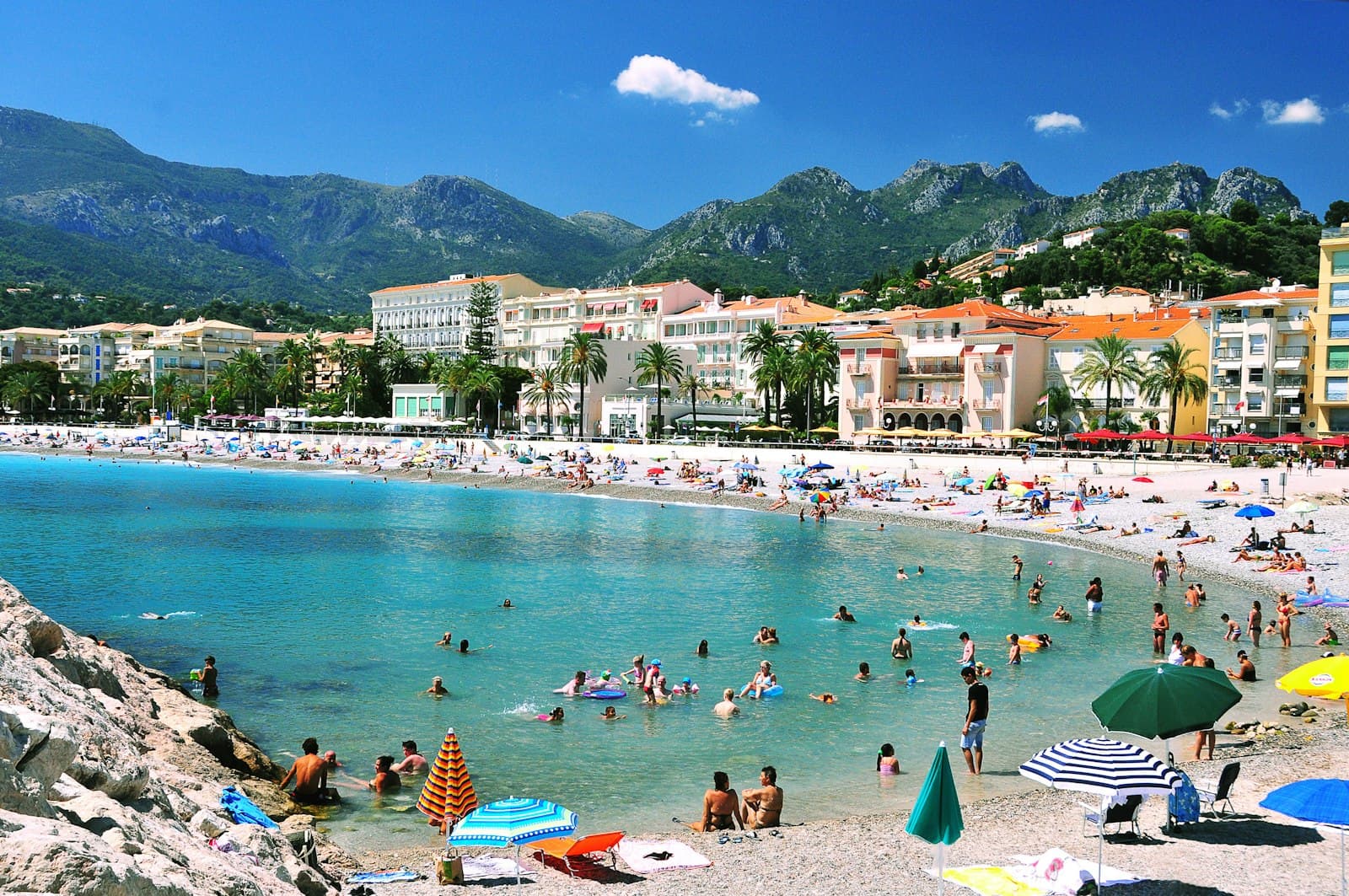
July and August are hot, busy and beach-focused; the old town and gardens stay rewarding early in the day. Winter, festival aside, is famously gentle — this is the warmest stretch of the French Mediterranean coast, with sun well over 300 days a year.
Menton sits on the coastal rail line between Nice and Ventimiglia; trains from Nice take roughly 35 minutes and stop at Menton and Menton-Garavan. Nice Côte d'Azur airport is about 30 km west. The Italian border at the Pont Saint-Louis is walkable from Garavan.
The town is compact and best walked, but the old town is steep — the climb from the harbour to the basilica and cemetery is all stairs. Wear real shoes.
Look for the Citron de Menton IGP, the EU-protected local lemon (the only French lemon with the status), sold unwaxed and untreated. The covered market (Marché des Halles) is the place for citrus, marmalade and lemon products.
Several gardens, including Serre de la Madone and Val Rahmeh, have limited opening days and hours and may require booking — check before you go.