The Acequias
Mendoza is a city built on an ancient secret for survival in an arid land.
Full story unlocks in the tour
 David / CC BY 2.0, via Wikimedia Commons
“Where Andean snowmelt nurtures a desert oasis of world-class wine.”
Not the postcards. The stories even locals don't know — whispered in your ear, right where they happened.
Mendoza is a city built on an ancient secret for survival in an arid land.
The grand entrance gates of Mendoza's largest park hold a surprising international past.
The city's distinctive wide streets and numerous plazas are not merely aesthetic choices.
Discover every secret of Mendoza
Every address, every reveal in full — in your ear, right where it happened.
You pick your stops. You walk. The voice reveals what the others miss.
No tours available yet. Check back soon — we're preparing them.
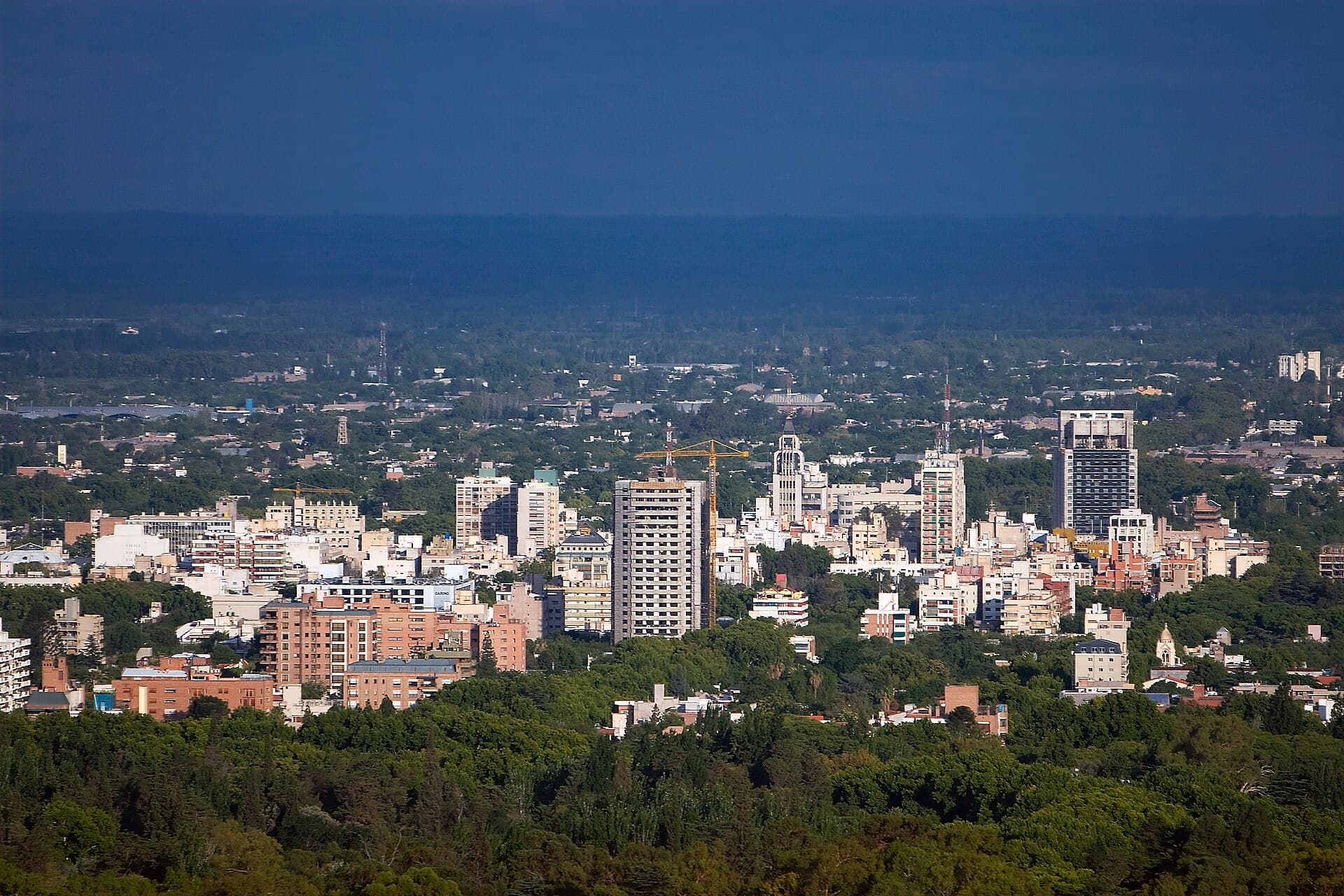
Mendoza, Argentina's fourth-largest metropolitan area, rises at the eastern foot of the Andes Mountains, a true desert oasis. Despite its arid climate, the city flourishes with a green landscape, thanks to an ingenious irrigation system that channels snowmelt from the peaks. This unique environment has cultivated not only a beautiful city but also a world-renowned wine region, particularly celebrated for its Malbec.
Mendoza offers a compelling blend of urban sophistication and natural grandeur. Its tree-lined avenues, inviting plazas, and active culinary scene provide a relaxed yet cosmopolitan atmosphere. Beyond the city limits, the dramatic Andes invite adventure, from high-altitude trekking to white-water rafting, making Mendoza a diverse destination for both epicureans and outdoor enthusiasts.
The history of Mendoza stretches back tens of thousands of years, with the indigenous Huarpe people being the dominant aboriginal group about 500 years ago. These skilled agriculturalists developed a sophisticated network of irrigation channels, known as acequias, to bring water from the Mendoza River to the arid plains. This ingenious system allowed for agricultural prosperity in a desert environment.
Spanish captain Pedro del Castillo officially founded the city on March 2, 1561, naming it Ciudad de Mendoza del Nuevo Valle de La Rioja after the governor of Chile, Don García Hurtado de Mendoza. The Spanish recognized the value of the Huarpe irrigation techniques and expanded upon them, laying the groundwork for Mendoza's future agricultural success. Early colonial economy relied on agriculture, cultivating wheat, fruits, and olives, but viticulture, introduced by Catholic missionaries in the 16th century, soon became its main legacy.
Mendoza played a crucial role in Argentina's independence. In 1814, General José de San Martín became governor of the Cuyo province and transformed Mendoza into the training headquarters for the legendary Army of the Andes. From here, in 1817, San Martín led his army across the Andes to liberate Chile and Peru from Spanish rule.
A catastrophic earthquake struck Mendoza on March 20, 1861, destroying most of the city and killing an estimated 5,000 to 12,000 people. The city was rebuilt from 1863, incorporating innovative urban designs with wider streets, sidewalks, and large squares to better withstand future seismic activity. This new urban plan, combined with the completion of a railway to Mendoza city in 1885, solidified its role as the economic center of the region. The late 19th century also saw an influx of European migrants, particularly from Italy, Spain, France, and Germany, who further developed the wine industry, bringing new grape varieties and expertise that cemented Mendoza's status as a global wine capital.
Begin your exploration in the city center with a stroll through Plaza Independencia, the heart of Mendoza, and its four surrounding smaller plazas: San Martín, Chile, Italia, and España. These green spaces are perfect for people-watching and soaking in the local atmosphere. Wander down Peatonal Sarmiento, a pedestrian street lined with cafes, and consider a visit to the Central Market (Mercado Central) for a taste of local life and a quick, authentic lunch.
No visit to Mendoza is complete without experiencing its world-renowned wine industry. Embark on a wine tour in one of the three main regions: Maipú, Luján de Cuyo, or the Uco Valley. Many wineries offer tours and tastings, with some even providing cooking classes or lunch experiences. For a unique perspective, consider a "Wine and Ride" tour in Maipú, where you can cycle between vineyards.
For a dose of nature and history, head to Parque General San Martín, a sprawling urban oasis designed by landscape architect Carlos Thays. Explore its serene lake, rose garden, and the impressive Monument to the Army of the Andes on Cerro de la Gloria, offering panoramic city and mountain views. Beyond the city, adventure awaits in the Andes. Options include visiting Aconcagua Provincial Park (home to the highest peak in the Western Hemisphere), relaxing at the Cacheuta Hot Springs, or enjoying horseback riding and white-water rafting in the mountains.
Mendoza enjoys a temperate, arid, continental climate with distinct seasons and over 300 days of sunshine annually. The shoulder seasons of autumn (March to May) and spring (September to November) are generally considered the best times to visit. Autumn brings the colors of the Vendimia (grape harvest festival) in March, with mild temperatures in the low 20s °C (low 70s °F). Spring offers pleasant weather, blossoming orchards, and fewer tourists. Summers (December to February) are hot, with temperatures occasionally reaching 38 °C (100 °F), ideal for poolside relaxation but potentially intense for midday tours. Winters (June to August) are cool and dry, with average highs around 14.7 °C (58 °F), perfect for those interested in skiing in nearby resorts like Las Leñas.
Mendoza is easily accessible by a short 90-minute flight from Buenos Aires, or via an overnight bus journey. The local currency is the Argentine Peso (ARS). While English is often understood in tourist areas, knowing some basic Spanish phrases will enhance your experience.
Public transportation within the city is available, but for exploring the wineries and surrounding areas, organized wine tours are highly recommended due to limited public transport to vineyards. Alternatively, renting a car provides flexibility, or consider using ride-sharing services like Uber for shorter distances to closer wine regions like Luján de Cuyo. It's customary to tip around 10% in restaurants, and it's important to carry cash for this, as tips cannot typically be added to credit card bills. ATMs are available, but be mindful of withdrawal limits and potential fees.
Given Mendoza's high altitude and intense sun, sensitive individuals may need a day to acclimatize, and it's always wise to drink plenty of water and use sun protection, especially during outdoor activities.