Peabody Hotel
Every day, a peculiar procession takes place in the lobby of the Peabody Hotel, involving a certain feathered entourage.
Full story unlocks in the tour
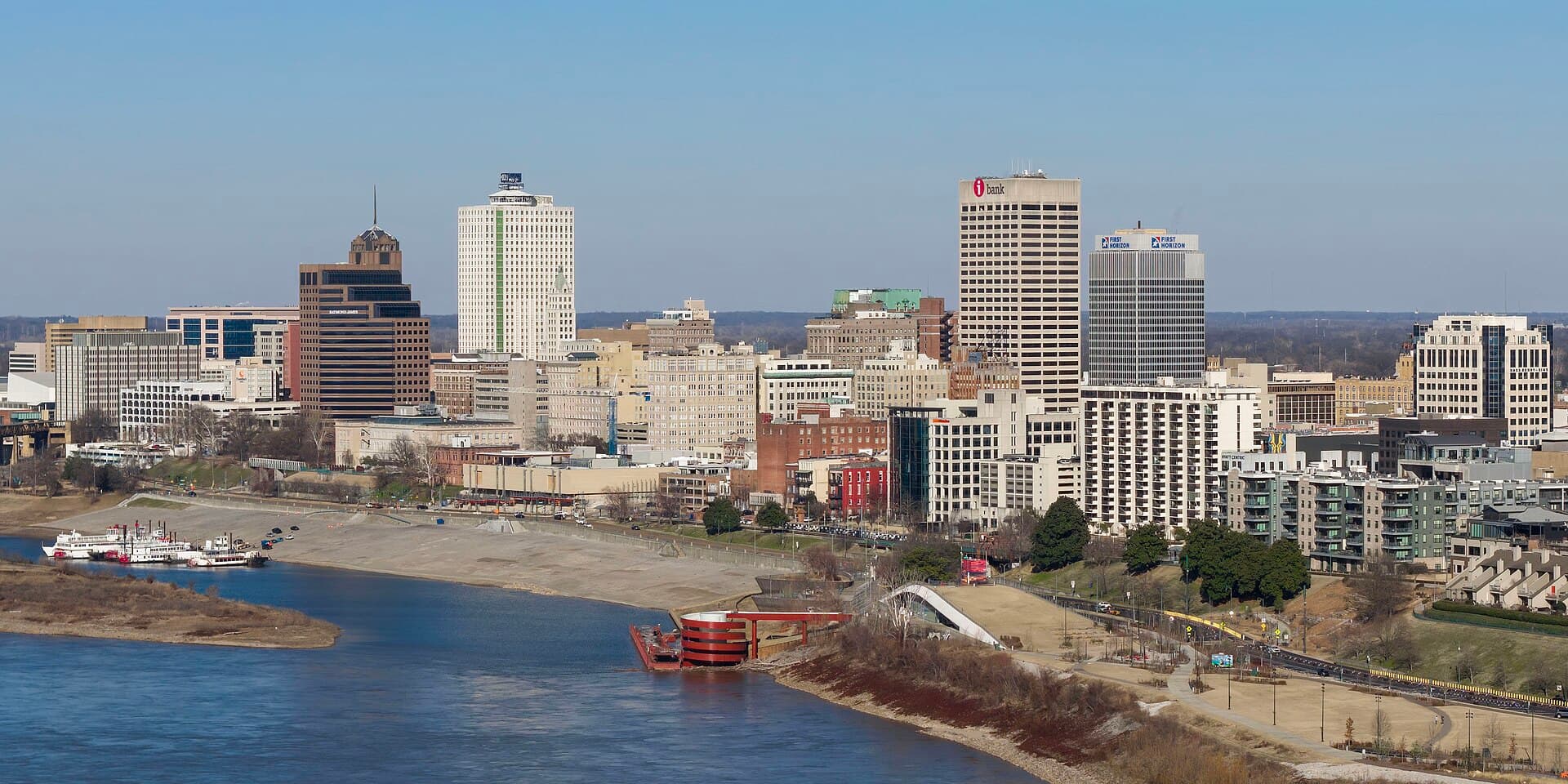 Quintin Soloviev / CC BY 4.0, via Wikimedia Commons
“Where the Mississippi hums a tune and history echoes in every brick.”
Not the postcards. The stories even locals don't know — whispered in your ear, right where they happened.
Every day, a peculiar procession takes place in the lobby of the Peabody Hotel, involving a certain feathered entourage.
Before it was a museum, this site was a hotbed of sound, but its origins were not what you'd expect for a soul music powerhouse.
The 'Million Dollar Quartet' famously jammed here, but a lesser-known recording, considered by some to be the first rock and roll record, also happened within these walls.
Discover every secret of Memphis
Every address, every reveal in full — in your ear, right where it happened.
You pick your stops. You walk. The voice reveals what the others miss.
No tours available yet. Check back soon — we're preparing them.
Memphis, Tennessee, rests on the Chickasaw Bluffs overlooking the Mississippi River, a city deeply intertwined with American history and culture. Its name, derived from the ancient Egyptian capital, suggests an enduring legacy. Here, the soulful sounds of blues, soul, and rock and roll were born and nurtured, shaping the soundtrack of generations. Beyond its musical heritage, Memphis is a city of resilient spirit, marked by pivotal moments in the Civil Rights Movement and a culinary tradition centered around its distinctive barbecue.
Walking the streets of Memphis is to step through layers of sound and story. From the lively Beale Street, where music spills from every doorway, to the quiet reverence of the National Civil Rights Museum, the city offers a profound journey. It's a place where the past feels present, where the echoes of legendary musicians and civil rights leaders resonate, inviting visitors to listen closely to the narrative etched into its very fabric.
The land that would become Memphis was historically inhabited by the Chickasaw people. The bluffs overlooking the Mississippi River provided a strategic vantage point, making it a desirable location for trade and settlement. In 1819, a group including Andrew Jackson, John Overton, and James Winchester founded the modern city of Memphis, naming it after the ancient Egyptian capital. Its position on the river quickly established it as a vital port for cotton trade and a hub for steamboat traffic, contributing significantly to its early growth.
During the 19th century, Memphis became one of the largest cities in the South, its prosperity fueled by the cotton industry and its role as a transportation center. However, the city also faced immense challenges, including devastating yellow fever epidemics in the late 1800s that led to significant population decline and economic hardship. Despite these setbacks, Memphis demonstrated remarkable resilience, slowly rebuilding and diversifying its economy.
The 20th century saw Memphis emerge as a crucible of American music. Beale Street became a renowned center for blues music, attracting legendary performers and fostering a unique sound. Later, Sun Studio and Stax Records would become instrumental in the birth of rock and roll and soul music, respectively, launching the careers of icons like Elvis Presley, Johnny Cash, Otis Redding, and Isaac Hayes.
Memphis also played a critical role in the Civil Rights Movement. The city was a focal point for the sanitation workers' strike in 1968, which brought Martin Luther King Jr. to Memphis in support of the workers' rights. His assassination on April 4, 1968, at the Lorraine Motel, remains a profound and somber moment in American history, forever linking Memphis to the struggle for equality. Today, the Lorraine Motel is home to the National Civil Rights Museum, a powerful testament to this pivotal era.
Begin your exploration on Beale Street, the historic home of the blues, where live music spills from clubs and restaurants day and night. Just a short walk away is the Rock 'n' Soul Museum, a Smithsonian affiliate, which traces the origins of rock and soul music from the rural South to its global impact. For a deeper dive into musical history, visit Sun Studio, where Elvis Presley, Johnny Cash, and Jerry Lee Lewis recorded. A pilgrimage to Graceland, Elvis Presley's iconic estate, offers a glimpse into the King of Rock and Roll's life and legacy. The National Civil Rights Museum, situated at the former Lorraine Motel, provides a moving and comprehensive look at the American Civil Rights Movement. Don't miss the Peabody Hotel to witness the daily march of the Peabody Ducks. For a taste of local flavor, explore the Cooper-Young Historic District, known for its independent shops, art galleries, and diverse eateries.
Spring (March to May) and Fall (September to November) offer the most pleasant weather for visiting Memphis, with comfortable temperatures and lower humidity. These seasons also feature numerous festivals and outdoor events. Summers can be hot and humid, while winters are generally mild but can have occasional cold snaps.
Memphis International Airport (MEM) serves the city with various domestic flights. Downtown Memphis is walkable, and many major attractions are concentrated in this area. For getting around further afield, ride-sharing services, taxis, and the Memphis Area Transit Authority (MATA) bus system are available. Consider purchasing a Memphis CityPASS if you plan to visit multiple attractions, as it offers discounted admission. Memphis is famous for its barbecue; be sure to try a dry rub or wet rib plate. Tipping customs are standard for the United States, typically 15-20% for good service in restaurants.