Jolimont rail yards (former site)
Melbourne once considered erecting a landmark to rival Sydney's Opera House over a vast expanse of railway tracks.
Full story unlocks in the tour
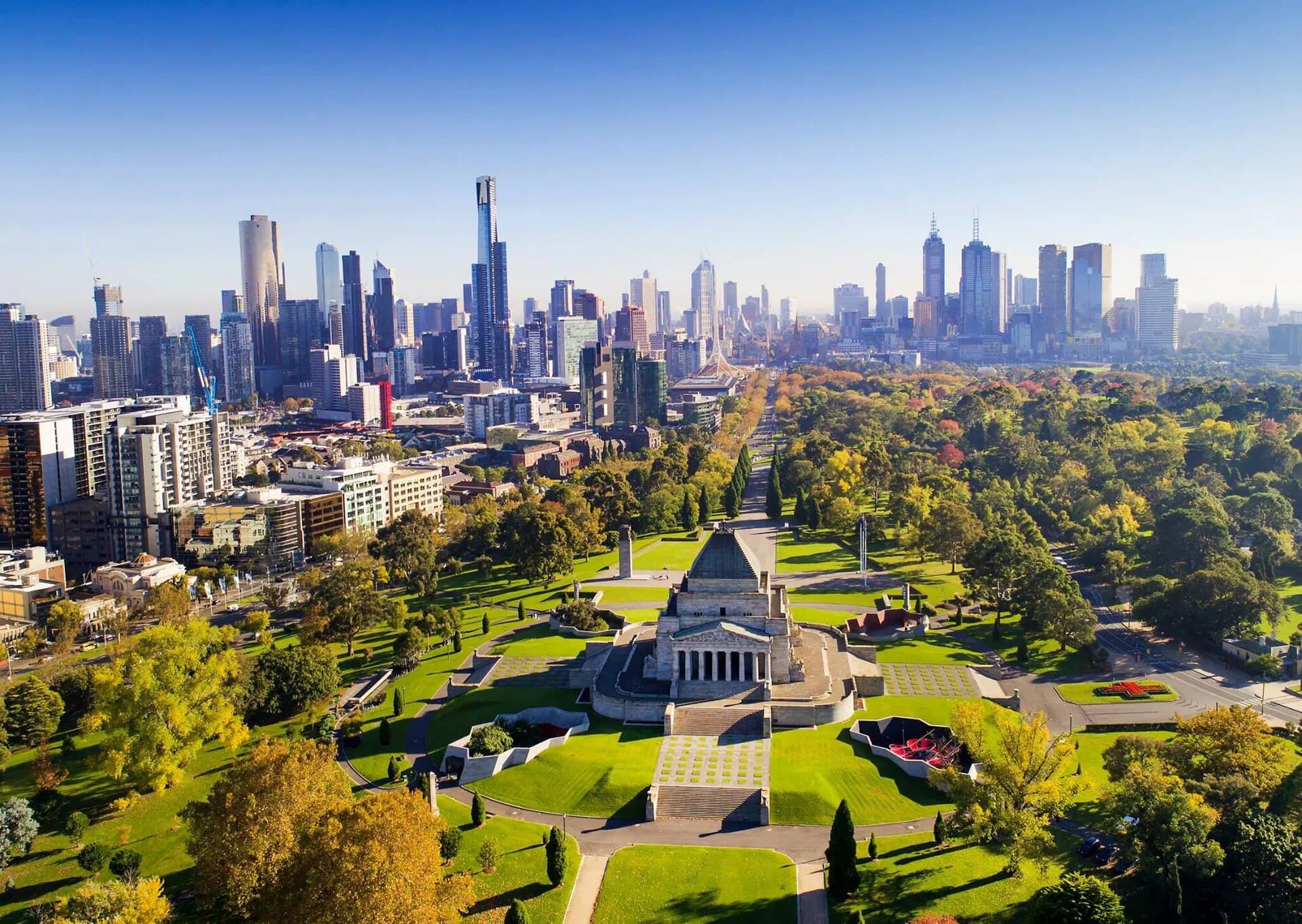 Melbpal / CC BY-SA 4.0, via Wikimedia Commons
“Melbourne: Where every laneway holds a secret, and the aroma of coffee drifts through the air.”
Not the postcards. The stories even locals don't know — whispered in your ear, right where they happened.
Melbourne once considered erecting a landmark to rival Sydney's Opera House over a vast expanse of railway tracks.
One of Melbourne's most elusive bars is camouflaged as a refrigerator door within a sandwich shop.
Melbourne's architecture carries subtle, often overlooked, messages from its past.
Discover every secret of Melbourne
Every address, every reveal in full — in your ear, right where it happened.
You pick your stops. You walk. The voice reveals what the others miss.
No tours available yet. Check back soon — we're preparing them.
Melbourne, the capital of Victoria, is a city that thrives on cultural expression, world-class sporting events, and an unparalleled coffee scene. It occupies much of the northern and eastern coastlines of Port Phillip Bay, and its urban area encompasses 31 local government areas. Often referred to as Australia's cultural capital, Melbourne is recognized for its dynamic street art, diverse culinary landscape, and a calendar packed with festivals and events. The city consistently ranks among the world's most livable cities, a testament to its engaging atmosphere and quality of life.
The city's character is particularly evident in its more than 230 laneways, which weave through the city blocks and are home to an array of restaurants, bars, and ever-evolving street art. From the bustling Queen Victoria Market to the serene Royal Botanic Gardens, Melbourne offers a blend of experiences that cater to various interests. Whether it's the excitement of a major sporting event or the relaxed ambiance of a quiet cafe, Melbourne invites exploration and discovery.
The area now known as Melbourne has been home to Aboriginal Victorians for at least 40,000 years. The traditional custodians of the land encompassing Melbourne are the Boonwurrung, Woiwurrung, and Wurundjeri peoples of the Kulin nation, for whom the wider Port Phillip Bay area is known as Narrm or Naarm. This region was a vital meeting place and a rich source of food and water for these Indigenous communities.
European settlement began in 1835 with the arrival of free settlers from Van Diemen's Land (Tasmania), making Melbourne unique among Australian state capitals for its unofficial founding by individual enterprise. The settlement was named Melbourne in 1837 by Governor Richard Bourke, honoring the then-British Prime Minister, William Lamb, 2nd Viscount Melbourne. It was incorporated as a Crown settlement in 1837, declared a town in 1842, and officially recognized as a city by Queen Victoria in 1847.
The discovery of gold in Victoria in the early 1850s triggered a massive population boom, transforming Melbourne into one of the world's largest and wealthiest metropolises by the late 1880s. During this period, the city saw significant development, including the construction of Australia's first railway in 1854 and the establishment of institutions like the University of Melbourne and the State Library of Victoria in the mid-1850s. Following the federation of Australia in 1901, Melbourne served as the interim seat of the federal government until Canberra became the permanent capital in 1927.
Melbourne offers a diverse array of sights, from historic landmarks to contemporary art spaces. Begin at Flinders Street Station, a prominent meeting point and the busiest train station in the Southern Hemisphere, known for its iconic architecture. Across the way, Federation Square serves as a central public space, often hosting events and offering an engaging atmosphere for people-watching. Delve into the city's street art scene in laneways like Hosier Lane, AC/DC Lane, and Presgrave Place, where murals and graffiti constantly transform the urban landscape.
For art enthusiasts, the National Gallery of Victoria (NGV) is Australia's oldest and most visited art museum, housing an extensive collection of over 70,000 works across two buildings. Explore the State Library of Victoria, celebrated for its Dome Reading Room, a truly photogenic spot. Immerse yourself in history at the Melbourne Museum, which includes the Bunjilaka Aboriginal Cultural Centre, offering insights into Indigenous history and culture. For a unique perspective, consider a visit to the Melbourne Skydeck for panoramic city views. Do visit the Royal Botanic Gardens for a tranquil escape, or catch a game at the Melbourne Cricket Ground (MCG), a significant sporting arena and the birthplace of Australian Rules football.
Melbourne experiences a temperate oceanic or humid subtropical climate, known for its changeable weather, often described as 'four seasons in one day'. The warm season runs from December to March, with average daily high temperatures above 23°C (74°F), and February being the warmest month. The cool season, from late May to early September, sees average daily highs below 16°C (60°F), with July being the coolest month. Autumn (March to May) and spring (September to November) are generally considered the best times to visit, offering pleasant weather for exploring the city on foot or by bicycle.
Melbourne has an efficient public transportation network comprising trams, trains, and buses. The easiest way to pay for travel is with a Myki card, which can be purchased at train stations, some tram stops, and convenience stores; remember to tap on and off. Within the CBD and Docklands, a free tram zone allows for complimentary travel on any tram. Melbourne Airport is the second-busiest in Australia. While Melbourne is generally a safe city for tourists, its changeable weather means it's advisable to dress in layers and carry both sunglasses and an umbrella, regardless of the forecast. The city is also known for its extensive freeway network and the world's largest urban tram network.