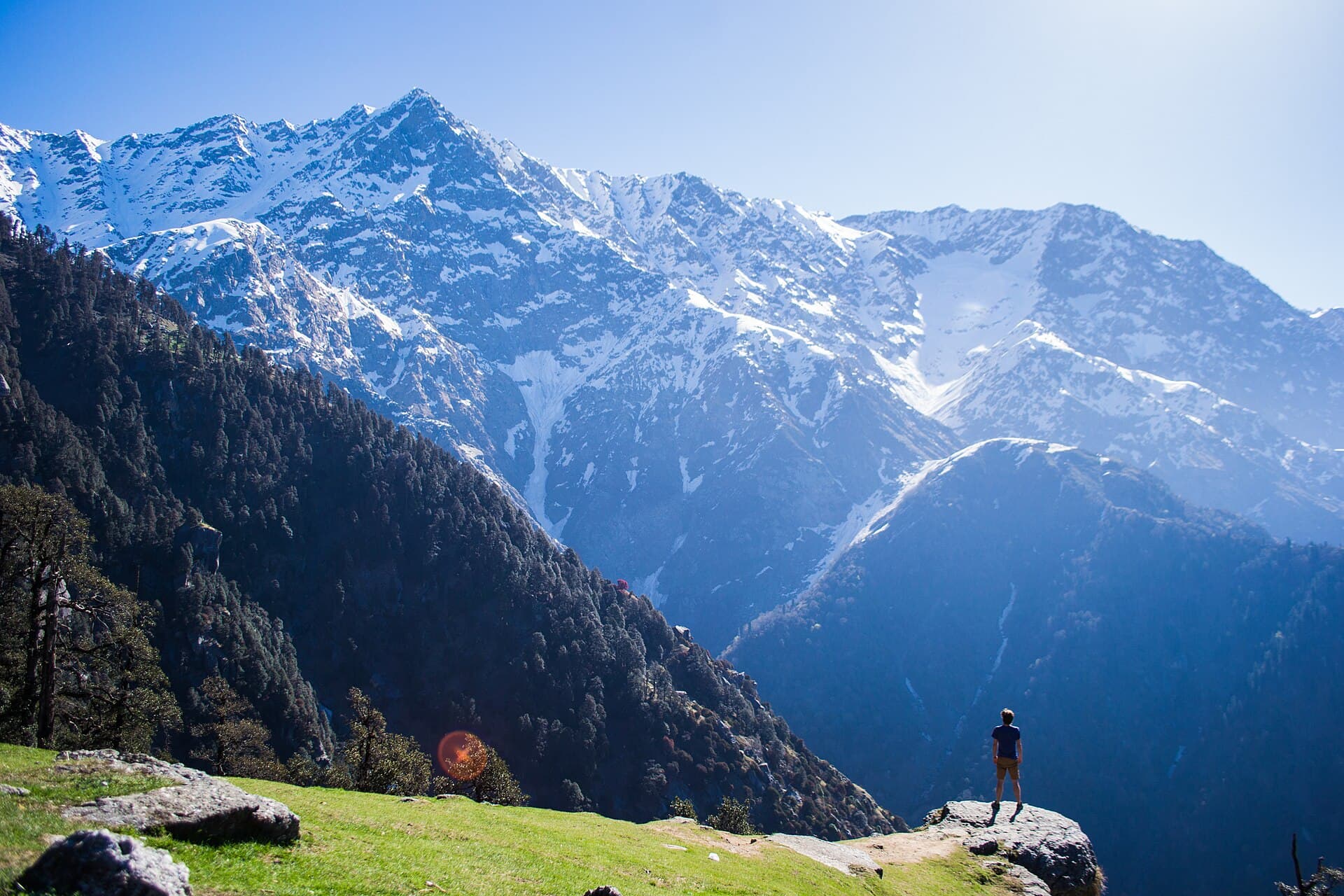
McLeod Ganj, IndiaRignam Wangkhang / CC BY 2.0, via Wikimedia Commons
IN

McLeod Ganj

Where the Dhauladhars meet dharma, and stories breathe from every prayer flag.

The secrets of McLeod Ganj

McLeod Ganj, as no one tells it.

Not the postcards. The stories even locals don't know — whispered in your ear, right where they happened.

3 secrets below. Many more wait inside the tour.
St. John in the Wilderness Church

This neo-Gothic church, constructed in 1852, holds a secret within its solemn graveyard, a tale speaking volumes about the unpredictable nature of life in the Himalayas during the British Raj.

Full story unlocks in the tour
Dalai Lama's Residence (Mortimer House)

The current official residence of His Holiness the 14th Dalai Lama in McLeod Ganj possesses a surprising past, predating its spiritual significance.

Full story unlocks in the tour
Bhagsunag Waterfall

The cascading waters of Bhagsu Nag are more than a natural spectacle; their origin intertwines with a legendary battle between a king and a serpent deity.

Full story unlocks in the tour
The full tour

Discover every secret of McLeod Ganj

Every address, every reveal in full — in your ear, right where it happened.

Get the key to McLeod Ganj

You pick your stops. You walk. The voice reveals what the others miss.

Choose your time

How long do you have in McLeod Ganj?

No tours available yet. Check back soon — we're preparing them.

About McLeod Ganj

The story of McLeod Ganj

McLeod Ganj, often referred to as "Little Lhasa," is a lively hill station within the Kangra district of Himachal Pradesh, India. Situated at an average elevation of 2,082 meters (6,831 feet) amidst the Dhauladhar mountains, it offers a distinct blend of Tibetan culture and Indian allure. This town serves as the home of His Holiness the 14th Dalai Lama and the Tibetan government-in-exile, establishing it as a significant center for Tibetan Buddhism and culture beyond Tibet.

Travelers are drawn to McLeod Ganj for its spiritual atmosphere, expansive Himalayan views, and opportunities for cultural immersion and outdoor pursuits. The town's narrow, winding streets are alive with the sights and sounds of Tibetan life, from crimson-robed monks to bustling markets offering handicrafts and traditional foods. Beyond its spiritual core, McLeod Ganj also offers an entrance to adventure with numerous trekking trails into the surrounding mountains. Whether seeking calm within its peaceful monasteries, exploring its layered history, or embarking on a mountain trek, McLeod Ganj provides a singular and enriching experience.

History

From British Retreat to Tibetan Sanctuary

McLeod Ganj's origins reach back to the mid-19th century when the British annexed the area after the Second Anglo-Sikh War in March 1850. It was established as a British garrison town and named after Sir Donald Friell McLeod, the then Lieutenant Governor of Punjab. Initially, it served as a summer retreat for British officers and a cantonment for troops stationed at Kangra. By 1852, Dharamshala became the administrative capital of the Kangra district, with McLeod Ganj and Forsyth Ganj developing as important civilian settlements. Lord Elgin, a British Viceroy of India (1862-1863), held such affection for the area that he even proposed it become the summer capital of India, and his resting place is at St. John in the Wilderness Church, just below McLeod Ganj.

The town underwent a profound change after the devastating 7.8 magnitude Kangra earthquake in 1905, which obliterated most buildings and claimed thousands of lives, leaving McLeod Ganj a virtual ghost town. Rebuilding was slow until a pivotal moment in 1959. Following the Chinese invasion of Tibet, His Holiness the 14th Dalai Lama, Tenzin Gyatso, departed Tibet and sought asylum in India. In May 1960, the Indian government granted permission for the Dalai Lama and his followers to settle in McLeod Ganj, which then became the headquarters of the Tibetan government-in-exile and the Dalai Lama's official residence.

This influx of Tibetan refugees profoundly reshaped McLeod Ganj, transforming it into a dynamic center for Tibetan Buddhism and culture. Monasteries, temples, and schools were established, including the Namgyal Monastery in 1960 and the Library of Tibetan Works and Archives in 1970, which safeguards a vast collection of Tibetan artifacts and manuscripts. The town has since grown substantially in population and has become a significant tourist and pilgrimage destination, affectionately known as "Little Lhasa" due to its substantial Tibetan population.
What to see

Begin your exploration at the Tsuglagkhang Complex, the spiritual core of McLeod Ganj and the official residence of the 14th Dalai Lama. Here, you can observe monks engaged in rituals, meditate in calm surroundings, and visit the Tibet Museum, which chronicles the history and struggle of the Tibetan people. Adjacent to the main temple stands the Namgyal Monastery, the Dalai Lama's personal monastery, where visitors can sometimes witness monks in debate.

Take a serene walk along the Kora Circuit, a spiritual path that encircles the Tsuglagkhang Complex, adorned with prayer wheels and flags. For a refreshing natural escape, trek to Bhagsu Nag Waterfall, a cascade of water believed to possess sacred origins. Nearby, the Bhagsunag Temple, dedicated to Lord Shiva and the serpent deity Nag, offers a glimpse into local Hindu traditions, with sacred pools where devotees cleanse themselves. Consider an early morning visit to the waterfall to avoid crowds.

Discover colonial-era history at St. John in the Wilderness Church, a neo-Gothic Anglican church built in 1852, known for its stained-glass windows and the tomb of Lord Elgin, a former Viceroy of India. For those seeking adventure, the Triund Trek is a popular day hike offering expansive views of the Dhauladhar range and Kangra Valley. Finally, immerse yourself in Tibetan culture at the Library of Tibetan Works and Archives, which preserves a substantial collection of Tibetan manuscripts and artifacts.

When to visit

The most favorable times to visit McLeod Ganj are during the spring (March to June) and autumn (October to November) months. During spring, temperatures are agreeable, ranging from 15°C to 30°C, making it suitable for trekking and sightseeing with clear skies and views of the Dhauladhar range. Autumn offers clear skies, crisp air, and colorful landscapes after the monsoon, with temperatures between -1°C and 15°C. While winter (December to February) brings snow and a tranquil atmosphere, it can be quite cold, with temperatures dropping to -1°C. The monsoon season (July to September) should generally be avoided due to heavy rainfall, which can lead to landslides and challenging travel conditions, though it does transform the landscape into lush greenery.

Practical

McLeod Ganj is accessible by road from Dharamshala, with the closest airport being Gaggal Airport (also known as Kangra Airport), approximately 20 kilometers distant. The nearest major railway station is Pathankot, about 90 kilometers away. From Pathankot, you can secure a taxi or bus to Dharamshala. Once in McLeod Ganj, the town center is largely walkable. Taxis and auto-rickshaws are available for shorter distances or to reach nearby attractions.

Accommodation options span from budget-friendly guesthouses to more tranquil retreats. The local cuisine is a highlight, with numerous cafes and restaurants offering authentic Tibetan dishes like momos and thukpa, alongside Indian and international fare. It's advisable to bring warm clothing, especially during the cooler months, and be ready for unpredictable mountain weather. While generally safe, it's always prudent to observe general travel safety precautions.

Good to know
What is McLeod Ganj known for?
McLeod Ganj is known as the residence of His Holiness the 14th Dalai Lama and the seat of the Tibetan government-in-exile, establishing it as a significant center for Tibetan Buddhism and culture.
Is McLeod Ganj the same as Dharamshala?
McLeod Ganj is an upper town or suburb of Dharamshala. While Dharamshala is the larger district capital, McLeod Ganj is specifically recognized as "Little Lhasa" due to its strong Tibetan influence and the presence of the Dalai Lama.
Can visitors meet the Dalai Lama in McLeod Ganj?
While the Dalai Lama's residence within the Tsuglagkhang Complex is not open to the public, visitors can attend public teachings when he is in residence and his schedule permits. It is recommended to check official schedules in advance.
What kind of food can I expect in McLeod Ganj?
McLeod Ganj offers a varied culinary scene with a strong emphasis on Tibetan cuisine, including momos (steamed dumplings), thukpa (noodle soup), and butter tea. You'll also find Indian and international dishes in its many cafes and restaurants.
Are there good trekking opportunities in McLeod Ganj?
Yes, McLeod Ganj is a popular starting point for various treks, with the Triund Trek being a prominent option offering expansive views of the Dhauladhar range and Kangra Valley.
What is the significance of the Tsuglagkhang Complex?
The Tsuglagkhang Complex is the spiritual and cultural core of the Tibetan community in exile, housing the Dalai Lama's residence, the Namgyal Monastery, and the Tibet Museum. It serves as a global center for Tibetan Buddhism and a symbol of cultural preservation.
McLeod Ganj
From€9.00
No booking · activate anytime · 12h to walk it
Get the key to McLeod Ganj