Catedral Basílica da Sé
The grand organ within Mariana's Cathedral Basílica da Sé holds a unique distinction beyond its age and intricate craftsmanship.
Full story unlocks in the tour
 HVL / CC BY 4.0, via Wikimedia Commons
“Ancient stones recall eras of prospecting and piety.”
Not the postcards. The stories even locals don't know — whispered in your ear, right where they happened.
The grand organ within Mariana's Cathedral Basílica da Sé holds a unique distinction beyond its age and intricate craftsmanship.
The central square of Mariana, Praça Minas Gerais, once served a starkly different purpose, now marked by a somber tribute.
A fire in 1999 nearly claimed one of Mariana's significant churches, yet a particular element survived almost untouched.
Discover every secret of Mariana
Every address, every reveal in full — in your ear, right where it happened.
You pick your stops. You walk. The voice reveals what the others miss.
No tours available yet. Check back soon — we're preparing them.
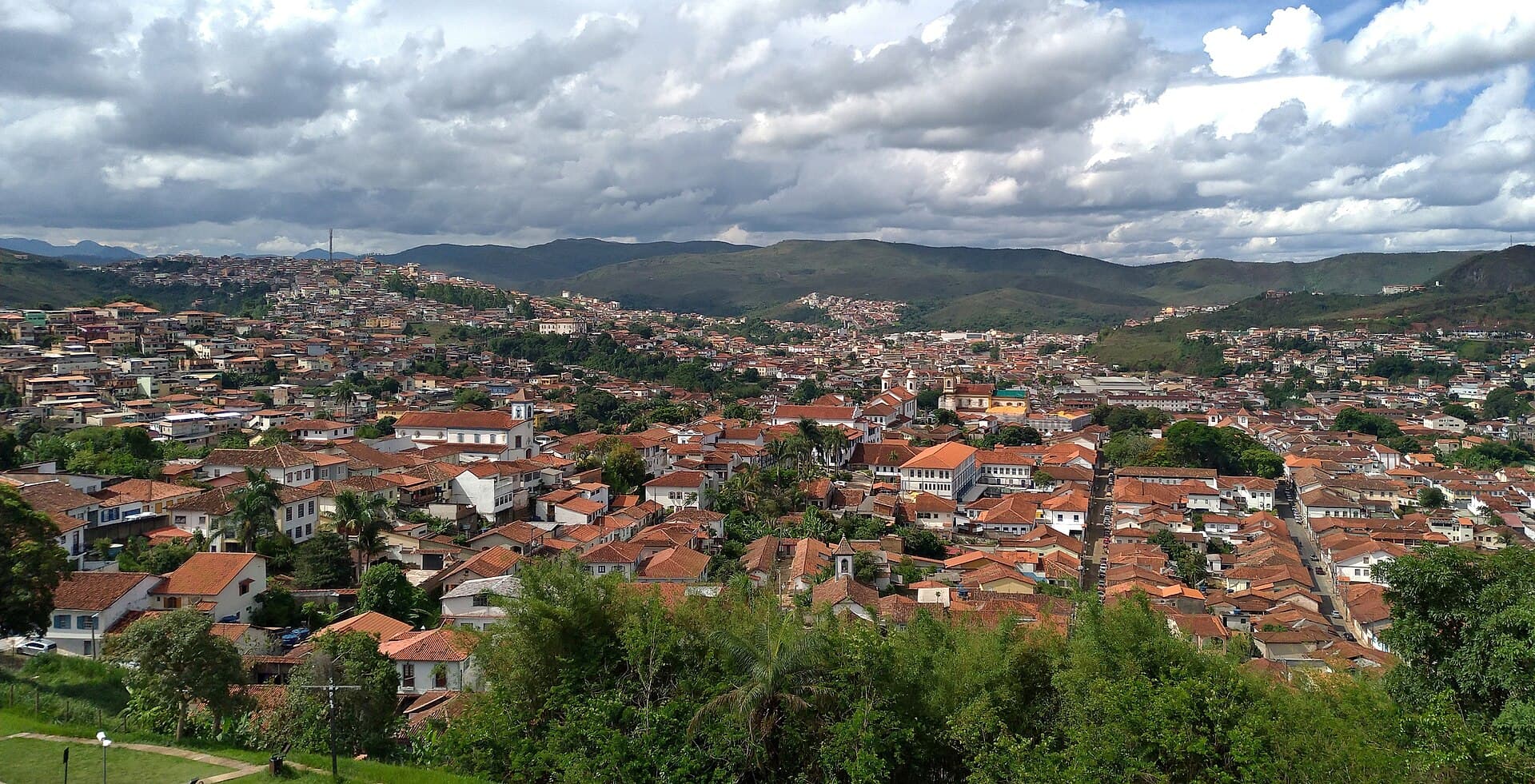
Mariana, set amidst the green hills of Minas Gerais, is a city where Brazil's colonial past feels remarkably present. As the oldest settlement and first capital of Minas Gerais, its stone-paved thoroughfares and Baroque architecture recount a story of gold, faith, and artistry. Established in 1696 as Ribeirão do Carmo by Portuguese explorers seeking gold, Mariana swiftly became a significant center during the Brazilian gold rush, shaping the region's destiny.
Today, Mariana draws visitors with its well-maintained 18th-century Portuguese architecture and a distinct grid layout that distinguishes it from other mining towns in the state. It stands as a testament to Brazil's intricate history, inviting exploration of its cultural heritage and deep ties to the mining industry. The city's dedication to preserving its culture and heritage is apparent, making it a popular destination and a key part of the Caminho dos Diamantes (Diamonds Path) section of the Estrada Real, Brazil's largest tourist route.
## The Lure of Gold and Early Foundations Mariana's origins trace back to the late 17th century, born from the Bandeiras period of Brazil's colonial history. Portuguese expeditions, often financed by colonial aristocracy, ventured into the interior in search of untapped riches like gold and silver. Gold was first discovered in the area in 1696, leading to the establishment of a settlement initially named Ribeirão do Carmo.
## A City of Firsts and Religious Significance Mariana quickly gained prominence, becoming the first village, city, and capital of the state of Minas Gerais. In 1745, King Dom João V of Portugal officially ordained it as a city, renaming it Mariana in honor of his wife, Maria Anna of Austria. Around the same time, it became the seat of the first bishopric in the state, solidifying its role as an important religious center. The city's planned layout, with its rectangular plazas and streets, was a response to the influx of people during the gold rush, making it the first planned city in Minas Gerais.
## Artistic Flourishing and Economic Shifts The 18th century saw Mariana as a major source of gold for the Portuguese Crown. This period also fostered a profound artistic legacy, with renowned artists like Aleijadinho and Manuel da Costa Ataíde contributing to the city's Baroque churches. However, by the late 19th century, Mariana's economic prominence began to wane as the gold mines were exhausted. The relocation of the state capital to Belo Horizonte in 1897 further diminished its status as a major economic center.
## A Modern Legacy and Lingering Challenges While mining, particularly for gold and iron ore, continues to be part of Mariana's economy, tourism has emerged as another important component. The city's well-preserved historical sites attract visitors, and its proximity to Ouro Preto, a UNESCO World Heritage Site, makes it a popular day trip destination. However, Mariana's history is also marked by darker threads, including its role as a hub for the slave trade during the 18th century. More recently, the city was at the center of an unprecedented environmental disaster in 2015, when the Fundão tailings dam collapsed, releasing 60 million cubic meters of mining waste and devastating nearby communities like Bento Rodrigues. This event, considered Brazil's largest environmental disaster, continues to impact the region and its people.
Begin your exploration at Praça Minas Gerais, the city's main square, which is framed by two prominent 18th-century churches: the Igreja de Nossa Senhora do Carmo and the Igreja São Francisco de Assis. The Igreja São Francisco de Assis, completed in 1763, features ceiling paintings by Manuel da Costa Ataíde. Just a short walk north, the Catedral Basílica da Sé stands as the city's largest and most significant church, constructed between 1709 and 1750. It houses a 1701 German organ by Arp Schnitger, a rare instrument outside of Europe, with concerts held on Fridays and Sundays.
For expansive views of Mariana's red-tiled roofs, climb the unfinished towers of Igreja São Pedro dos Clérigos. Immerse yourself in the city's artistic and religious heritage at the Archdiocesan Museum of Sacred Art, located in a 1770 Rococo building. It displays over 2,000 religious artifacts, including sculptures, silverware, and paintings. The Music Museum, housed in the former Bishop's Palace, showcases handwritten compositions by local 18th-century musicians. For a glimpse into the region's mining past, take a short taxi ride to Mina de Ouro de Passagem, Brazil's oldest gold mine, where you can descend 120 meters underground in an old mining cart.
Mariana is a year-round destination, though the best time for general outdoor activities is from mid-April to late September, with a peak in late August, when the weather is clear and perceived temperatures are pleasant. The warm season extends from January to March, coinciding with Brazil's summer and popular holiday periods like Carnival, which can mean more crowds and higher prices. Cooler, drier months are from June to September, which is Brazil's winter, but temperatures in Mariana rarely drop below 20°C. If you prefer to avoid the busiest tourist times, consider visiting in the shoulder seasons of late March through May or September through November.
Mariana is accessible primarily by road, with bus services connecting it to major cities like Belo Horizonte. Local buses also run frequently between Mariana and Ouro Preto, taking about 35 minutes. Once in Mariana, walking is a common and enjoyable way to explore the historic center, with taxis available for longer distances or trips to nearby attractions like Mina de Ouro de Passagem. Accommodation ranges from charming pousadas that reflect the colonial architecture to more standard hotels, catering to various budgets. Many eateries close by 10 PM. The city observes its founding day on July 16th with a Mass at Catedral da Sé and parades.