The Maras Salt Mines
The salt you might sprinkle on your food from Maras has a surprising origin story that predates the Incas.
Full story unlocks in the tour
 Diego Delso / CC BY-SA 4.0, via Wikimedia Commons
“Where ancient ingenuity meets a landscape etched with salt.”
Not the postcards. The stories even locals don't know — whispered in your ear, right where they happened.
The salt you might sprinkle on your food from Maras has a surprising origin story that predates the Incas.
The Incas built these massive circular depressions not for defense or ceremony, but for a purpose that reveals their advanced scientific understanding.
Beyond the famous salt mines, the town itself holds a unique architectural detail that speaks to its colonial importance.
Discover every secret of Maras
Every address, every reveal in full — in your ear, right where it happened.
You pick your stops. You walk. The voice reveals what the others miss.
No tours available yet. Check back soon — we're preparing them.
Maras, a village in the heart of Peru's Sacred Valley, offers a captivating blend of natural wonder and ancient ingenuity. Located approximately 40 to 50 kilometers (24.8 to 31 miles) northwest of Cusco, it rests at an altitude of about 3,300 meters (10,827 feet) above sea level. The area is celebrated for its otherworldly salt mines, known as the Salineras de Maras, and the enigmatic circular terraces of Moray.
This region provides a unique window into Andean traditions, where age-old practices continue to shape daily life against a backdrop of dramatic mountain vistas. Maras is not merely a collection of archaeological sites; it is a living landscape where the past and present intertwine, offering visitors an authentic glimpse into Peruvian heritage. The town itself, with its colonial architecture and quiet atmosphere, offers a contrast to the more bustling tourist hubs of the Sacred Valley.
The history of Maras stretches back to pre-Inca times, with evidence suggesting civilizations in the area as early as 700 BCE. The famous Maras Salt Mines are believed to have been initially constructed by the Wari civilization, flourishing between 500 and 1100 AD. The Incas, recognizing the economic value of the salt, later expanded and refined the intricate system of terraces and channels that still function today. Salt extraction has been continuous in Maras since its inception, a testament to the enduring methods passed down through generations.
During the colonial period, Maras grew in importance as a populated center, serving as a key stop for muleteers transporting goods like coca leaves between the high jungle and Cusco. The town was formally founded around 1556 by Pedro Ortiz de Orué. This era left its mark on the town's architecture, particularly in the colonial doorways carved with coats of arms and religious symbols that adorn old mansions. The salt mines, however, remained under local control even after the Spanish conquest, with ownership and administration passed down through families in the communities of Maras and Pichingoto.
Moray, a few kilometers from Maras, presents a different chapter of Inca history. While the exact timeframe is debated, its origins trace back to the Inca civilization, likely constructed in the 1400s. Archaeologists widely believe Moray functioned as an advanced agricultural laboratory, where the Incas experimented with crop cultivation in various microclimates created by the concentric terraces. This innovative site demonstrates the Incas' profound understanding of agronomy, engineering, and ecology. After the Spanish conquest, Moray was abandoned and gradually reclaimed by nature, only to be rediscovered in 1931. Today, both Maras and Moray stand as powerful reminders of the ingenuity and resilience of ancient Andean cultures.
The primary draw to Maras is undoubtedly the Salineras de Maras, a vast expanse of over 4,500 salt ponds carved into the Qaqawiñay Mountain. These individual, shallow pools, fed by a natural saline spring, create a striking patchwork of white, pink, and earthy brown hues, especially vivid during the dry season. Visitors can observe local families harvesting salt using ancestral methods, a tradition maintained for centuries.
A short distance away lies Moray, an archaeological site featuring a series of enormous terraced circular depressions. These unique formations are thought to have been an Inca agricultural laboratory, where different levels created distinct microclimates for experimenting with crops. The precision of Inca engineering and their advanced agricultural knowledge are evident here.
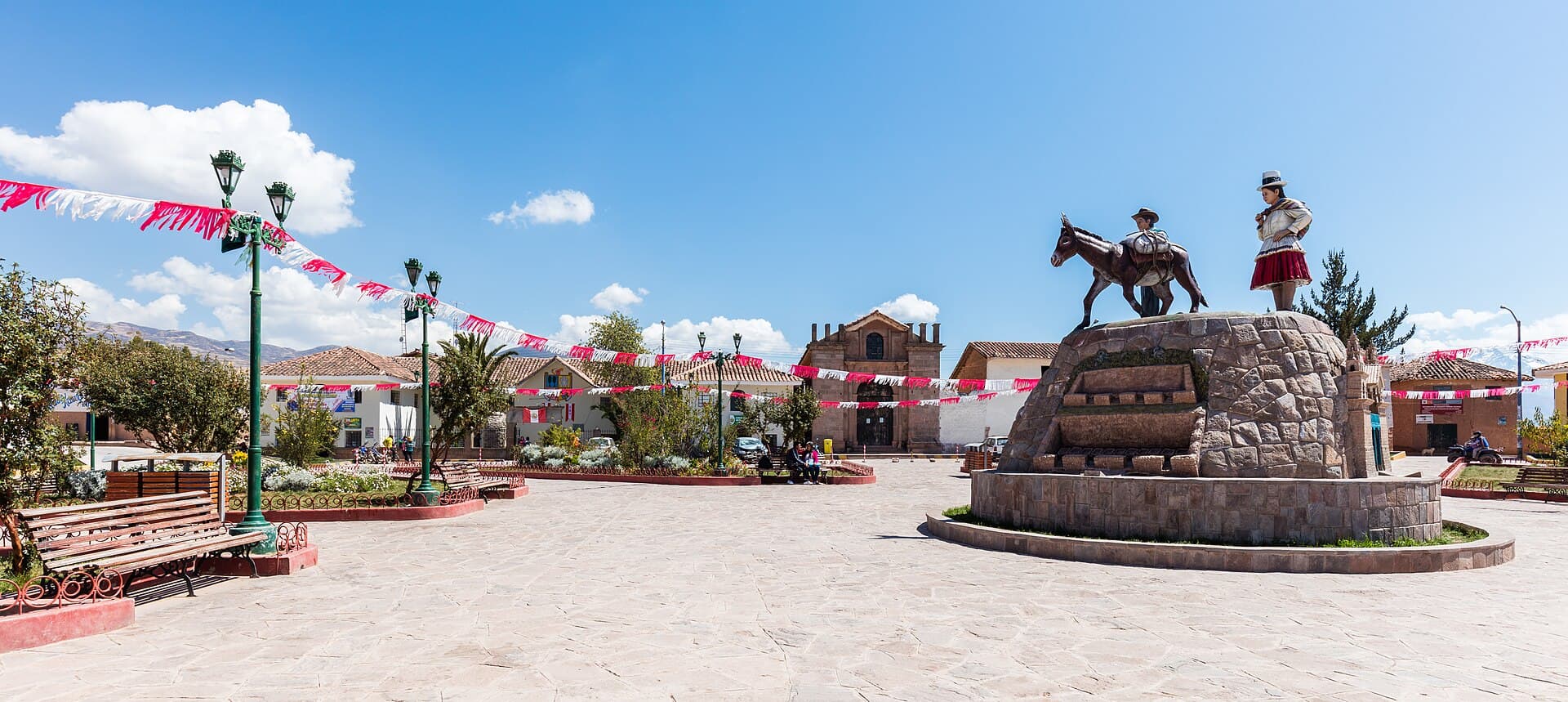
The town of Maras itself offers a quieter experience. Wander through its streets to admire colonial doorways carved in stone, some bearing coats of arms, and observe the traditional adobe houses. The main square and the Church of San Francisco de Asís are also points of interest, providing a glimpse into the town's colonial past and local life.
The best time to experience Maras is during the dry season, which extends from May to October. During these months, the weather is mild and dry, with clear skies, allowing for excellent visibility of the salt pans and surrounding landscapes. The salt pools exhibit their most brilliant white and pink colors as the water evaporates under the intense sun. While the rainy season (November to April) brings lush greenery, it can also lead to muddy access routes and a brownish tint to the salt. For photography, early morning before 10:00 AM offers the best light and fewer crowds at the Salineras.
Maras is situated at an altitude of approximately 3,300 meters (10,827 feet), so it's advisable to acclimatize in Cusco or the Sacred Valley for at least two days before visiting to prevent altitude sickness. The entrance fee for the Maras Salt Mines is separate from the Cusco Tourist Ticket (Boleto Turístico) and costs approximately 20 soles (around $5.50 USD) for foreign visitors, payable in cash only at the entrance. Moray, however, does require the Boleto Turístico.
Many visitors opt for a guided tour from Cusco, which often combines Maras with Moray and sometimes Chinchero, providing transportation and an English-speaking guide. Alternatively, private taxis offer flexibility, or budget travelers can use colectivos (shared minivans) to the Maras turnoff and then a local taxi. Dress in layers, as temperatures can vary, and bring sun protection (sunscreen, hat, sunglasses) due to the strong Andean sun. Comfortable walking shoes are recommended for navigating the terrain.