Playa de La Audiencia
The name of this particular beach holds a secret from the very first European encounters.
Full story unlocks in the tour
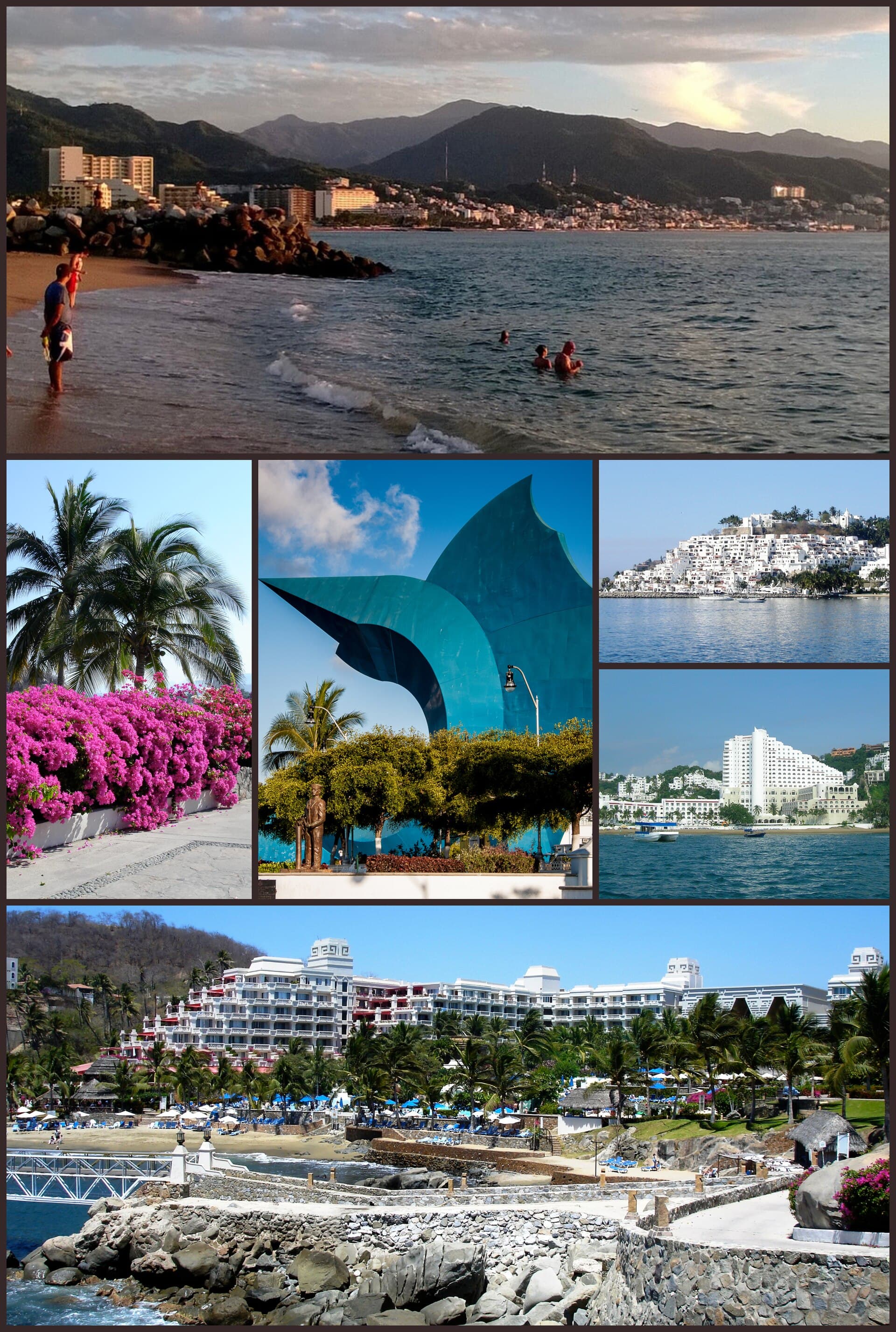 Montaje realizado por User:Wovedro. / CC BY-SA 4.0, via Wikimedia Commons
“Where the Pacific breathes tales of mariners and the ocean's bounty.”
Not the postcards. The stories even locals don't know — whispered in your ear, right where they happened.
The name of this particular beach holds a secret from the very first European encounters.
The city's name comes from a tree, but perhaps not the one you might imagine, and it carries a rather cautionary narrative.
Beneath the tranquil waters of Santiago Bay rests a fragment of Manzanillo's dramatic past, now a thriving underwater realm.
Discover every secret of Manzanillo
Every address, every reveal in full — in your ear, right where it happened.
You pick your stops. You walk. The voice reveals what the others miss.
No tours available yet. Check back soon — we're preparing them.
Manzanillo, along Mexico's Pacific coast, presents a city of compelling contrasts. It is widely recognized as the "Sailfish Capital of the World," a designation earned through its enduring tradition of hosting international fishing tournaments. Beyond the sportfishing, Manzanillo stands as Mexico's busiest port on the Pacific, a crucial nexus for cargo bound for Mexico City and beyond, linking significant shipping routes between Asia and the Americas.
The city unfolds across two crescent-shaped bays—Bahía de Manzanillo and Bahía de Santiago—each providing distinct experiences. While the port buzzes with industrial activity, the city also embraces its role as a resort destination with golden-sand beaches and warm ocean waters. Manzanillo offers a fusion of authentic Mexican life and coastal relaxation, making it a multifaceted destination for travelers.
The area surrounding Manzanillo possesses a history extending back to ancient cultures like the Olmecs, with early inhabitants forming sedentary tribes engaged in agriculture. The Nahuatl Indians, whose language is still spoken today, called it Cozcatlan in the 1400s, meaning "Place of Pearls." Other indigenous names included Tlacotla and Caxitlan.
European contact began in 1522 when Spanish captain Gonzalo de Sandoval, under orders from Hernán Cortés, anchored in the Bay of Salagua, searching for secure harbors and shipbuilding locations. Cortés himself visited the bay twice to safeguard his galleons from Portuguese privateers. Manzanillo Bay was later charted in 1527 by navigator Alvaro de Saavedra, who named it Santiago de la Buena Esperanza, or "St. James of Good Hope." The city became the third port established by the Spanish in the Viceroyalty of New Spain and a departure point for important expeditions, including a significant part of the fleet that conquered the Philippines.
For over 300 years, the Pacific Coast endured assaults, looting, and the burning of ships by privateers from Portugal, England, France, and Spain. The modern name, Manzanillo, was officially adopted when the port opened in 1825, due to the abundant manzanilla trees utilized for shipbuilding. Manzanillo was elevated to city status on June 15, 1873. The completion of the railroad to Colima in 1889 further stimulated its development. In 1908, President Porfirio Díaz designated Manzanillo as an official port of entry to Mexico. The city even served as the state capital of Colima briefly in 1915 when Pancho Villa's troops threatened the city of Colima.
In recent times, the harbor has undergone modernization and deepening, allowing access for major shipping lines globally. Manzanillo became the headquarters of the Mexican Naval Force in the Pacific in 1945. The city endured a devastating hurricane in 1959, leading to extensive reconstruction. The construction of the Las Hadas hotel complex in 1974 marked a turning point, transforming Manzanillo into an elite tourist resort. Its global recognition was solidified in 1979 when the Hollywood film "10," starring Bo Derek, was filmed there. Today, the Port of Manzanillo continues its leadership as Mexico's busiest container port.
Manzanillo presents a variety of attractions that blend its port identity with its appeal as a resort destination. Begin at the Malecón de Manzanillo, the city's boardwalk, where you can stroll along the waterfront and admire the iconic Monumento al Pez Vela (Sailfish Monument), a testament to its fishing legacy. The zócalo, or main plaza, in the historic downtown, offers a lively atmosphere with flowering trees and a fountain, where locals gather.
For beach enthusiasts, Manzanillo's twin bays provide diverse options. Playa La Audiencia is recognized for its golden sand and clear waters, ideal for swimming. Playa Miramar is one of the more expansive beaches, suitable for water sports. For snorkeling and diving, explore the waters around Playa La Boquita, where the San Luciano shipwreck creates an artificial reef teeming with marine life. Surfers can discover challenging waves at Playa Cuyutlán. Beyond the beaches, consider a visit to Laguna de Las Garzas for birdwatching and observing crocodiles, or the El Tortugario Ecologico (Turtle Sanctuary) to learn about sea turtle conservation. For an expansive view of Santiago Bay and the surrounding beaches, ascend to the Mirador del Cerro de La Cruz Lookout Point or explore the paths around the abandoned La Cumbre condominiums.
The most favorable time to visit Manzanillo is during the dry season, from November to April. During these months, average monthly rainfall is typically one inch or less, and the possibility of hurricanes is low. Temperatures remain warm to hot throughout the year, with average highs around 85°F (29°C) in the cooler months (January-April) and reaching about 90°F (32°C) in July and August. While the rainy season spans from June to October, it often brings brief afternoon showers rather than continuous downpours, transforming the landscape into a verdant expanse.
Manzanillo is served by Playa de Oro International Airport (ZLO), which handles both domestic and international flights. The airport is situated approximately 40-45 kilometers northwest of the city center, a drive of about 45 minutes. Taxis and hotel transfers offer the most convenient ways to reach the city from the airport.
The official currency is the Mexican Peso (MXN). While credit and debit cards are widely accepted, especially in urban areas, it is advisable to carry some cash for smaller purchases, markets, or rural locations. ATMs are readily available. It is generally recommended to use Mexican Pesos, as the Mexican government has restrictions on using or exchanging US or Canadian currency directly in most establishments.
Spanish is the official language. While many in the tourism sector communicate in English, learning a few basic Spanish phrases can enrich your experience. Electrical outlets are consistent with those in Canada and the US, but voltage and frequency may differ, so a power converter might be necessary for certain devices.