Manta's Central Market
Beyond the active fish stalls, a local secret unfolds in the market's less-traveled aisles.
Full story unlocks in the tour
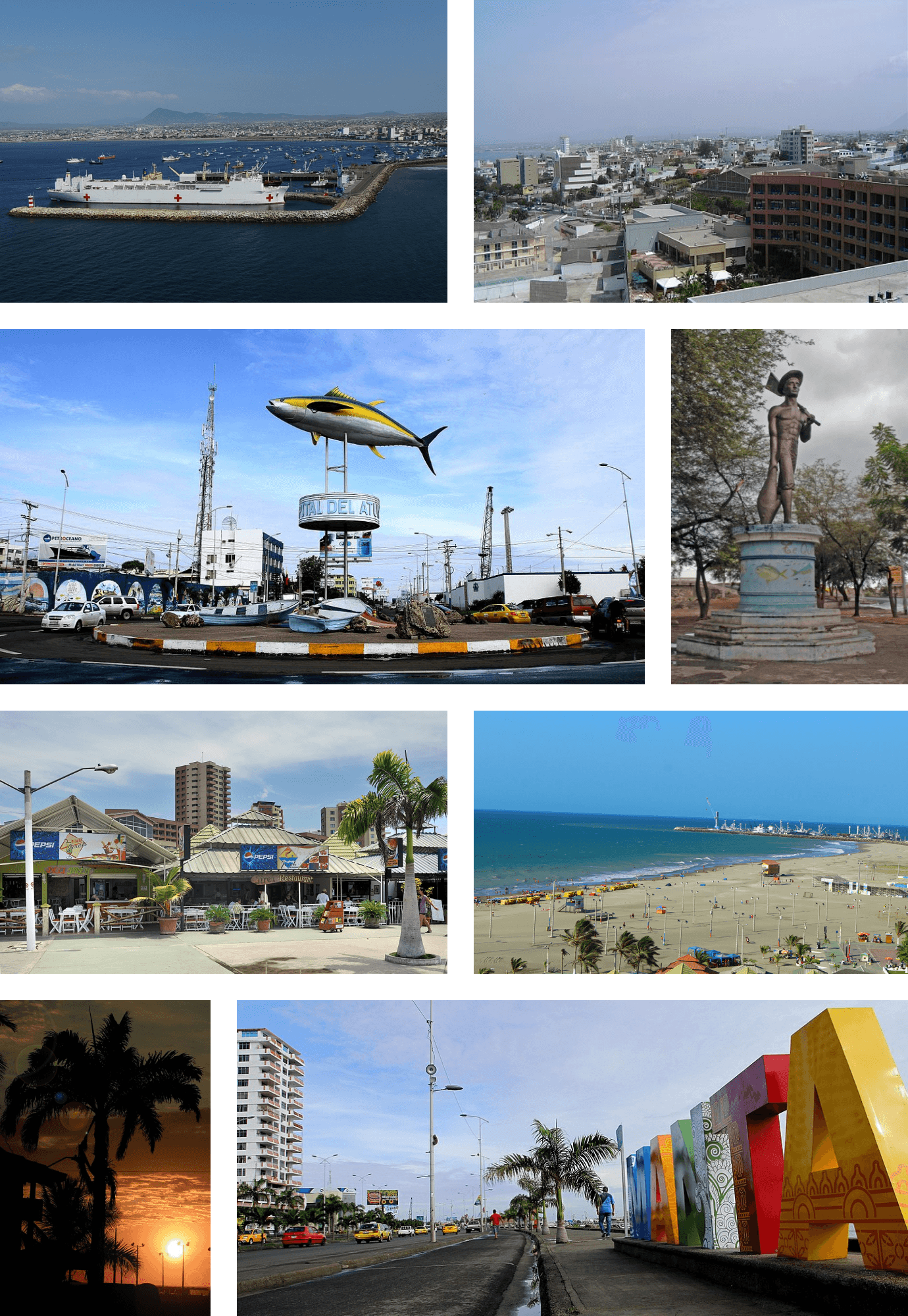 David C. S. / CC BY-SA 4.0, via Wikimedia Commons
“Where the Pacific murmurs ancient stories and modern life sways to a maritime cadence.”
Not the postcards. The stories even locals don't know — whispered in your ear, right where they happened.
Beyond the active fish stalls, a local secret unfolds in the market's less-traveled aisles.
This airport, bearing the name of a former president, holds an unexpected past connected to international affairs.
Just a brief journey from Manta, this town is the true origin of a hat famously misidentified.
Discover every secret of Manta
Every address, every reveal in full — in your ear, right where it happened.
You pick your stops. You walk. The voice reveals what the others miss.
No tours available yet. Check back soon — we're preparing them.
Manta, officially known as San Pablo de Manta, stands as a significant port city on Ecuador's central Pacific coast, the largest and most populated urban area in the Manabí Province. It is a place where the rhythms of a major fishing industry—recognized as the 'World Capital of Tuna Fishing'—blend with a growing tourism sector. The city presents a fusion of urban convenience and natural allure, making it an inviting destination for those seeking both repose and activity.
With a history reaching back to pre-Columbian times, when it served as a trading post for the Manteño people, Manta has evolved into an economic center. It is acknowledged as the third most economically important city in Ecuador, following Quito and Guayaquil. Its strategic position has long made it a gateway, a role it continues to fulfill with its active seaport and international airport. Beyond its industrial facade, Manta reveals a lively culture, delightful seafood, and access to inviting beaches and natural wonders.
Manta's narrative commences long before the arrival of Europeans, with evidence of human presence dating back to 3000 BCE. Originally named Jocay, meaning 'Golden Doors,' it matured into a prominent trading post for the Manta, or Manteño, civilization by 1200 CE. The Manteño people were adept navigators and traders, establishing routes that stretched along the coast from what is now Mexico to Chile, exchanging items like exquisite ceramics, precious metalwork, and Spondylus shells, which held profound cultural significance.
The Spanish conquistador Francisco Pacheco is credited with the city's official founding on March 2, 1534, when he renamed it San Pablo de Manta. During the colonial era, Manta became an important Spanish port, facilitating trade in agricultural products such as cocoa and coffee. However, this strategic position also rendered it vulnerable, and the city suffered devastation from pirates and European invaders multiple times between 1543 and 1628, prompting many inhabitants to seek refuge inland.
A notable historical event unfolded in 1735 when Charles Marie de La Condamine arrived at Manta's port, leading the French Geodesic Mission to precisely measure the equator's location. In the 20th century, Manta experienced a significant 'tuna boom,' which transformed its economy and brought it global recognition for its fishing and tuna canning industries. Today, Manta upholds its maritime legacy, with its port serving as Ecuador's largest and a crucial hub for international trade and cruise ship calls.
Manta offers a varied array of attractions, from its animated urban core to tranquil natural escapes. A walk along the Malecón Escénico is highly recommended, a scenic boardwalk connecting different parts of the city, lined with eateries, cafés, and local vendors. Playa El Murciélago, Manta's most frequented urban beach, provides ready access to activities and dining. For a quieter interlude, Santa Marianita Beach, merely 20 minutes from downtown, is known for its expansive shoreline and consistent breezes, making it an excellent location for kitesurfing.
To delve into local culture, explore the Mercado Central for fresh produce, seafood, and a glimpse into daily life. The Museo del Banco Central houses ceramics and artifacts from the pre-Columbian Manta civilization and other ancient cultures of Manabí. A brief day trip to Montecristi, the origin of the renowned Panama hat, allows you to observe artisans weaving these intricate hats and browse artisan shops. Those who appreciate nature can explore the Pacoche Wildlife Refuge, a misty forest inhabited by howler monkeys and tropical birds, just minutes from the port. For expansive views, consider a walk to the San Lorenzo Lighthouse, particularly at sunset.
Manta enjoys warm weather throughout the year, with average daily temperatures consistently hovering around 27-29°C (81-84°F). The city experiences two primary seasons: a wet season from December to May and a drier, windier season from June to December. For warm-weather pursuits and beach holidays, the ideal time to visit is typically from late June to mid-October, with a peak in August, when skies are clearer and rainfall is minimal. The wet season, while warmer and more humid, brings verdant landscapes and occasional refreshing showers.
The official currency in Manta, and across Ecuador, is the United States dollar (USD). ATMs are widely available, though it is prudent to carry some cash for smaller purchases. Spanish is the official language. Manta is generally considered secure in tourist areas, especially along beaches and main attractions. However, like any urban center, it is advisable to exercise basic caution, such as avoiding open displays of expensive items and remaining aware of your surroundings, particularly after dark. For transportation, official port-sanctioned yellow taxis or pre-arranged private tours are suggested. Eloy Alfaro International Airport (MEC) serves Manta with domestic flights to Quito and an international route to Panama City.