Gata Loops
Along the challenging Gata Loops, a sequence of 21 hairpin bends on the Manali-Leh highway, travelers frequently leave offerings for an unexpected resident.
Full story unlocks in the tour
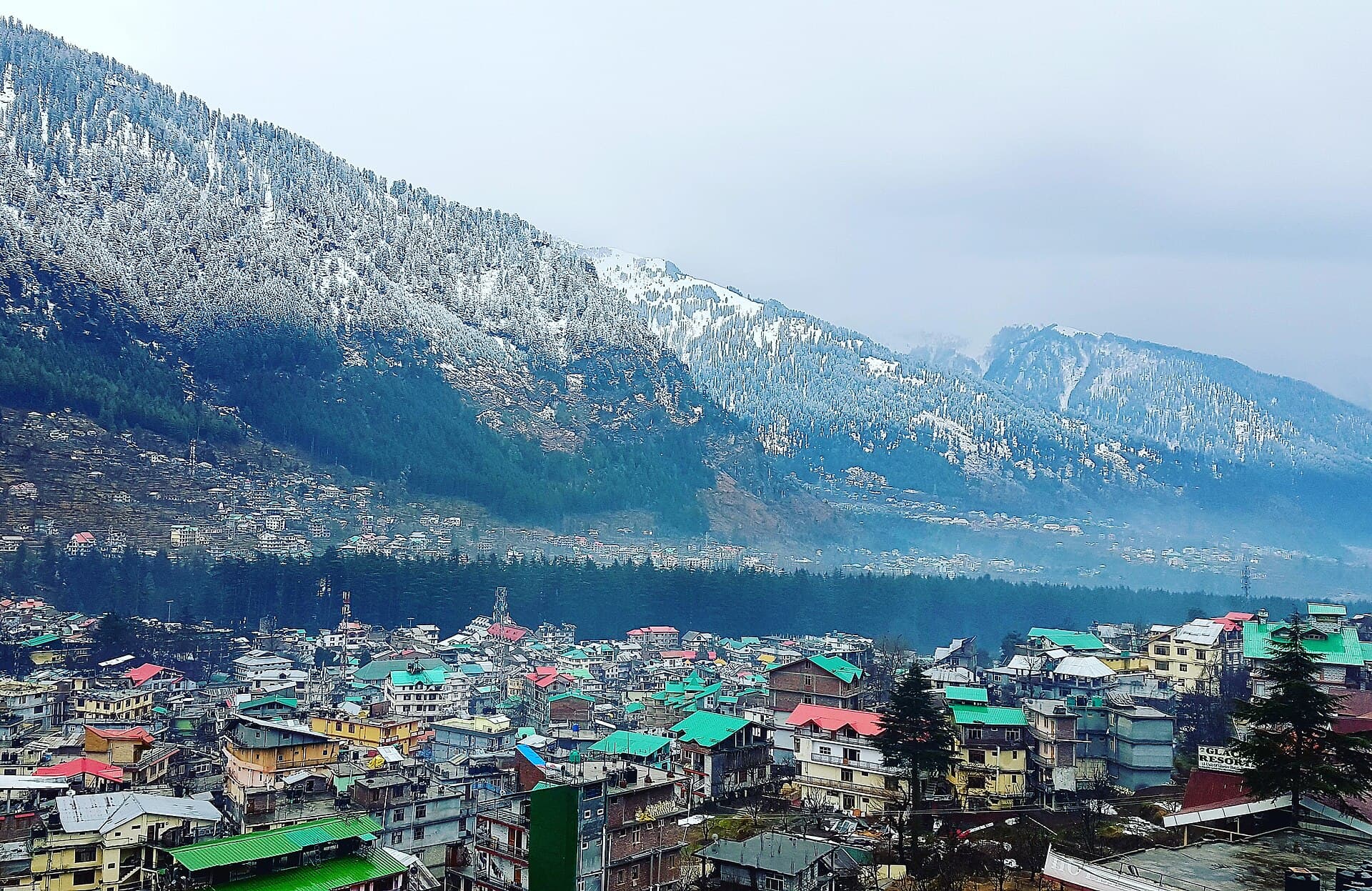 Neerajsinghazm / CC BY-SA 4.0, via Wikimedia Commons
“Where ancient legends converge with Himalayan adventures.”
Not the postcards. The stories even locals don't know — whispered in your ear, right where they happened.
Along the challenging Gata Loops, a sequence of 21 hairpin bends on the Manali-Leh highway, travelers frequently leave offerings for an unexpected resident.
In the tranquil village of Rumsu, near Manali, a unique democratic system is said to be among the world's oldest.
The intensely hot springs of Manikaran Sahib are employed for an unusual culinary purpose.
Discover every secret of Manali
Every address, every reveal in full — in your ear, right where it happened.
You pick your stops. You walk. The voice reveals what the others miss.
No tours available yet. Check back soon — we're preparing them.
Manali, situated in the northern reaches of the Kullu Valley in Himachal Pradesh, is a town where the Beas River carves its path through a landscape of dramatic peaks and verdant forests. At an elevation of approximately 2,050 meters (6,726 feet), it acts as a portal to the more remote expanses of Lahaul and Spiti, and onward to Leh in Ladakh. Often referred to as the 'Valley of the Gods,' Manali's appeal lies in its fusion of mythological heritage, natural grandeur, and an inviting atmosphere that draws both adventurers and those seeking quietude.
The town’s character is multifaceted, offering everything from peaceful strolls through deodar and pine forests to exhilarating activities. Its distinctive cultural fabric is woven with threads of ancient customs, evident in its architecture, festivals, and the genuine hospitality of the Kulluvi people. Whether you are drawn by the call of the mountains, the echoes of ancient legends, or the promise of a peaceful escape, Manali provides a captivating experience that resonates long after your departure.
The name Manali itself is full of ancient Hindu mythology, derived from "Manu-Alaya," signifying 'the dwelling of Manu.' According to lore, after a great deluge covered the earth, Sage Manu, the forefather of humanity, disembarked from his ark in this very region to re-establish human life. This profound origin story has led to Manali and the surrounding Kullu Valley being revered as the 'Valley of the Gods,' a place where deities and sages are believed to have made their homes.
During medieval times, the Manali region formed an integral part of the broader Kullu principality. This period witnessed the construction of significant religious sites, such as the 16th-century Hadimba Devi Temple, a distinctive wooden pagoda-style structure dedicated to the goddess Hadimba from the Mahabharata. The Kullu dynasty, tracing its lineage to the 1st century AD, played a pivotal role in shaping the valley's culture and economy, establishing trade routes that connected the region with Ladakh, Tibet, and other parts of the Indian subcontinent.
The 19th and early 20th centuries saw the arrival of British colonial visitors, who began to transform Manali into a mountain retreat. They introduced new infrastructure and cultivated apple orchards, a practice that remains a significant part of the local economy. After India gained independence, Manali's expansion as a tourist destination accelerated, aided by improved road networks and enhanced leisure facilities. Today, Manali stands as a testament to its profound past, blending ancient mythological traditions with the demands of contemporary tourism, while steadfastly preserving its unique cultural identity.
Manali presents a blend of spiritual sites, natural splendor, and adventure centers. The Hadimba Devi Temple, a 16th-century wooden temple with pagoda-style architecture situated amidst cedar forests, is a prominent spiritual landmark. Nearby, the Manu Temple in Old Manali is dedicated to Sage Manu, believed to be the progenitor of humankind. For therapeutic relaxation, the Vashisht Hot Sulphur Springs are a popular draw, accompanied by temples dedicated to Lord Rama and Vashishta Muni.
Adventure seekers head to Solang Valley, a center for activities like paragliding, zorbing, and skiing, offering expansive views of glaciers and snow-capped peaks. The Beas River provides opportunities for white-water rafting and tranquil riverside picnics. For sweeping vistas and a passage to the Lahaul and Spiti valleys, Rohtang Pass (open seasonally) is a key destination, offering a high-altitude wonderland experience. The Manali Sanctuary is home to diverse wildlife, including musk deer, black bears, and various bird species.
The ideal time to visit Manali depends on your desired experience. For comfortable weather and outdoor activities like trekking and paragliding, the summer months from March to June are perfect, with temperatures ranging from 10°C to 25°C. If you envision snow-covered landscapes and winter sports, plan your visit between October and February, when temperatures can drop below freezing, and heavy snowfall is common from December to February. The monsoon season, from July to September, brings verdant greenery but also substantial rainfall and potential landslides, making it less suitable for extensive outdoor exploration.
Manali is accessible by road, with the nearest airport in Bhuntar, approximately 50 km away. Many travelers choose overnight buses or self-drive from Delhi (12-14 hours) or Chandigarh (300 km). Within Manali, local cabs or rented scooters/bikes are recommended for exploring, especially for reaching less-traveled spots. It is prudent to carry cash, as some smaller villages may not accept digital payments. Booking accommodations, particularly during peak seasons like summer (May-June) and winter snowfall (December-January), is advisable due to high demand. Pack layers, as evenings can be cool year-round, and warm clothing is essential for winter visits. Respect local customs and avoid littering to preserve the natural beauty of the region.