Malmö Castle
This formidable red-brick fortress, Scandinavia's oldest preserved Renaissance castle, once held both royalty and captives. Yet, a lesser-known chapter involved a clandestine WWII rescue.
Full story unlocks in the tour
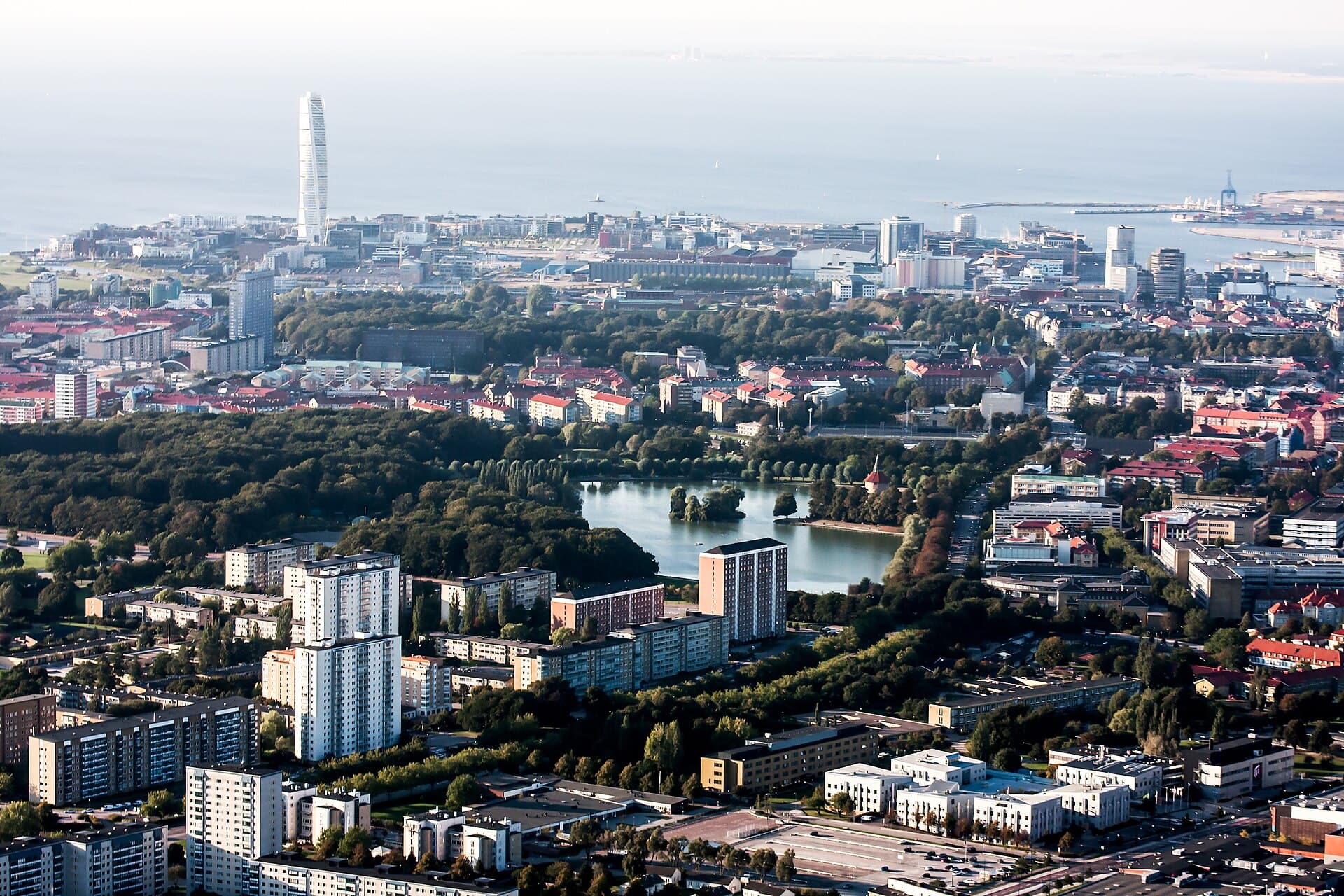 This image was produced by me, David Castor (user:dcastor). The pictures I submit to the Wikipedia Project are released to the public domain. This gives you the right to use them in any way you like, without any kind of notification. This said, I would still appreciate to be mentioned as the originator whenever you think it complies well with your use of the picture. A message to me about how it has been used would also be welcome. You are obviously not required to respond to these wishes of mine, just in a friendly manner encouraged to. (All my photos are placed in Category:Images by David Castor or a subcategory thereof.) / CC0, via Wikimedia Commons
“Where historic foundations meet forward-thinking design across the Öresund.”
Not the postcards. The stories even locals don't know — whispered in your ear, right where they happened.
This formidable red-brick fortress, Scandinavia's oldest preserved Renaissance castle, once held both royalty and captives. Yet, a lesser-known chapter involved a clandestine WWII rescue.
The grand, historic facade of Malmö City Library hints at its past, but its transformation involved an unexpected architectural union.
Malmö's distinctive twisting skyscraper dominates the horizon, yet its singular design drew inspiration from something far more organic.
Discover every secret of Malmö
Every address, every reveal in full — in your ear, right where it happened.
You pick your stops. You walk. The voice reveals what the others miss.
No tours available yet. Check back soon — we're preparing them.
Malmö, Sweden's third-largest city, presents a compelling fusion of historical depth and contemporary flair. Situated on the Öresund Strait, it serves as a lively gateway to Scandinavia, connected to Copenhagen by the impressive Öresund Bridge. The city, with its compact and easily traversable center, invites exploration, unfolding a rich array of grand squares and modern architectural marvels.
Recognized for its green spaces, Malmö is often referred to as the 'City of Parks,' providing numerous tranquil oases amidst urban life. Its diverse population, with residents from over 170 countries, contributes to a rich cultural landscape, reflected in its varied culinary offerings and lively atmosphere. From historic castles to cutting-edge design, Malmö offers a dynamic experience for any traveler.
## From Danish Stronghold to Swedish Industrial Powerhouse Malmö's origins trace back to the late 13th century, first mentioned as a city in 1275. Originally named Malmhaug, meaning 'Sandpile,' it began as a Danish settlement that grew around a fortified manor built by the Archbishop of Lund to control the coast. For centuries, Malmö flourished as Denmark's second-largest city, particularly during its 'Golden Age' between the 14th and 16th centuries, owing to a thriving herring trade and its role within the Hanseatic League.
Key architectural landmarks from this era include St. Peter's Church (Sankt Petri Kyrka), constructed around 1300, which remains the city's oldest surviving major structure. In 1434, Eric of Pomerania built the first fortification of Malmö Castle, and the city received its coat of arms, featuring a griffin, a symbol still in use today. For nearly a century, from 1444 to 1536, Malmö was also where all of Denmark's money was minted, underscoring its political and economic importance.
In 1658, following the Treaty of Roskilde, Malmö and the surrounding Scania region came under Swedish control. This transition, however, led to a period of economic decline and unrest, exacerbated by wars between Sweden and Denmark and inadequate harbor facilities. By the early 18th century, the city's population had significantly diminished.
Malmö's fortunes began to revive with the construction of a modern harbor in 1775. The mid-19th century marked the beginning of its transformation into a major industrial and transportation center, particularly after the arrival of the railroad in 1856. The city gained renown for shipbuilding, with the Kockums shipyard growing into one of the largest in the world. By 1900, Malmö had solidified its position as Sweden's third-most populous city.
The late 20th and early 21st centuries saw Malmö undergo another significant metamorphosis. The closure of the Kockums shipyard in the 1980s prompted a shift from heavy industry to a knowledge-based economy. The establishment of Malmö University in 1998 and the opening of the Öresund Bridge in 2000, linking Malmö with Copenhagen, were pivotal in this transformation. Today, Malmö is defined by a combination of historic buildings and modern architecture, a testament to its continuous evolution.
Begin your exploration in Gamla Staden, Malmö's Old Town, where narrow streets lead to historic squares. Stortorget, the largest and oldest square, is framed by 16th-century architecture, including the impressive City Hall and an equestrian statue of King Karl X Gustav. A short stroll away, Lilla Torg offers a more intimate setting with its appealing half-timbered houses, restaurants, and cafes.
Visit Malmö Castle (Malmöhus Slott), Scandinavia's oldest preserved Renaissance castle, which now houses several museums, including the Malmö Art Museum, the Natural History Museum, and an aquarium. Adjacent to the castle are the expansive Kungsparken and Slottsparken, offering tranquil walking paths, exotic trees, and the picturesque Slottsträdgården (Castle Garden) with its themed sections and a cafe.
For a glimpse of contemporary Malmö, journey to Västra Hamnen (Western Harbour), a revitalized waterfront district. Here, you will find the iconic Turning Torso, a neo-futuristic skyscraper that twists 190 meters into the sky. Enjoy the boardwalks and views of the Öresund Bridge, which connects Malmö to Copenhagen. Do not miss Ribersborg Beach, known as 'Ribban,' a popular city beach with a 2.5-kilometer stretch of sand and the historic Ribersborg Kallbadhus, an open-air bathhouse.
The ideal time to visit Malmö is during the summer months, from June to August, when the weather is warm and pleasant, with average temperatures ranging from 18°C to 21°C. Daylight hours are extended, creating an inviting atmosphere perfect for outdoor activities and enjoying the city's parks and beaches. Late spring (May) and early autumn (September) also offer excellent conditions, with milder temperatures, fewer crowds, and often better deals on accommodation. While winters are colder and quieter, they can provide a cozy, authentic local experience.
Malmö is readily accessible by air, with Malmö Airport (MMX) situated approximately 28 kilometers east of the city. It is served by airlines like SAS, Wizz Air, and Ryanair, with direct flights to various destinations. Alternatively, Copenhagen Airport (CPH) is a major international hub just a 35-minute train ride across the Öresund Bridge.
Navigating Malmö is straightforward. The city center is compact and highly walkable, and Malmö is recognized as one of the world's most bike-friendly cities, featuring over 515 kilometers of cycle paths. Bicycle rentals and a city bike-sharing system are available. Public transportation, managed by Skånetrafiken, consists of an efficient network of green city buses and yellow regional buses, as well as Pågatåg and Öresundståg trains for longer distances and connections to Copenhagen. Cash is not accepted on buses; tickets can be purchased via the Skånetrafiken app or at ticket machines.
The local currency is the Swedish Krona (SEK). Swedish is the primary language, but English is widely spoken.