Vasco da Gama Pillar
This stone pillar, a sentinel on the coast, conceals a detail about early global exploration that extends beyond its Portuguese origins.
Full story unlocks in the tour
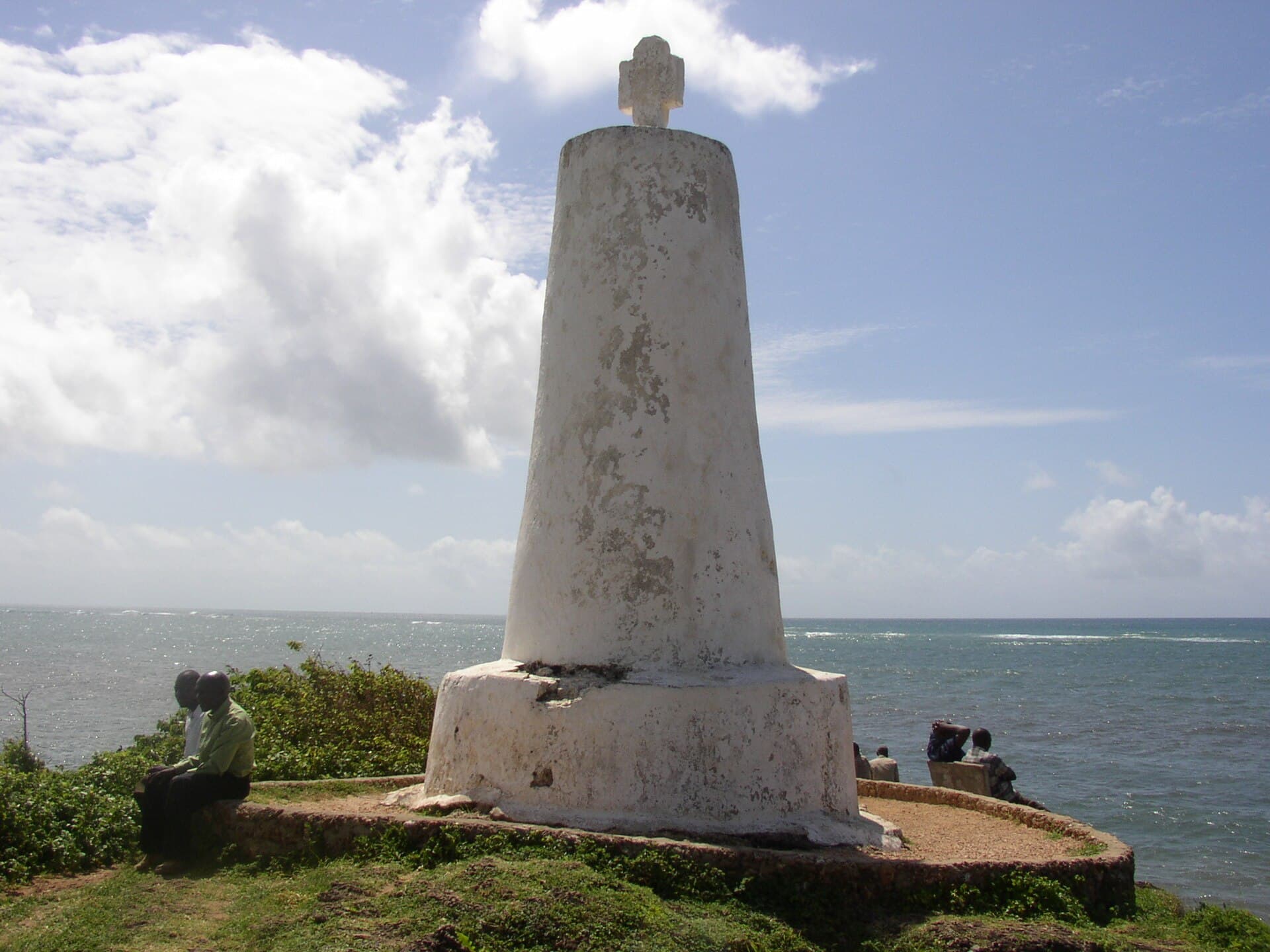 Mgiganteus / CC BY-SA 3.0, via Wikimedia Commons
“Where ancient currents meet sun-drenched shores.”
Not the postcards. The stories even locals don't know — whispered in your ear, right where they happened.
This stone pillar, a sentinel on the coast, conceals a detail about early global exploration that extends beyond its Portuguese origins.
The sophisticated infrastructure of this abandoned Swahili city hints at a level of urban planning rarely associated with early African settlements.
Beyond its East African charm, Malindi carries a surprising European moniker and a distinct cultural flavor.
Discover every secret of Malindi
Every address, every reveal in full — in your ear, right where it happened.
You pick your stops. You walk. The voice reveals what the others miss.
No tours available yet. Check back soon — we're preparing them.
Malindi, a coastal town in Kenya, presents a compelling fusion of historical depth and radiant natural splendor. Positioned on Malindi Bay at the mouth of the Galana River, it lies approximately 120 kilometers northeast of Mombasa. The town is celebrated for its expansive white-sand beaches, clear azure waters, and significant historical landmarks, inviting both repose and cultural exploration.
With a population of around 120,000 residents, Malindi maintains a community-focused ambiance while serving as a vital coastal center. Its unique location has historically rendered it a crucial port and a nexus of diverse cultures, evident in its Swahili, Arab, and European influences. From wandering through ancient ruins to diving amidst marine ecosystems, Malindi offers a distinctive East African experience.
## Early Origins and Trade Malindi stands as one of the oldest settlements along the East African coast, its story deeply interwoven with the evolution of the Swahili civilization. Archaeological evidence suggests human presence in the area even before the town's presumed founding between the 13th and 14th centuries. Initially a small community, it expanded swiftly with the migration of Bantu peoples and the arrival of traders from the Arabian Gulf. Chinese records from the early 15th century contain the first written references to Malindi, linked to the expeditions of Admiral Zheng He. The town's ruler even dispatched a personal envoy with a giraffe as a gift to China aboard Zheng He's fleet in 1414.
## Portuguese Arrival and Influence In 1498, the Portuguese explorer Vasco da Gama arrived in Malindi, where the Sultan extended a warm welcome. This encounter led to a trade agreement and the engagement of a pilot to guide da Gama's fleet towards India. As a gesture of gratitude, Vasco da Gama erected a padrão, recognized today as the Vasco da Gama Pillar, one of Africa's earliest remaining European monuments. Malindi became a significant Portuguese ally and trading post, thriving as rival cities like Kilwa and Mombasa waned. The Portuguese established a factory in Malindi in 1502, maintaining it as their primary East African base until 1593, when they relocated to Mombasa.
## Decline, Revival, and Modern Era The transfer of the Portuguese base to Mombasa initiated a prolonged economic downturn and a partial desertion of Malindi. However, the mid-19th century witnessed a resurgence when Majid bin Said, the Sultan of Zanzibar, invested in extensive agricultural plantations, drawing new inhabitants and restoring the port's economic importance. In 1890, Malindi came under British administration, and the abolition of the slave trade led to a decline in agricultural production. Malindi was officially designated a town in 1903.
A significant contemporary development was the establishment of the Malindi Marine National Park in 1968, the first of its kind in Africa. This marked a pivot towards eco-tourism and marine conservation. The town has also cultivated a distinctive cultural connection with Italy, earning it the moniker 'Little Italy' due to a substantial Italian community that began settling there in the 1960s, influenced by the offshore San Marco Space Centre.
Malindi presents a varied array of attractions, harmonizing historical sites with natural wonders. The Vasco da Gama Pillar, established in 1498, stands as one of Africa's earliest European monuments and attests to the town's initial encounters with European explorers. Nearby, the Portuguese Chapel of St. Francis Xavier, constructed in 1542, is considered East Africa's oldest Christian church.
Just 20 kilometers distant, the Gedi Ruins are a UNESCO World Heritage site and one of the most thoroughly examined medieval Swahili coastal settlements. These ruins, situated within the Arabuko-Sokoke Forest, encompass stone mosques, a palace, and dwellings, offering a glimpse into a once-flourishing urban center. The surrounding Arabuko-Sokoke Forest is East Africa's largest remaining coastal forest and a globally endangered habitat, recognized for its high endemism, including the golden-rumped elephant shrew and Clarke's weaver.
For those drawn to the ocean, the Malindi Marine National Park is Kenya's inaugural marine protected area, established in 1968. It is celebrated for its lively coral reefs, diverse fish species, and marine life such as green and hawksbill turtles, dolphins, and even migrating humpback whales. Visitors can enjoy snorkeling, scuba diving, or glass-bottom boat tours to explore the underwater ecosystems. Additionally, Golden Beach is known for its shimmering sands, providing a tranquil alternative for repose.
Malindi experiences a consistently warm tropical climate throughout the year, with temperatures generally ranging from 20°C to 30°C. The most favorable time to visit for beach activities and water sports is during the dry seasons: from June to September and again from December to March. During these periods, rainfall is minimal, and the ocean is calm with excellent visibility for snorkeling and diving. The months of November to February are particularly opportune for whale shark sightings in the nearby Watamu waters. The long rainy season occurs from April to July, and short rains from October to November, which can lead to choppier seas and limited water activities, though the landscape becomes lush and less crowded.
Malindi Airport is situated 2.5 kilometers from the town center, offering daily scheduled flights connecting to Mombasa, Nairobi, and Lamu. Taxis are readily available from the airport to various accommodations. A well-maintained tar road links Malindi to Mombasa, approximately 120 kilometers away.
Within Malindi, local transportation options include tuk-tuks and matatus (minibuses) for navigating the town. Accommodation choices span from luxurious resorts along the palm-lined beaches to more modest options within the town. The most frequented tourist areas are typically south of the town center, extending towards the Marine National Park and Casuarina, providing direct beach access and a more serene ambiance. It is advisable to reserve accommodations in advance, particularly during the peak dry seasons. Kenya requires a visa, which can be obtained online. Vaccinations against malaria, hepatitis, tetanus, and yellow fever are recommended, especially during the rainy season.