Málaga Cathedral
The city's grand cathedral bears an unusual nickname, hinting at a surprising architectural quirk.
Full story unlocks in the tour
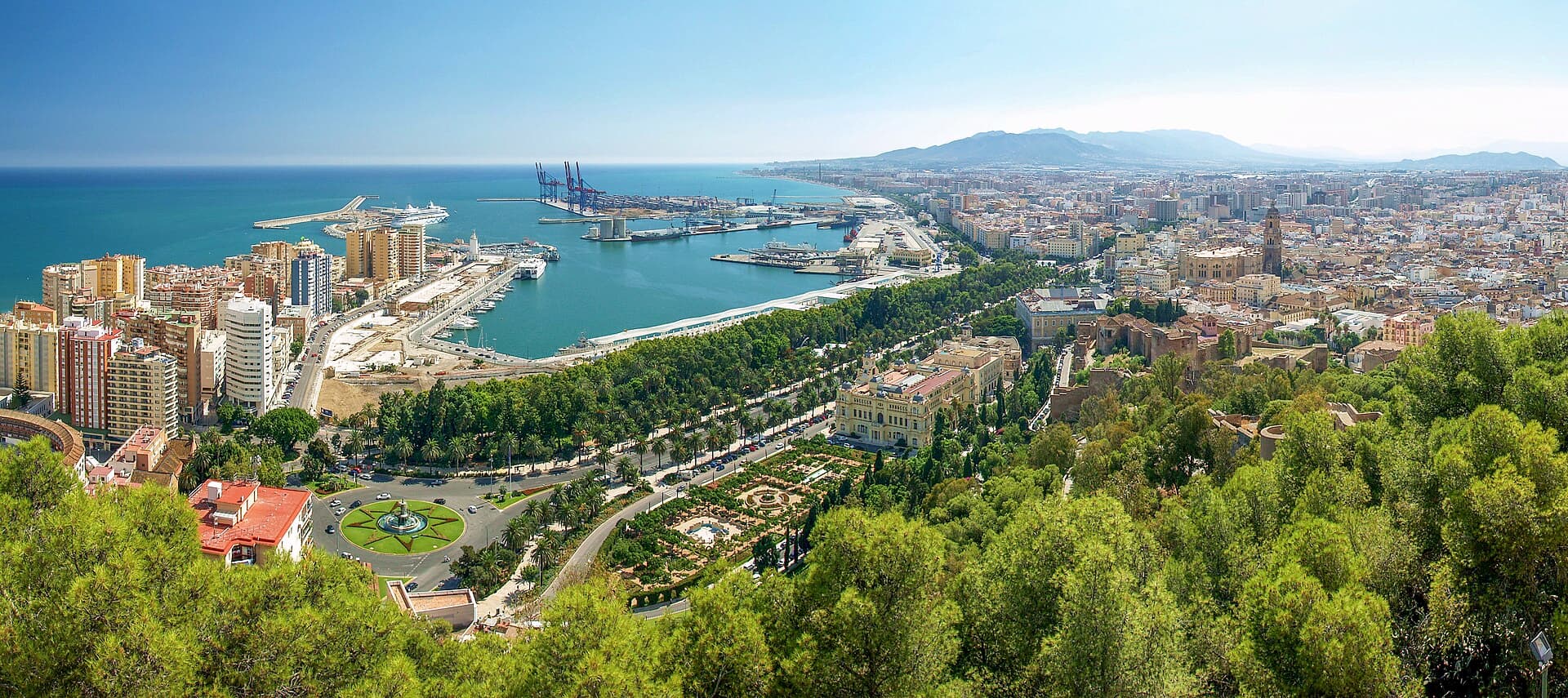 Kiban / CC BY-SA 3.0, via Wikimedia Commons
“Where ancient stones meet contemporary canvases under the Mediterranean sun.”
Not the postcards. The stories even locals don't know — whispered in your ear, right where they happened.
The city's grand cathedral bears an unusual nickname, hinting at a surprising architectural quirk.
For centuries, a significant piece of Roman history lay concealed beneath a modern building.
During Holy Week, a unique tradition involving a prisoner unfolds in Málaga.
Discover every secret of Málaga
Every address, every reveal in full — in your ear, right where it happened.
You pick your stops. You walk. The voice reveals what the others miss.
No tours available yet. Check back soon — we're preparing them.
Málaga, a port city on Spain's southern coast, serves as the capital of its namesake province in Andalusia. It is the second-largest city in Andalusia and the sixth-largest in Spain, with a population of 592,346 in 2024. Situated along the Costa del Sol, it offers a compelling blend of ancient history, engaging culture, and Mediterranean allure.
The city's urban core developed between the Gibralfaro Hill and the Guadalmedina River. Málaga is a place where Roman ruins, Moorish fortresses, and world-class art stand together, creating a dynamic atmosphere for visitors. From exploring medieval ramparts to discovering contemporary art, Málaga balances its deep past with a forward-looking spirit.
## Ancient Origins and Roman Influence Málaga's history stretches back approximately 2,800 years, making it one of the oldest continuously inhabited cities in Western Europe. The Phoenicians from Tyre established the colony of Malaka around 770 BC, founding it as a trading port. From the 6th century BC, the city was under the influence of Ancient Carthage.
In 218 BC, Málaga came under Roman rule, flourishing economically, partly due to its production of garum, a fermented fish sauce. The Roman presence is notably visible in the Roman Theatre, constructed in the 1st century AD during Emperor Augustus's reign.
## Moorish Rule and Reconquista After periods of Visigothic and Byzantine rule, Málaga was placed under Islamic rule in the 8th century. Under the Moors, it became one of Andalusia's most important cities, with the Alcazaba fortress being a significant architectural legacy. The current Alcazaba complex was begun in the 11th century and modified over time, serving as both a residence for Muslim governors and a fortification. The Gibralfaro Castle was added in the 14th century to protect the Alcazaba.
The Crown of Castile gained control of Málaga on August 18, 1487, after a siege during the Granada War, a violent episode that ended Moorish rule. Following the Reconquista, churches and convents were built, and the city entered a period of slow decline in the 16th century due to epidemics, poor harvests, floods, and earthquakes.
## Industrialization, Decline, and Modern Resurgence The 18th century saw a recovery in Málaga's prosperity, with the port becoming crucial to the city's economy. The 19th century brought a period of industrialization, though it was followed by socioeconomic decay in the latter part of the century. Málaga was also a significant center for Spanish liberalism during much of the 19th century.
In the 20th century, Málaga experienced a resurgence, becoming a popular destination for travelers. Today, tourism, construction, and technology services are key business sectors. The city is also known as the birthplace of Pablo Picasso, who was born in 1881 in Plaza de la Merced.
Begin your exploration at the Alcazaba, a palatial Moorish fortress with intricate courtyards and gardens, offering expansive views of the city and port. At its base lies the Roman Theatre, a remarkably preserved 1st-century AD structure with an interpretive center. Ascend to Gibralfaro Castle, connected to the Alcazaba by a fortified walkway, for some of the best panoramic vistas of Málaga.
Visit the Málaga Cathedral, known as 'La Manquita' (the one-armed lady) due to its unfinished south tower. Consider a rooftop tour for unique city views. Art enthusiasts should explore the Picasso Museum Málaga, housed in a 16th-century palace, displaying over 200 works by the city's most celebrated son. You can also visit Picasso's birthplace in Plaza de la Merced.
Immerse yourself in local life at Mercado Central de Atarazanas, a lively market with fresh produce, seafood, and tapas stalls. For a leisurely stroll, head to Muelle Uno, a port promenade with shops and restaurants, leading to La Farola lighthouse.
Málaga enjoys a Mediterranean climate with mild winters and warm summers, offering pleasant weather throughout the year. It experiences approximately 300 days of sunshine annually.
The shoulder seasons of spring (March to May) and autumn (September to October) are often considered ideal. During these months, temperatures are comfortable for sightseeing and outdoor activities, crowds are moderate, and prices are reasonable. Spring brings blooming gardens and Easter processions, while autumn offers warm beaches and harvest season events.
Summer (June to August) is perfect for beach holidays, though it can be warm and busy. Winter (December to February) is mild, with average daytime temperatures around 17-18°C, making it suitable for cultural visits and enjoying the city's Christmas lights.
Málaga's compact city center makes it easy to explore many highlights in two to three days. If you plan day trips to nearby attractions like Ronda, the Caminito del Rey, or Antequera, consider extending your stay to four or five days. The city is well-connected, with Málaga Airport serving as a major hub. Public transport options include buses and a new subway system.
Many attractions are within walking distance in the historic center. For reaching the Alcazaba, a lift is available to avoid the stairs. Tipping is customary in Spain, usually a small amount for good service. While Spanish is the official language, English is widely spoken in tourist areas. Keep an eye out for local coffee culture, as Malagueños have specific ways of ordering their coffee, each with its own name.