Fort Rotterdam
This imposing 17th-century Dutch fort, a prominent landmark in Makassar, holds a surprising secret about its original design.
Full story unlocks in the tour
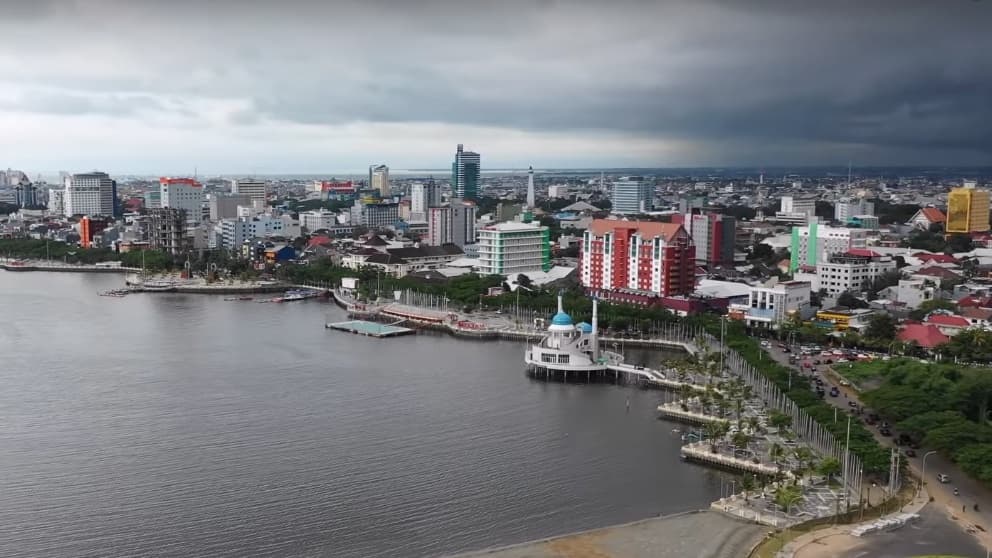 Bluesatellite / CC BY-SA 4.0, via Wikimedia Commons
“Where ancient maritime tales meet the pulse of modern city life.”
Not the postcards. The stories even locals don't know — whispered in your ear, right where they happened.
This imposing 17th-century Dutch fort, a prominent landmark in Makassar, holds a surprising secret about its original design.
Beyond the lively activity of traditional wooden ships, Paotere Harbour reveals a connection to a distant continent.
The local language, Makassarese, carries a unique phonetic quirk not found in many other languages.
Discover every secret of Makassar
Every address, every reveal in full — in your ear, right where it happened.
You pick your stops. You walk. The voice reveals what the others miss.
No tours available yet. Check back soon — we're preparing them.
Makassar, the capital of South Sulawesi, is a dynamic port city that serves as a vital gateway to Eastern Indonesia. Once known as Ujung Pandang, it is a bustling urban center where modern life intertwines with deep-rooted cultural traditions. Situated on the southwest coast of Sulawesi, facing the Makassar Strait, its strategic location has historically made it a significant maritime hub.
The city offers a captivating blend of experiences, from its historical sites and waterfront promenade to its acclaimed culinary scene. Makassar is often considered one of Indonesia's culinary capitals, celebrated for its bold, spicy, and satisfying gastronomy, particularly its fresh seafood. While some travelers use Makassar as a transit point to other regional destinations like the highlands of Tana Toraja, the city itself offers a memorable journey into Indonesia's maritime soul.
With a population exceeding 1.3 million people, Makassar is the largest city in Eastern Indonesia and the country's fifth-largest urban area. It is a melting pot of cultures, primarily home to the Bugis and Makassarese people, known for their seafaring heritage, along with significant Chinese, Torajan, and Mandar communities.
## From Sultanate to Colonial Hub Makassar's history stretches back to the early 16th century when it flourished as a thriving seaport and the capital of the powerful Gowa Sultanate. Its strategic position in the Makassar Strait made it a crucial point on the spice trade routes, attracting merchants from China, Arabia, India, and Europe, including Portugal.
The Gowa rulers embraced a free trade policy, which further cemented Makassar's status as a cosmopolitan center. In 1607, the Gowa Sultanate officially adopted Islam, strengthening its cultural and political ties with other Muslim states in the archipelago. The mid-17th century marked the "Golden Age" of Makassar under the rule of Sultan Hasanuddin, who fiercely resisted Dutch colonization attempts and earned the moniker "Fighting Cock of the East."
## Dutch Conquest and Colonial Era Despite its strong resistance, the Gowa Sultanate was eventually defeated by the Dutch East India Company (VOC) in 1667, leading to the signing of the Treaty of Bongaya. This treaty ceded control of trade to the Dutch, who then rebuilt the existing Fort Ujung Pandang into Fort Rotterdam, making it the center of their colonial administration. The fort served as a defense command headquarters, trading office, residence for high officials, and a governmental center for the eastern Indonesian archipelago.
Makassar remained an important port throughout the Dutch colonial period, serving the Eastern Indonesian regions. Its influence extended through Makassarese fishers who traveled as far south as the Australian coast. After Indonesia's proclamation of independence in 1945, Makassar was briefly designated the capital of the Dutch-sponsored State of East Indonesia from 1946 to 1949. The city was officially known as Ujung Pandang from 1971 to 1999 before its historical name, Makassar, was restored.
Begin your exploration at Fort Rotterdam, an imposing 17th-century Dutch fortress. This well-preserved landmark, originally a Gowa Kingdom fort, houses the La Galigo Museum, showcasing South Sulawesi's history and Bugis seafaring heritage. Wander through its courtyards and along its sturdy walls for views of the harbor.
Next, head to Losari Beach, a popular waterfront promenade known for its sunsets and the distinctive 99 Domes Mosque. This is not a sandy beach but a lively area for locals and visitors to relax and enjoy the views.
Experience the city's maritime culture at Paotere Harbour, where traditional wooden Phinisi boats, crafted by the Bugis seafarers, are still actively used. It is a bustling, authentic port where you can witness the rhythm of Makassar's sea-faring traditions.
For a change of pace, consider a day trip to Bantimurung Bulusaraung National Park, a short drive from the city. This park is known for its waterfalls, caves, and butterfly conservation. Alternatively, explore the unique karst landscapes of Rammang-Rammang and the ancient cave art at Leang-Leang.
Makassar experiences a tropical climate, consistently warm and humid throughout the year, with average temperatures ranging from 25°C to 30°C (77°F to 86°F). The ideal time to visit is during the dry season, which typically runs from May to October. During these months, you can expect clear skies, lower humidity, and minimal rainfall, making it perfect for outdoor activities, island hopping, and exploring the city's attractions. The driest months are usually August and September. The rainy season occurs from November to April, with December and January being the wettest months, experiencing almost daily rainfall.
Makassar's local currency is the Indonesian Rupiah (IDR). It is advisable to exchange money at authorized centers or withdraw cash from ATMs. For getting around the city, ride-hailing apps like Grab or Gojek are convenient and offer both car and motorbike taxi options at fixed prices. The Trans Mamminasata bus service (Teman Bus program) provides air-conditioned routes connecting major districts, including the airport and harbor, with designated stops and structured schedules. While traditional minibuses (pete-pete or angkot) are a cheap way to get around, they are less structured. Sultan Hasanuddin International Airport (UPG) serves Makassar and is located about 20-23 km from the city center. Taxis are readily available from the airport, or you can use the airport bus service. Makassarese and Buginese are widely spoken, but Indonesian is the official language.