Skifa el Kahla (The Dark Gate)
This monumental gate, once Mahdia's sole land entrance, is said to possess a spectral guardian.
Full story unlocks in the tour
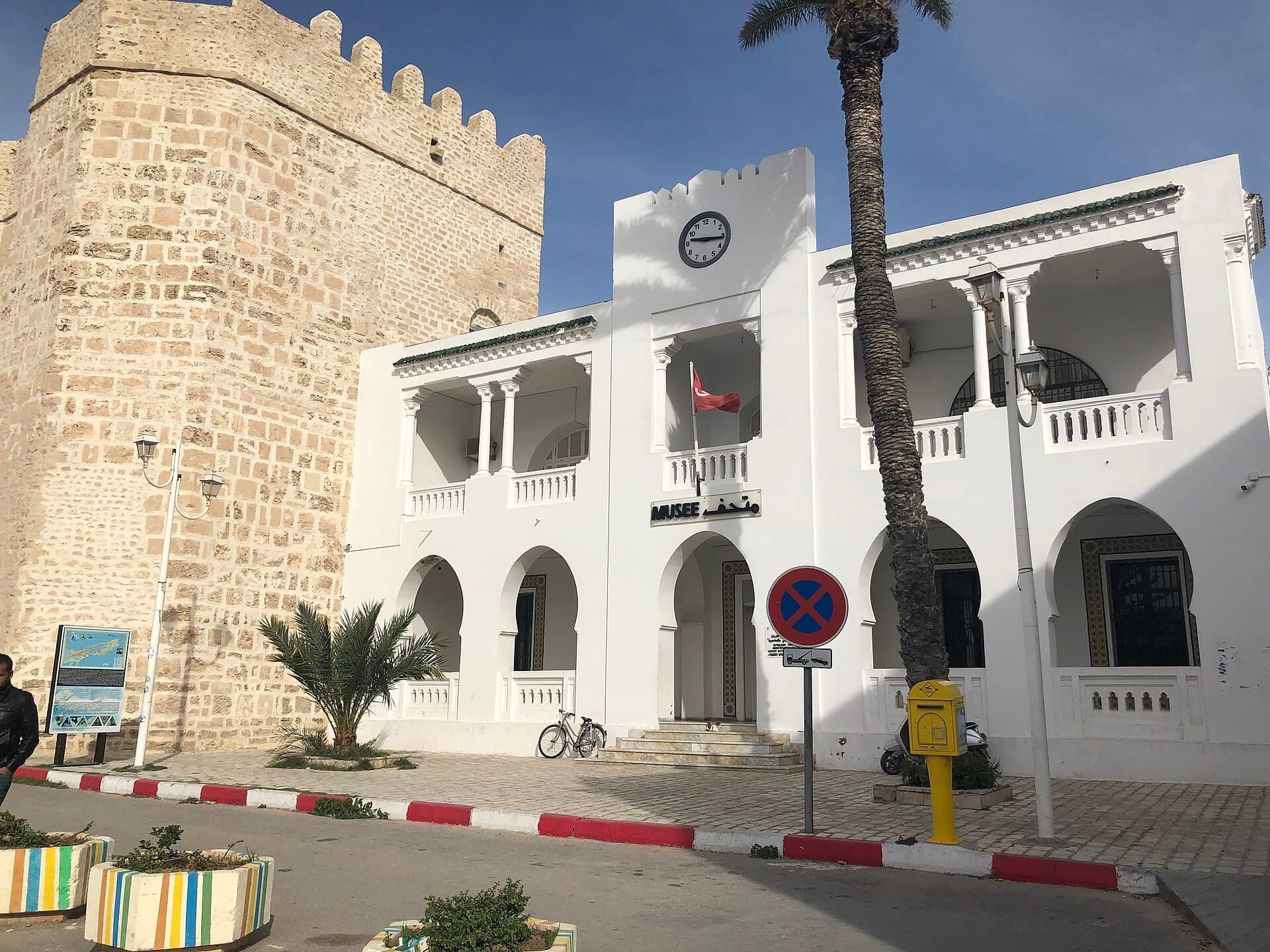 Davide Mauro / CC BY-SA 4.0, via Wikimedia Commons
“Where ancient foundations meet the rhythm of the sea.”
Not the postcards. The stories even locals don't know — whispered in your ear, right where they happened.
This monumental gate, once Mahdia's sole land entrance, is said to possess a spectral guardian.
The waters off Mahdia's coast conceal a trove from antiquity.
Unlike most mosques, Mahdia's Great Mosque lacks a traditional minaret.
Discover every secret of Mahdia
Every address, every reveal in full — in your ear, right where it happened.
You pick your stops. You walk. The voice reveals what the others miss.
No tours available yet. Check back soon — we're preparing them.
Mahdia, a captivating coastal city on Tunisia's central Mediterranean coast, offers a unique blend of deep Islamic history, traditional Tunisian culture, and a relaxed seaside atmosphere. Unlike larger, more bustling tourist hubs, Mahdia has preserved its local character, making it appealing to travelers seeking an authentic Tunisian experience alongside historical exploration and beach relaxation. The city is situated on a remarkably narrow peninsula, surrounded by the sea on three sides, which historically made it an easily defensible location.
Founded in 916 AD by the Fatimid ruler Abdallah al-Mahdi, Mahdia served as the first capital of the Fatimid Caliphate. This period left a strong architectural and cultural legacy that continues to define Mahdia today. From its ancient walls and key monuments to its active fishing harbor and traditional silk weaving workshops, Mahdia invites visitors to step back in time and immerse themselves in its past and unhurried rhythm of daily life.
## From Phoenician Outpost to Fatimid Capital Mahdia's story stretches back long before its medieval walls. The peninsula, known as Cape Africa, was an ancient Carthaginian trading post. In 916 AD, Abdallah al-Mahdi Billah, the first Fatimid caliph, chose this rocky, easily defensible peninsula as the site for his new capital. Construction began in 916 AD, and the city, named Mahdia after the caliph, was officially inaugurated in 921 AD. The Fatimids, a Shia Muslim dynasty, established control over North Africa and sought a new capital distinct from the predominantly Sunni city of Kairouan.
During its time as the Fatimid capital (921-969 CE), Mahdia was a fortified political and religious center, with massive defensive walls, magnificent palaces, a grand mosque, and an exceptionally well-protected military harbor carved directly into solid rock. This extraordinary feat of engineering made it one of the most sophisticated naval bases of the medieval Mediterranean. From Mahdia, the Fatimid caliphs ruled much of what is now Tunisia, Algeria, Morocco, Libya, and Sicily, building up their navy and sending missionaries eastward. However, weakened by internal uprisings, the Fatimids eventually moved their capital to Egypt, founding Cairo in 973 AD.
## A City of Many Rulers After the Fatimids departed, Mahdia became a site of conflict and was subjected to numerous raids. It was attacked by Norman Sicilians, the Genoese, and the Knights of Malta. In 1148, the Normans captured the city, and it later came under Almohad rule in 1160. The city was also a target of the Barbary Crusade in 1390, when a French army laid siege but failed to take it. In 1550, the Spanish captured Mahdia, and a garrison remained until 1553. The emperor ordered the city to be dismantled, despite its strategic importance. Shortly after, the Ottomans reoccupied Mahdia, but the town lost much of its logistical and commercial importance, becoming primarily a fishing and oil-working settlement. It remained under Turkish rule until the 19th century. Following Tunisia's independence in 1956, Mahdia gradually transformed from a traditional fishing town into a peaceful seaside resort, with careful preservation of its historic core.
Begin your exploration at the Skifa el Kahla, also known as the Dark Gate or Bab Zouila. This imposing 10th-century gate, 33 meters high, was once the sole land entrance to the fortified Fatimid city. Passing through its almost 50-meter-long vaulted passage feels like stepping back in time. Beyond the gate, the Medina of Mahdia unfolds with its whitewashed houses, often adorned with ornate green doors, and cobbled lanes. This traditional medina is quieter and more residential than others in Tunisia, offering an authentic glimpse into local life.
At the eastern end of the peninsula, visit the Great Fatimid Mosque, founded in 916 CE. Its unique fortress-like design and lack of a traditional minaret make it a significant architectural landmark. Overlooking the sea, the 16th-century Ottoman fortress of Borj el Kebir offers sweeping views of the coastline, the old town, and the fishing harbor. Nearby, the Mahdia Marine Cemetery presents a striking sight with thousands of white tombs sloping gently towards the sea, highlighting the city's deep connection to its maritime heritage. Do not miss the fishing harbor, one of Tunisia's busiest, especially in the early morning when boats return with their catch. For a deeper dive into the city's past, the Mahdia Museum houses artifacts from Punic, Roman, Byzantine, and Islamic eras, including impressive mosaics.
The most pleasant times to visit Mahdia are during spring (March to May) and autumn (September to October). During these periods, temperatures are comfortably warm, ranging from 20°C to 28°C (68°F to 82°F), ideal for exploring historical sites and enjoying the beaches without the intense summer heat. The tourist crowds are also relatively smaller during these shoulder seasons. While summer (June to September) offers the warmest sea temperatures, it can be quite hot, with daytime temperatures often exceeding 30°C (86°F), and is the peak tourist season.
Mahdia is easily accessible, with the most convenient option for international arrivals being Monastir-Habib Bourguiba International Airport (MIR), located about 50 kilometers north. From the airport, Mahdia is a 45-minute drive or can be reached via the Sahel Metro light rail, which runs from Sousse through Monastir to Mahdia every 30-60 minutes. The Mahdia terminus is conveniently located at the western end of the medina. Within Mahdia, the medina and central waterfront are easily explored on foot. Taxis are readily available for travel between the medina and the resort zone. Louages (shared taxis with fixed routes) are also a common mode of transport in Tunisia. Daily spending, excluding accommodation, typically ranges from €21–€47, making it an accessible destination.