Maison de Bois
The oldest house in Mâcon tells a silent, cheeky story on its facade.
Full story unlocks in the tour
 Luciani71 / CC BY-SA 3.0, via Wikimedia Commons
“Where Burgundy meets the South, a city shaped by wine and river.”
Not the postcards. The stories even locals don't know — whispered in your ear, right where they happened.
The oldest house in Mâcon tells a silent, cheeky story on its facade.
Step into an 18th-century pharmacy that feels frozen in time.
Beneath the unassuming charm of a Mâcon street lies a history of desperation and discreet mercy.
Discover every secret of Mâcon
Every address, every reveal in full — in your ear, right where it happened.
You pick your stops. You walk. The voice reveals what the others miss.
No tours available yet. Check back soon — we're preparing them.
Mâcon, a city in east-central France, rests on the western bank of the Saône River, marking the southern edge of Burgundy. Its location provides a unique blend of northern and southern French influences, evident in its architecture, climate, and unhurried pace of life. The city is a gateway to the celebrated Mâconnais and Beaujolais wine regions, revered particularly for its high-quality white wines, predominantly Chardonnay.
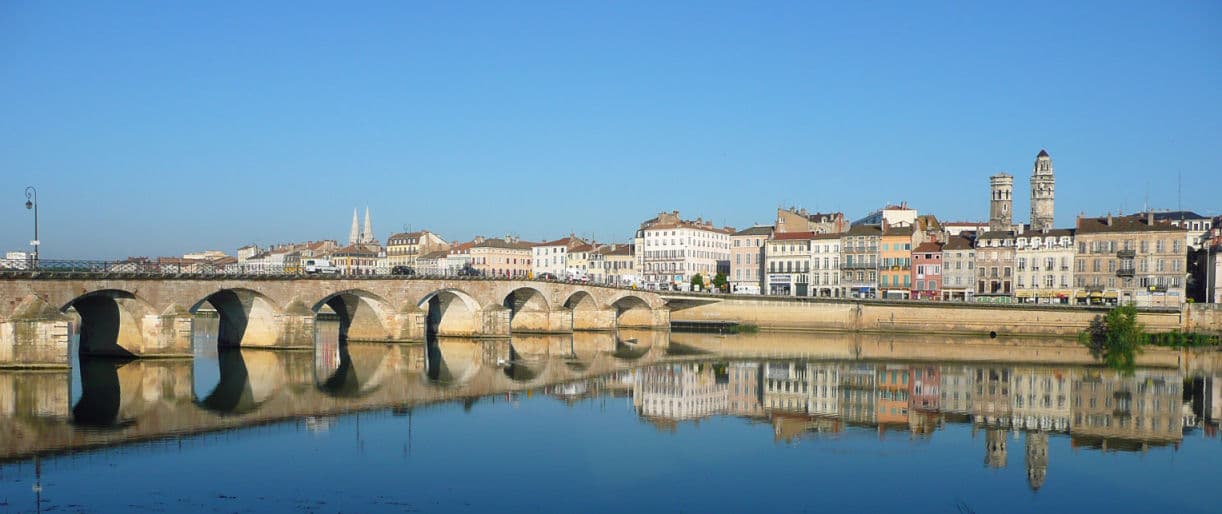
With roots stretching back to Roman times, Mâcon has evolved from a Celtic settlement and Roman river port to a significant trading hub in the Middle Ages. Today, its streets are lined with a mix of medieval half-timbered houses, Renaissance townhouses, and 19th-century civic buildings, reflecting its layered past. A quiet walk along the Saône River promenade reveals colorful facades and offers delightful views, embodying the city's tranquil yet lively atmosphere.
Mâcon serves as the prefecture of the Saône-et-Loire department and is home to approximately 35,000 residents. It offers an appealing blend of culture, architecture, and scenic landscapes, making it an inviting destination for those seeking an authentic French experience.
Mâcon's history spans over two millennia, beginning as a Celtic settlement before becoming the Roman river port of Matisco in the 1st century BCE. Its strategic position on the Saône River made it a vital transport and trading hub in Roman Gaul, with archaeological remains hinting at its early importance. By the early Middle Ages, Mâcon had become an episcopal see, a role it maintained from 536 to 1790.
During the Middle Ages, Mâcon flourished as a border town connecting the Kingdom of France to the Holy Roman Empire between 843 and 1600. The Saône River was central to its prosperity, allowing townspeople to grow wealthy from trade and taxes. The city's urban and architectural character from this period is still visible, with remnants like the Old Saint-Vincent Cathedral towers, originally an 11th-century Romanesque structure. The Maison de Bois, a half-timbered house dating from the late 15th or early 16th century, stands as one of Burgundy's well-preserved examples of its kind, showcasing the city's Renaissance prosperity.
The 19th century brought modernization and a revival of Romanesque styles, exemplified by structures like the Église Saint-Pierre. Mâcon also holds significance as the birthplace of the 19th-century poet and politician Alphonse de Lamartine in 1790. His legacy is honored throughout the city, with a quayside and museum bearing his name. During World War II, Mâcon marked the northernmost town of the unoccupied zone libre, becoming a site of Resistance activity after German occupation in 1942.
Today, Mâcon continues to embrace its heritage while thriving as a center for southern Burgundy wine, particularly its celebrated Mâconnais whites. The city's commitment to preserving its past is evident in ongoing restoration efforts, such as those at Saint-Vincent Cathedral and the Maison de Bois.
Begin your exploration at the Pont Saint-Laurent, a medieval stone bridge offering views of the Saône River and the city's colorful facades. Wander to Place aux Herbes to admire the Maison de Bois, Mâcon's oldest house, with its distinctively carved wooden facade from the late 15th or early 16th century. Nearby, the Vieux Saint-Vincent Cathedral showcases Romanesque and Gothic architectural elements, with its twin towers remaining an iconic part of the skyline.
For art and history, the Musée des Ursulines, housed in a former 17th-century convent, presents archaeological findings, fine arts, and regional history, including an exhibit dedicated to Alphonse de Lamartine, a famous poet born in Mâcon. The Église Saint-Pierre, a 19th-century neo-Romanesque church, stands prominently in the city center. Do not overlook the remarkably preserved Apothicairerie de l'Hôtel-Dieu, an 18th-century apothecary shop offering a glimpse into historical medicine.
Beyond the city center, consider a visit to the Cité des Climats et Vins de Bourgogne in Mâcon, an interactive museum dedicated to Burgundy's wines and vineyards. A short drive will take you to La Roche de Solutré, an iconic rock formation offering wide views of the surrounding vineyards and housing an important prehistoric museum.
The best time to visit Mâcon is during late spring and early autumn, specifically from May to June and September to October. During these months, the weather is generally mild, with comfortable temperatures ranging from 22°C to 28°C, ideal for outdoor activities and exploring the vineyards. Summers (June to August) are warm, with average temperatures around 25°C, and offer a lively atmosphere with local festivals. While winters (December to February) are colder and damp, averaging around 3°C, they provide a peaceful charm with fewer crowds.
Mâcon's historic center is compact and easily explored on foot, with most attractions within a 15-minute walk of each other. The city is well-connected by public transport, including buses serving the city and surrounding areas. For longer distances or exploring the surrounding vineyards, renting a car is recommended, though parking in the city can be challenging. Mâcon-Loché TGV train station offers direct rail connections to major cities like Lyon (1 hour) and Paris (1.5 hours), making it an accessible destination. Lyon's international airport is about an hour's drive away. Local cuisine specialties include poulet de Bresse, bugnes (crispy pastries), and regional cheeses, alongside the celebrated Mâconnais wines.