Mackay Regional Botanic Gardens
These gardens are a relative newcomer, established in 2003, but their central lagoon holds a much older secret.
Full story unlocks in the tour
 Allan Henderson / CC BY 2.0, via Wikimedia Commons
“Where sugarcane fields meet the Coral Sea, and platypus play at dawn.”
Not the postcards. The stories even locals don't know — whispered in your ear, right where they happened.
These gardens are a relative newcomer, established in 2003, but their central lagoon holds a much older secret.
Mackay is named after explorer John Mackay, who led an expedition here in 1860, but the river that flows through the city almost bore a different name entirely.
Walk through Mackay's central business district, and you'll notice a distinct architectural style that tells a story of resilience.
Discover every secret of Mackay
Every address, every reveal in full — in your ear, right where it happened.
You pick your stops. You walk. The voice reveals what the others miss.
No tours available yet. Check back soon — we're preparing them.
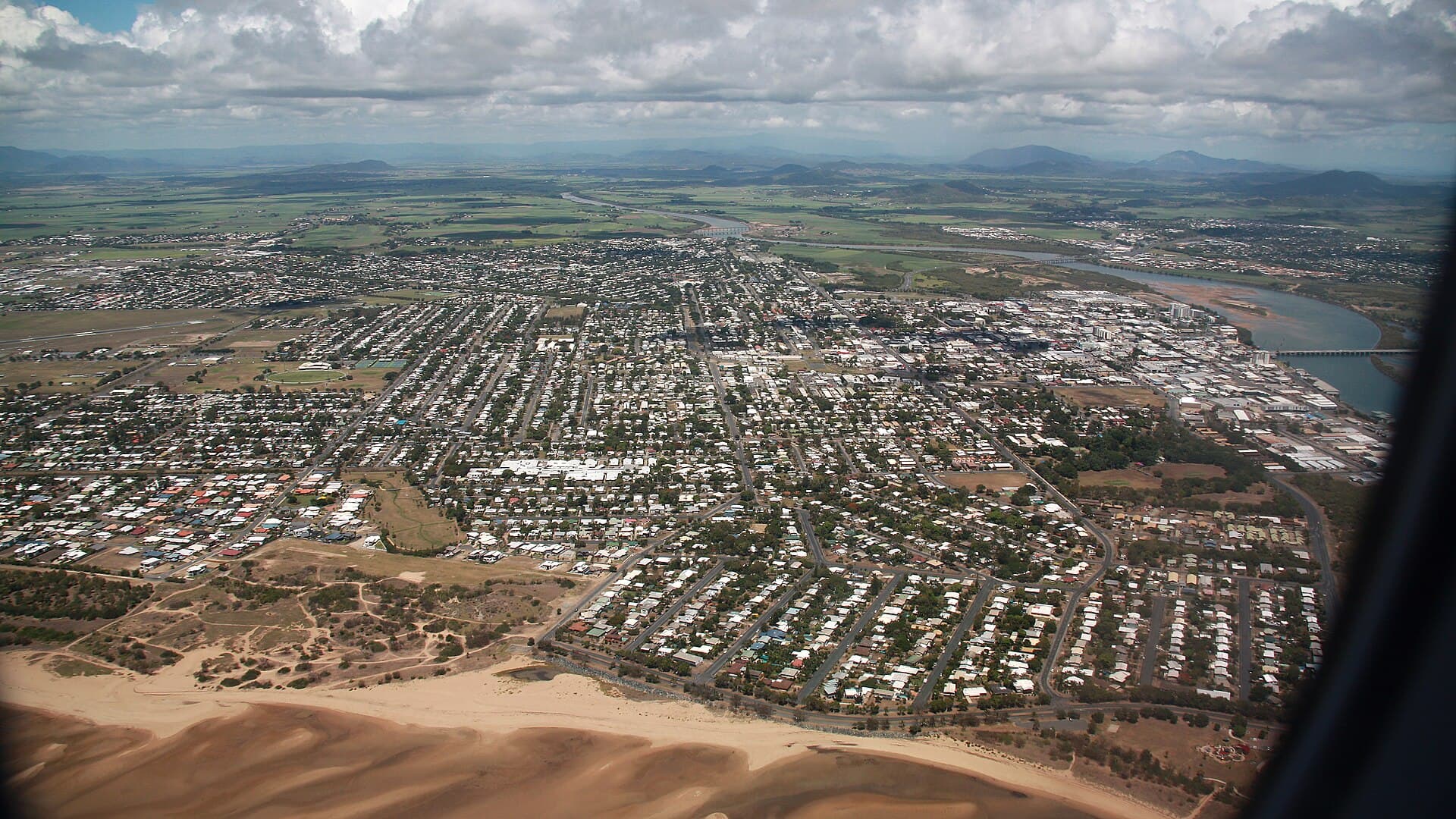
Mackay, a coastal city in Queensland, Australia, sits along the Pioneer River, approximately 803 kilometers north of Brisbane. Often referred to as Australia's 'Sugar Capital,' the region is a major hub for sugarcane production, with vast fields shaping the surrounding landscape. Beyond its agricultural prowess, Mackay offers a blend of natural beauty, from subtropical rainforests to serene beaches and the nearby Great Barrier Reef.
The city is a melting pot of cultures, influenced by its Yuwi Indigenous heritage, South Sea Islanders, and European migrants from Italy and Malta, particularly in the sugar industry. This diverse background contributes to a lively local scene, known for its seafood, tropical produce, public art, and a spirited jazz presence.
The land where Mackay now stands was traditionally home to the Yuwibara (Yuibera) Indigenous people. European exploration of the area began in 1770 when Captain James Cook sailed past the coast, with botanist Sir Joseph Banks briefly noting Indigenous Australians. In 1860, John Mackay led an overland expedition into the Pioneer Valley, becoming the first European to visit the region now bearing his name. He selected land for settlement, returning in 1862 to establish the first European presence at Greenmount.
The settlement, initially named Alexandra after Princess Alexandra of Denmark, was later renamed Mackay in honor of John Mackay. It gained port status in 1863, and the first town lots were sold in 1864. The region's economic foundation quickly shifted with the introduction of sugarcane. In 1865, John Spiller planted the first sugarcane crop, and by 1868, the first production sugar mill was built.
The burgeoning sugar industry heavily relied on indentured or enslaved South Sea Islanders for labor, with the first 70 workers arriving in Mackay in 1867. By the mid-1880s, the Mackay region supported over 30 sugar plantations and 26 sugar mills, with South Sea Islander laborers constituting more than a third of the 6,000 inhabitants. From around 1891, Mediterranean migrants from Italy and Malta also began working the sugarcane plantations, and by the 1930s, a significant portion of Australia's Italian migrants resided in North Queensland.
The city faced a major setback in 1918 when a cyclone nearly destroyed it. The subsequent reconstruction saw a prevalence of Art Deco and Spanish Mission architectural styles, which still characterize parts of the city today. Mackay was officially classified as a city in 1918. In more recent history, the region's economy has also been bolstered by the hinterland coal mining developments and a growing tourism industry.
Begin your exploration at the Mackay Regional Botanic Gardens, one of Queensland's newer botanic gardens, opened in 2003. These 51-hectare gardens showcase the diverse flora of the Central Queensland Coast Bioregion, featuring lush tropical rainforests, wetlands, and themed areas celebrating the region's cultural heritage, including South Sea Islander, Aboriginal, and Maltese gardens. The Bluewater Trail offers a scenic shared pathway for pedestrians and cyclists, stretching approximately 20km along the Pioneer River. This award-winning trail connects key attractions like the Botanic Gardens, the Sandfly Creek Environmental Walkway, and the free, three-tiered Bluewater Lagoon swimming facility.
For those interested in fishing, Mackay is considered a premier destination. Land-based fishing opportunities abound at the Mackay Marina, East Point, and the Ron Camm Bridge, where you can target species like mackerel, tuna, queenfish, and barramundi. Freshwater fishing is also popular in stocked dams such as Kinchant Dam and Teemburra Dam, known for large barramundi. Seek out platypus in their natural habitat at Broken River in Eungella National Park, a rare sight even for many Australians.
Mackay experiences a humid subtropical climate, bordering on tropical savanna, with warm to hot weather year-round. The cooler, drier season, from May to September, is generally considered the most pleasant time to visit, with daytime temperatures ranging from 21°C to 25°C. This period offers clear skies and lower humidity, ideal for outdoor activities. The wet season, from December to March, is characterized by hot, humid weather and intense rainfall, with occasional monsoonal low-pressure systems and tropical cyclones possible between November and April.
Mackay Airport (MKY) is conveniently located just 10 minutes from the city center, offering domestic flights to Brisbane, Rockhampton, Townsville, and Cairns with airlines like QantasLink, Jetstar, and Virgin Australia. Public bus services, operated by Kinetic and Translink, connect the airport to the CBD and various suburbs, including the Northern Beaches and Sarina. Taxis and ride-share services are also available throughout the metropolitan area. For those exploring the broader region, long-distance coaches like Greyhound Australia and Premier Motor Service provide connections to other major centers along the Queensland coast. Car hire is available at the airport for greater flexibility in exploring the national parks and surrounding areas.