Pajuçara Beach
The colorful jangadas waiting by the shore at Pajuçara aren't just for show.
Full story unlocks in the tour
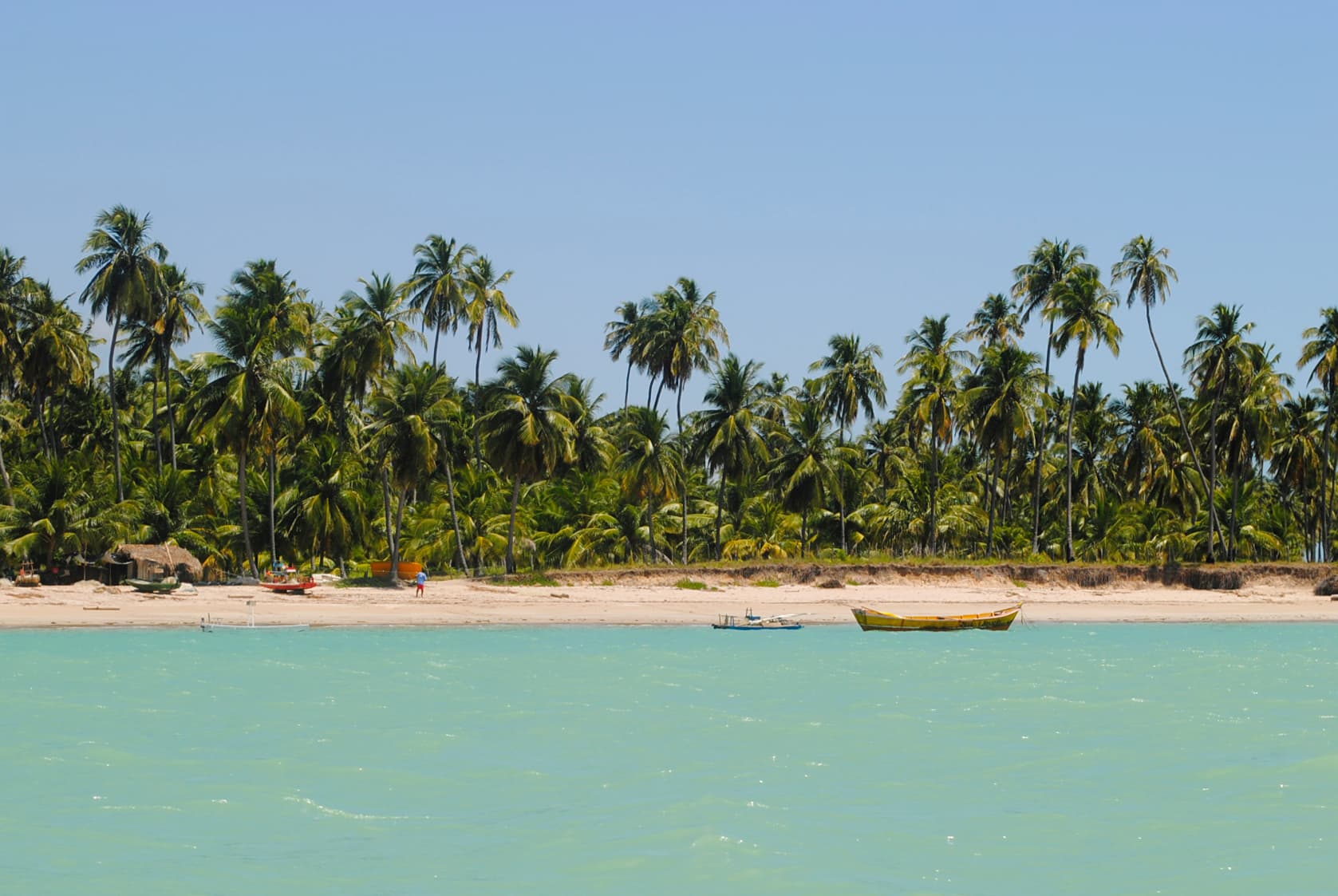 Cícero R. C. Omena / CC BY 2.0, via Wikimedia Commons
“Where the Atlantic whispers secrets to a city of turquoise and palms.”
Not the postcards. The stories even locals don't know — whispered in your ear, right where they happened.
The colorful jangadas waiting by the shore at Pajuçara aren't just for show.
This historic district, once the heart of Maceió's bustling port, tells a story beyond its colonial buildings.
Beyond the fresh seafood, there's a local delicacy that might surprise you with its name.
Discover every secret of Maceió
Every address, every reveal in full — in your ear, right where it happened.
You pick your stops. You walk. The voice reveals what the others miss.
No tours available yet. Check back soon — we're preparing them.
Maceió, the capital of Alagoas, is a coastal city in northeastern Brazil, celebrated for its clear turquoise waters, natural pools, and stretches of palm-lined beaches. Frequently referred to as the “Caribbean of Brazil,” the city interweaves urban conveniences with tropical serenity. Its consistently warm, tropical climate and over 300 days of sunshine each year make it a reliable destination for those seeking sun and sea.
Positioned between the Mundaú Lagoon and the Atlantic Ocean, Maceió’s landscape is defined by its sea and abundant coconut groves. The city’s welcoming atmosphere, alongside its culture expressed through cuisine, music, and festivals, provides a distinct Brazilian experience. From exploring historic districts to relaxing on pristine sands, Maceió invites visitors to discover the allure of the Alagoas coast.
Maceió’s origins trace back to an old sugar mill and plantation complex in the 17th or 18th century. The settlement, initially known as Macayo, began its development with ships arriving in Jaraguá Bay to transport timber. The establishment of sugar mills further propelled its growth, leading to the export of sugar, and later, tobacco, coconuts, leather, and spices.
On December 5, 1815, Maceió officially became a village. Its continued expansion and strategic location led to a significant political shift. On December 9, 1839, Maceió was appointed the capital of the Alagoas province, a move that greatly accelerated its economic and administrative development. The Jaraguá port, protected by a reef, became one of Brazil's important export hubs in the mid-19th century. While the harbor could only accommodate vessels of light draft, larger oceangoing ships anchored outside the reef.
Throughout the 19th century, Maceió saw the construction of significant landmarks. The Metropolitan Cathedral, a blend of eclectic facade with neo-Gothic elements and Rococo decorations, was built between 1840 and 1859 and remains a central architectural symbol. Other colonial buildings, such as the Government Palace and the Church of Bom Jesús dos Mártires, also date from this period. The city also became an intellectual center with the founding of institutions like the Historical Institute of Alagoas in 1869 and the Literary Academy of Alagoas in 1919.
Today, Maceió's economy is diversified, driven by tourism, fishing, and sugar cane production. The city has developed a robust tourist infrastructure, featuring excellent hotels and resorts, particularly in the popular beachfront areas of Pajuçara, Ponta Verde, and Jatiúca. Despite its modern appearance, Maceió has carefully preserved much of its 17th-century heritage, with architecture that blends with contemporary Brazilian culture. It serves as a cultural hub, showcasing traditions through numerous museums and memorials, offering visitors a fascinating look into the historical heart of Alagoas.
Maceió offers a range of attractions, from its iconic beaches to its historic core. The urban beaches of Pajuçara, Ponta Verde, and Jatiúca are central to the city's appeal, offering calm, clear waters and lively promenades. At Pajuçara Beach, take a traditional jangada (sailboat) trip to the natural pools that form at low tide, providing a unique snorkeling experience among colorful fish.
Explore the historic Jaraguá district, known for its preserved colonial architecture and former warehouses now housing cultural centers and bars. The Floriano Peixoto Palace Museum and the Museum of Image and Sound of Alagoas provide insights into the region's history and culture. Do not miss the Metropolitan Cathedral, with its eclectic facade, and the neoclassical Deodoro Theater, a significant venue for performing arts.
Beyond the city, consider day trips to other coastal destinations. Praia do Gunga, with its extensive coconut groves and where the sea meets the Lagoa do Roteiro, offers both saltwater and freshwater swimming. Praia do Francês, known for its calm waters on one side and waves suitable for surfing on the other, is another popular choice.
Maceió enjoys a warm, tropical climate year-round, with average temperatures consistently hovering around 25°C to 27°C (77°F to 81°F). The city experiences over 300 days of sunshine annually, making it an attractive destination throughout the year. The dry season generally runs from August through March, with October to January often considered the best time to visit due to lower rainfall and ideal beach conditions. While a short rainy season occurs from April to July, showers are typically brief, making it still suitable for cultural sightseeing. Even during the cooler months of July and August, temperatures remain pleasant, around 23.9°C (75°F).
Maceió is served by Zumbi dos Palmares International Airport (MCZ), located approximately 30-40 minutes from the main beach districts. Taxis and ride-hailing apps are readily available for transportation from the airport and around the city. Public buses are an economical option for getting around, though they may not have fixed timetables.
The standard voltage in Maceió is 220V. While generally safe, especially in popular tourist areas like Pajuçara and Ponta Verde, it's advisable to take standard precautions such as avoiding deserted beaches at night and being mindful of belongings in crowded places. Local currency is the Brazilian Real (BRL), and while credit cards are widely accepted, carrying some cash for smaller purchases is recommended. Tipping is customary in restaurants, with a 10% service charge often added automatically.