Rua dos Mercadores (Big Street)
This street, now a lively commercial thoroughfare, once marked a significant, albeit unofficial, divide in Macao.
Full story unlocks in the tour
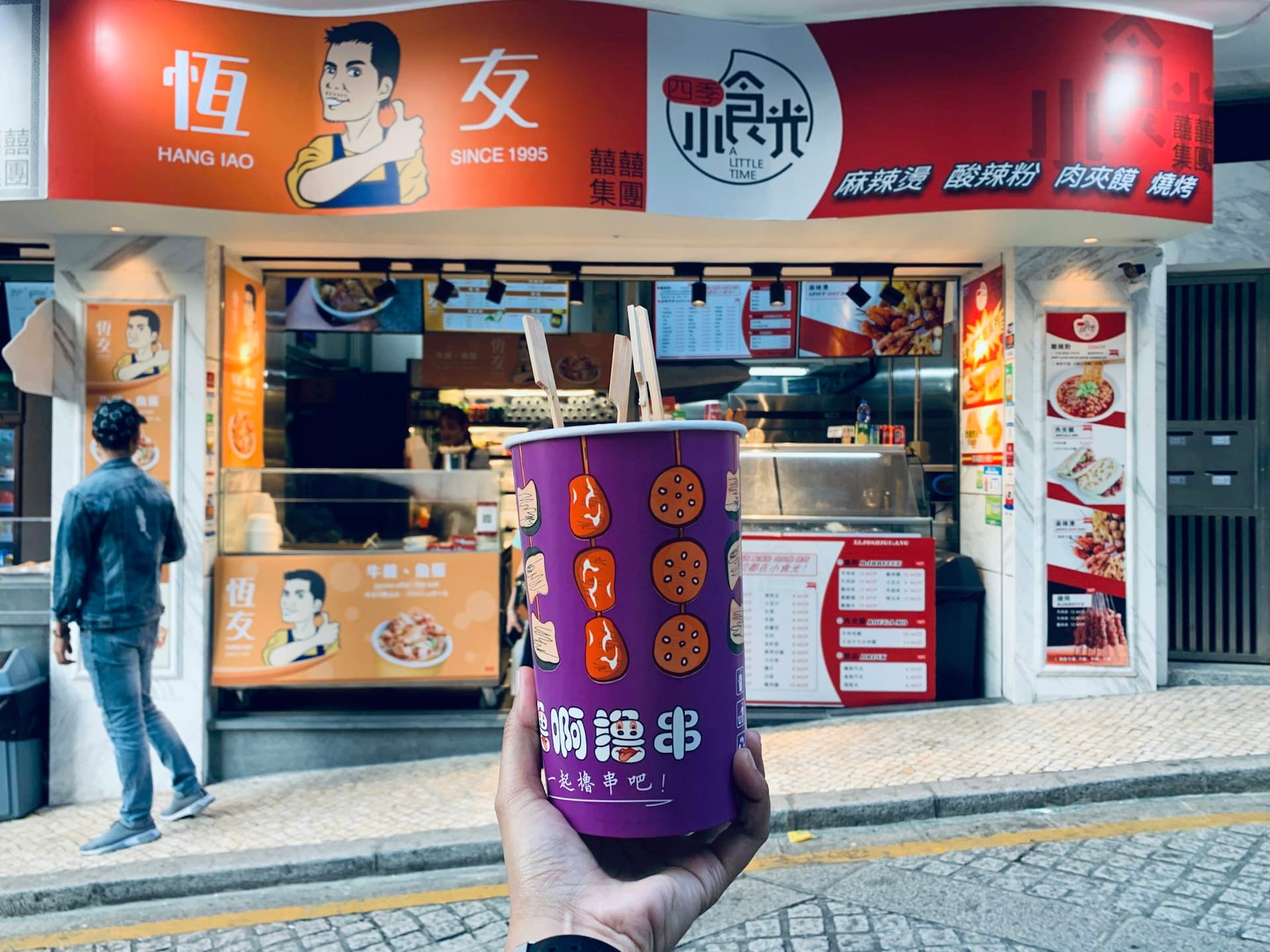 Photo: Kate Genita / Unsplash
“Where ancient alleys meet modern skylines, and East truly embraces West.”
Not the postcards. The stories even locals don't know — whispered in your ear, right where they happened.
This street, now a lively commercial thoroughfare, once marked a significant, albeit unofficial, divide in Macao.
The grand avenue leading to this central square bears a name that honors someone who never set foot in Macao.
Beyond its expansive views and thrill-seeking activities, this soaring structure holds a record for a daring feat that necessitated a unique engineering solution.
Discover every secret of Macao
Every address, every reveal in full — in your ear, right where it happened.
You pick your stops. You walk. The voice reveals what the others miss.
No tours available yet. Check back soon — we're preparing them.
Macao, a Special Administrative Region of China, presents a captivating fusion of Chinese and Portuguese cultures, offering a distinctive mosaic of time-honored stories, architectural styles, and culinary delights. Positioned on the southern coast of China, it was the first and final European colony in mainland Asia, leased to Portugal in 1557 and returned to China in 1999. This prolonged colonial past has left an enduring impression, evident in its UNESCO World Heritage-listed historic center, where soft-hued Jesuit churches stand beside traditional Chinese temples and Mediterranean-inspired homes.
Beyond its historical appeal, Macao is globally recognized as the "Gambling Capital of the World," with a casino industry significantly larger than that of Las Vegas. However, to lessen its reliance on gaming, Macao is actively diversifying its allure, concentrating on cultural and entertainment offerings. The city is a highly urbanized and densely populated region, comprising the Macao Peninsula, the islands of Taipa and Coloane, and the Cotai reclamation zone. This compact territory offers a compelling journey through centuries of East-meets-West heritage, from lively street markets to opulent resorts.
The human story of Macao stretches back thousands of years, with archaeological evidence suggesting settlement as far back as 6,000 years ago. Initially a quiet fishing village, it became known as Ou Mon or A-Ma-Gao, named after A-Ma, the goddess of sailors. Its strategic location in the Pearl River estuary made it a natural refuge and trading port for ships traveling between Southeast Asia and Guangzhou.
The Portuguese first arrived in southern China in 1513, establishing a trading post. By 1557, Macao was leased to Portugal by the Ming dynasty as a permanent trading post, in exchange for an annual rent. This marked the beginning of over four centuries of Portuguese influence, making Macao the first and last European colony in China.
Macao quickly thrived as a major trade center, connecting China with markets in Japan, India, Africa, and Europe, facilitating the exchange of goods like silver, pepper, and sandalwood. It also became an important base for Catholic missionaries, particularly the Jesuits, who used the city to launch missions into China and Japan. This period saw the development of a unique multicultural character, with a population that included Portuguese administrators, Chinese merchants, and Macanese people of mixed Asian and Portuguese ancestry.
The city encountered challenges, including attempts by the Dutch to take control in 1622 and a period of decline in the 1640s due to trade route disruptions and Chinese trade bans. However, Macao regained importance with the lucrative opium trade in the 18th century. In the 19th century, Portugal asserted greater sovereignty, annexing the islands of Taipa and Coloane. Gambling was legalized in 1850, laying the groundwork for Macao's future as a gaming capital.
Macao remained a Portuguese colony until its handover to China on December 20, 1999. Under the "One Country, Two Systems" principle, Macao maintains a high degree of autonomy, including its own legal system and currency. In 2005, its historic center was designated a UNESCO World Heritage Site, recognizing its unique architectural and cultural blend.
Macao offers a wide array of sights, from historic landmarks to contemporary entertainment complexes. The Historic Centre of Macao, a UNESCO World Heritage Site, invites exploration, presenting a compelling blend of Portuguese and Chinese architecture. Stroll through Senado Square, a beautifully paved public space surrounded by soft-hued neoclassical buildings, leading to other significant sites.
Dominating the skyline are the Ruins of St. Paul's, the impressive facade of what was once a 17th-century Jesuit church and college, destroyed by fire in 1835. Nearby, Monte Fort (Fortaleza do Monte), a 17th-century fortress, offers expansive views of the city and houses the Museum of Macao. The A-Ma Temple, dedicated to the goddess of seafarers, stands as one of Macao's oldest and most revered Chinese temples.
For a different atmosphere, visit Coloane Village, a charming and tranquil area with European architecture, small churches, and narrow streets, a clear contrast to the bustling city. Here, you can also find the original Lord Stow's Bakery, celebrated for its Portuguese egg tarts. The Cotai Strip is Macao's answer to Las Vegas, a lively area filled with colossal casino resorts and themed hotels, including the Venetian Macao and the Londoner Macao. For those seeking excitement, the Macao Tower offers expansive city views, a thrilling Skywalk, and the world's highest commercial bungee jump.
The ideal time to visit Macao is during autumn and winter, from mid-October to December. During these months, the weather is mild, pleasant, and dry, with comfortable temperatures ranging from 20–26°C. This period is perfect for outdoor activities and sightseeing. Spring (March to April) is also a good option, offering pleasant sunshine and mild nighttime temperatures, although it can be foggy and rainy. Summers (June to August) are hot and humid, with temperatures reaching up to 30°C, and the monsoon season from July to September brings the risk of cyclones and typhoons.
Macao's official currency is the Macanese Pataca (MOP$), though Hong Kong Dollars (HK$) are widely accepted at a 1:1 ratio. ATMs are readily available, and while larger establishments accept credit cards, smaller vendors often prefer cash. Cantonese is the most widely spoken language, followed by Mandarin and Portuguese, with English generally understood in tourist areas and casinos.
Getting around Macao is relatively easy and affordable. Public buses are a convenient option, with routes connecting major attractions. Many large hotels and casinos also offer free shuttle bus services. Taxis are also available. For international visitors, most nationalities can enjoy visa-free stays for 30 to 90 days. It's advisable to carry a minimum of MOP$5000 or equivalent to fund your stay and a valid return or onward journey ticket.