Les Halles de Lyon Paul Bocuse
This celebrated indoor market, named for France's legendary chef, holds a secret about its origins that extends beyond gourmet delights.
Full story unlocks in the tour
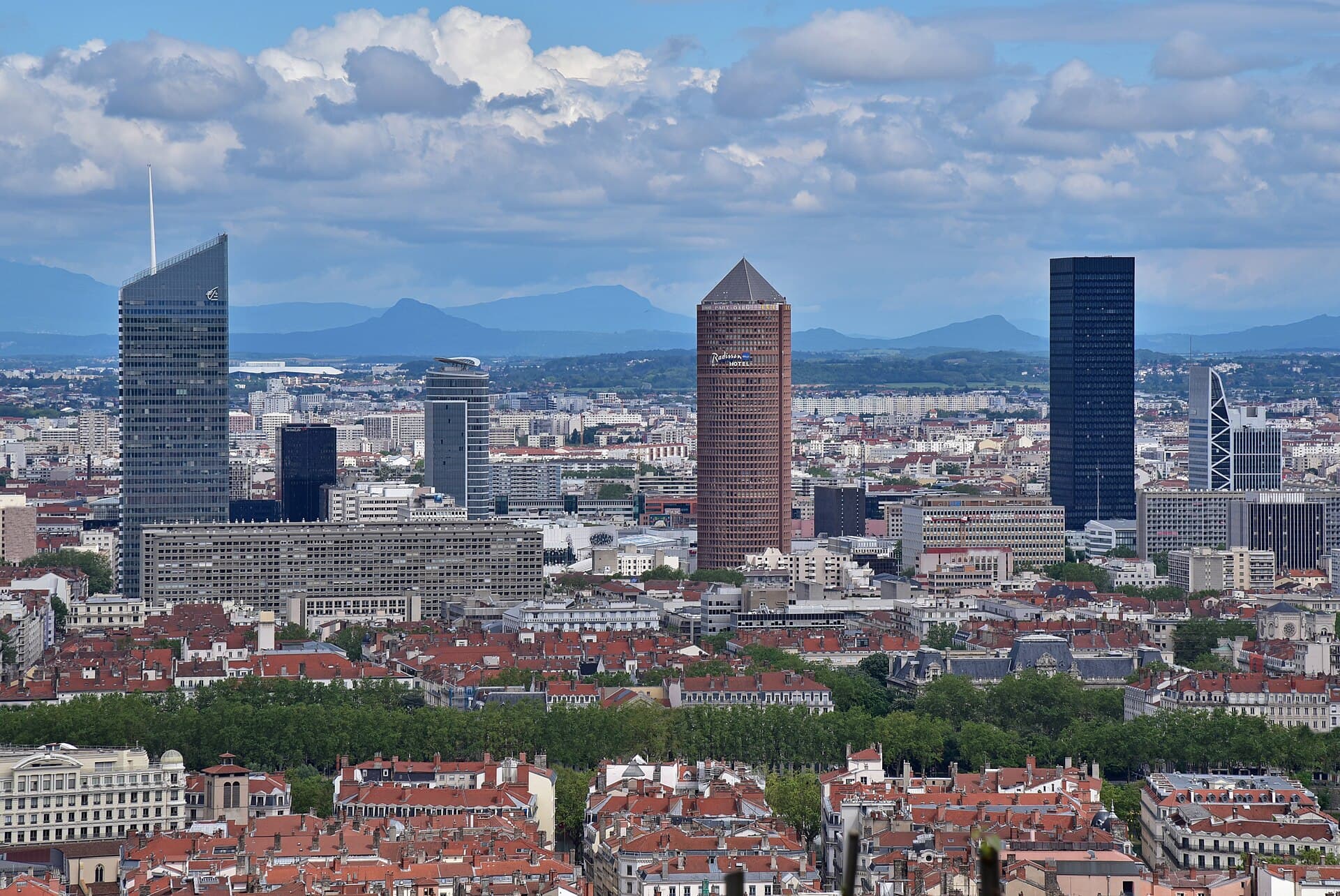 Aldg692VX / CC BY-SA 4.0, via Wikimedia Commons
“Lyon: Where Roman foundations meet Renaissance elegance and culinary innovation.”
Not the postcards. The stories even locals don't know — whispered in your ear, right where they happened.
This celebrated indoor market, named for France's legendary chef, holds a secret about its origins that extends beyond gourmet delights.
These unassuming passageways in the silk-weaving district conceal a history of rebellion and clever shortcuts.
The name 'bouchon' for these convivial restaurants has a surprising and somewhat debated origin, unrelated to wine corks.
Discover every secret of Lyon
Every address, every reveal in full — in your ear, right where it happened.
You pick your stops. You walk. The voice reveals what the others miss.
No tours available yet. Check back soon — we're preparing them.
Lyon, France's third-largest city, unfolds where the Rhône and Saône rivers converge, creating a distinctive peninsula known as the Presqu'île. This city is a study in layers, where Roman foundations underpin Renaissance grandeur and 19th-century industrial might. Lyon is recognized globally for its culinary traditions, earning it the title of France's gastronomic capital.
The city's historical districts—Vieux Lyon, Fourvière Hill, the Presqu'île, and the slopes of Croix-Rousse—are collectively inscribed on the UNESCO World Heritage List, a testament to its enduring architectural and cultural legacy. Beyond its historical charm, Lyon maintains a lively contemporary pulse, with a significant software industry, particularly in video games, and a growing startup sector. It's a city that invites exploration on foot, revealing its stories through ancient passageways, monumental frescoes, and bustling markets.
The story of Lyon begins in 43 BCE, when the Roman colony of Lugdunum was established on Fourvière Hill by Lucius Munatius Plancus. Its strategic location at the confluence of the Rhône and Saône rivers, and at the crossroads of major Roman roads, quickly elevated it to prominence, becoming the capital of the Gallia Lugdunensis province. The city flourished, reaching its peak of classical development in the 2nd century CE, a period that also saw the introduction of Christianity.
After the decline of Roman influence, Lyon transitioned through the Middle Ages, becoming part of the Kingdom of the Burgundians and later integrated into the Frankish kingdoms. The Archbishop of Lyon gained significant power, eventually receiving the title of “Primate of the Gauls” in 1079, a distinction still held today. The Renaissance marked a second golden age for Lyon, transforming it into a major European hub. The establishment of four annual fairs in the 15th century attracted merchants and Italian bankers from across Europe, making Lyon an important financial center. This era also saw the authorization of silk weaving privileges by King François I in 1540, previously an Italian monopoly, which laid the groundwork for Lyon's future as a silk capital.
The silk industry became central to Lyon's economy, with production expanding significantly in the 17th century. By the end of the 19th century, Lyon housed 310 silk factories and 210,000 workers, exporting silk worldwide. However, this period was not without conflict; the Canut revolts, where silk weavers demanded fair prices and working conditions, marked the era, though eventually leading to agreements. The Industrial Revolution brought new challenges with the advent of artificial textiles, leading to the collapse of industrial silk production in the 20th century, though haute couture and antique fabric restoration continue.
During World War II, Lyon played a crucial role as a center for the French Resistance, earning it the nickname 'Capital of the Resistance.' The city's secret passageways, known as traboules, were instrumental in evading Nazi forces. Urban development continued into the 20th and 21st centuries, with Lyon evolving into a major industrial center for textiles, chemicals, and mechanical engineering, and now a hub for banking, pharmaceuticals, biotech, and software.
Begin your exploration in Vieux Lyon, one of Europe's largest preserved Renaissance neighborhoods. Wander its pedestrian-friendly lanes, discover picturesque squares, and seek out the traboules, the city's unique covered passageways. Take a funicular up Fourvière Hill, the ancient Roman site of Lugdunum, for expansive views of the city. Here, you'll find the Roman ruins, including an ancient theater, and the gleaming Notre-Dame Basilica, known for its ornate Neo-Byzantine architecture and intricate mosaics.
The Presqu'île, the peninsula between the Rhône and Saône, is Lyon's lively commercial and cultural heart. Explore grand squares like Place Bellecour, one of Europe's largest pedestrian squares, and Place des Terreaux, home to the Bartholdi fountain and the Hôtel de Ville. Do not miss Les Halles de Lyon Paul Bocuse, a gourmet indoor market showcasing local delicacies. For art enthusiasts, the Museum of Fine Arts, housed in a former abbey on the Presqu'île, offers a diverse collection. Finally, discover the Croix-Rousse district, historically the silk workers' quarter, known for its distinct atmosphere and the Mur des Canuts, a massive trompe l'oeil mural.
The ideal times to visit Lyon are late spring (May-June) and early fall (September-October). During these months, the weather is pleasant, with temperatures ranging from 10°C to 22°C (50°F to 72°F), and the tourist crowds are generally smaller. Spring brings blooming gardens, while autumn offers colorful fall foliage and harvest season markets. Summer (July-August) is also popular, with warm weather and festivals, but can be hot and see more tourists, with some local businesses closing in August. December is magical for the Fête des Lumières (Festival of Lights), though temperatures are colder.
Lyon is a highly walkable city, with many of its main attractions in Vieux Lyon and the Presqu'île easily accessible on foot. For longer distances or reaching the hills, Lyon offers an excellent public transport network operated by TCL, including four metro lines, trams, buses, and two funiculars that ascend Fourvière Hill and Croix-Rousse. A single ticket costs around €2, with options for multi-day passes or books of ten tickets offering better value.
Lyon-Saint Exupéry Airport (LYS) connects the city to major European destinations. The Rhônexpress tram provides a convenient, though somewhat expensive, link from the airport to Part-Dieu train station, where you can connect to the metro. While English is spoken in tourist areas, having a few French phrases will enhance your experience, especially in traditional bouchons where staff may not always speak English. Keeping some cash on hand is also advisable for markets and smaller establishments.