Basilica of Our Lady of Luján
The grand Neo-Gothic Basilica of Our Lady of Luján, a beacon of faith, holds a quiet space beneath its soaring spires.
Full story unlocks in the tour
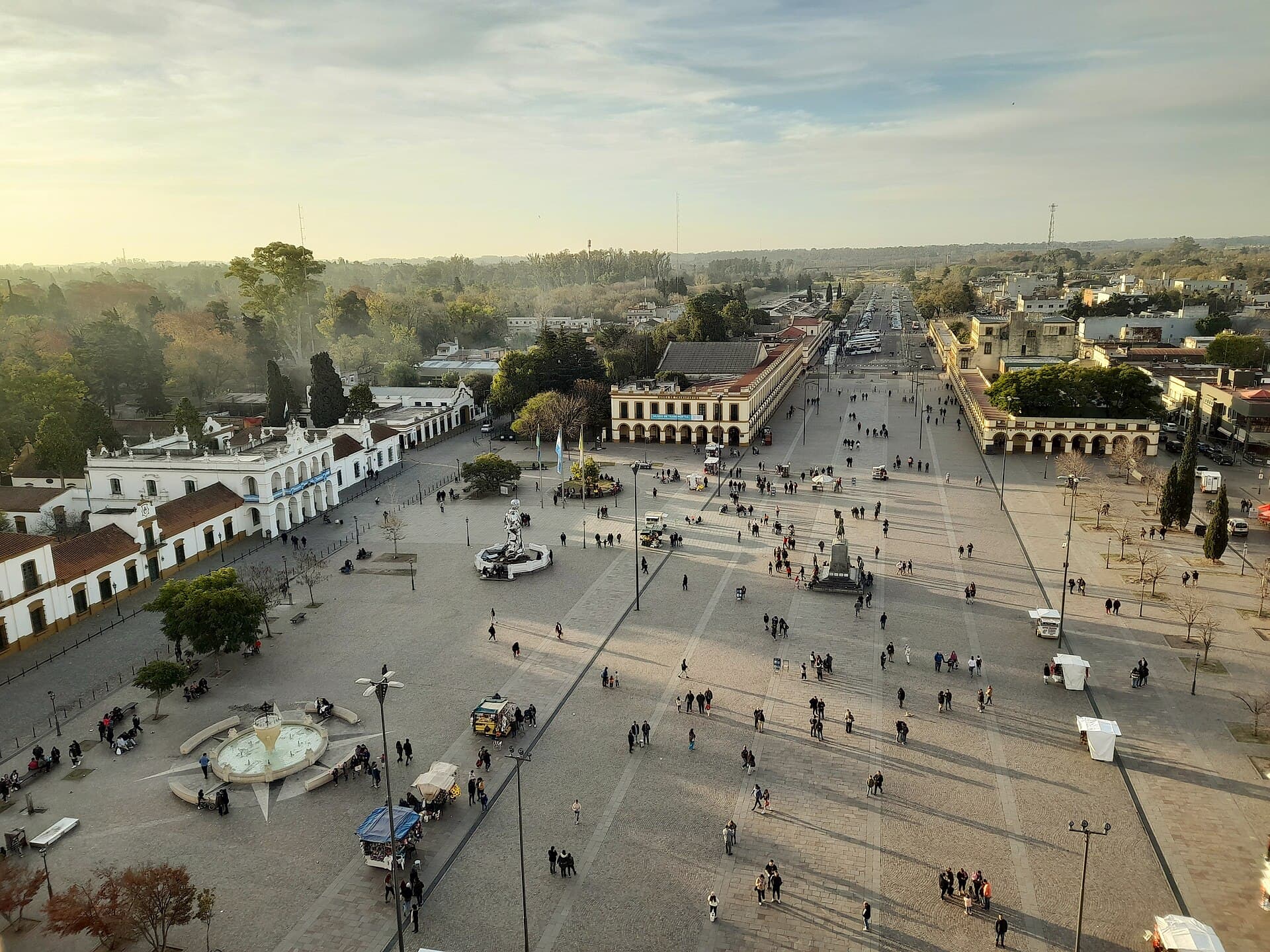 Betina Jones / CC BY-SA 4.0, via Wikimedia Commons
“Where devotion, heritage, and the gaucho spirit converge on the Pampa.”
Not the postcards. The stories even locals don't know — whispered in your ear, right where they happened.
The grand Neo-Gothic Basilica of Our Lady of Luján, a beacon of faith, holds a quiet space beneath its soaring spires.
In a city defined by its spiritual significance, an unassuming bakery holds a claim to a different kind of heritage, one that even a former president sampled.
The very river that gives Luján its name is tied to a curious event that shaped the city's destiny.
Discover every secret of Luján
Every address, every reveal in full — in your ear, right where it happened.
You pick your stops. You walk. The voice reveals what the others miss.
No tours available yet. Check back soon — we're preparing them.
Luján, a city in the Buenos Aires Province of Argentina, lies approximately 68 kilometers (42 miles) northwest of the nation's capital. Established in 1755, it is known as Argentina's "Capital of Faith" due to the iconic Basilica of Our Lady of Luján, a Neo-Gothic architectural triumph that draws millions of pilgrims annually.
Beyond its spiritual core, Luján offers a blend of cultural heritage and rural beauty. The city sits along the serene banks of the Luján River, providing a peaceful countryside atmosphere. It serves as an entry point to explore the gaucho culture of the Pampa region, with opportunities to delve into traditional workshops and local customs.
Whether seeking a spiritual journey, a historical exploration, or a taste of authentic Argentine traditions, Luján presents a singular and genuine experience. It is a favored destination for day trips from Buenos Aires, offering a diverse array of attractions for various interests.
Luján's history is unique, as its origins are not rooted in military forts or administrative decrees, but rather in a religious shrine. The story begins in 1630 with a miraculous event involving a terracotta statue of the Virgin Mary. Legend states that a wagon transporting this statue from Buenos Aires to Santiago del Estero became immobile near the Luján River. Despite strenuous efforts, the oxen refused to move until the box containing the statue was removed from the cart. This occurrence was interpreted as a divine sign that the Virgin willed to remain there, leading to the construction of a modest chapel at the site.
Over time, a settlement gradually formed around this venerated image as people sought to be closer to the shrine. In 1730, a century after the miracle, a stone church was consecrated, largely funded by pious donations from Buenos Aires merchants. The growing colonial town officially received the title "Villa de Nuestra Señora de Luján" in 1755, along with the right to establish its own city council (Cabildo), granting it judicial and administrative autonomy.
Luján's strategic location on the Camino Real, a vital route connecting the port of Buenos Aires with Upper Peru and Chile, further contributed to its development. It became a mandatory stop for merchants, officials, and travelers, fostering an economy based on serving these pilgrims and visitors. The city's cultural life became intertwined with colonial traditions, and it frequently hosted viceroys and prominent historical figures, giving it a significance beyond its size.
The transformation of Luján into a national shrine occurred in 1887 when Pope Leo XIII formally declared Our Lady of Luján the patroness of Argentina. That same year, construction commenced on the current Basilica, designed in a Neo-Gothic style by French architect Ulderico Courtois, to accommodate the increasing number of pilgrims. The grand basilica, with its 106-meter-high towers, was completed in 1935, and it continues to be the spiritual heart of the city, drawing millions of visitors annually.
The most prominent landmark in Luján is the Basilica of Our Lady of Luján, a Neo-Gothic architectural marvel dedicated to Argentina's patron saint. Its soaring spires, reaching 106 meters, are visible from a distance across the flat Pampa. Inside, the Basilica houses the small, 38-centimeter statue of the Virgin and features intricate French Gothic details, including stained-glass windows from Chartres, France. Visitors can also access a 360° viewpoint for panoramic city views and explore the crypt, which displays images of the Virgin from various countries.
Adjacent to the Basilica is the Enrique Udaondo Provincial Museum Complex, one of Argentina's largest and most significant historical museums. This complex includes the Colonial and Historical Museum, housed in the former town hall (Cabildo) and the Viceroy's house, offering insights into colonial life and national history. It also features a Transport Museum, showcasing Argentina's transportation evolution with antique vehicles, including Argentina's first locomotive, La Porteña, and the Plus Ultra hydroplane.
For a glimpse into rural charm, the village of Carlos Keen, located about 20 minutes from Luján, is a gastronomic center known for its peaceful atmosphere and country restaurants. The old train station in Carlos Keen now functions as an artisan marketplace.
Other notable sites include the Abbey of San Benito, an active monastery offering a tranquil atmosphere and Romanesque-style architecture, and the Ameghino House Museum, dedicated to the renowned Argentine naturalist Florentino Ameghino, showcasing 19th-century architecture and fossil remains.
The best times to visit Luján for pleasant weather and outdoor activities are during spring (September to November) and fall (March to May). These transitional seasons offer mild and comfortable temperatures, making them ideal for exploring the city and its attractions. Summers (December to February) are warm to hot, with average temperatures around 23-25°C, while winters (June to August) are cooler, with average temperatures of 10-12°C, but generally mild with low rainfall.
Luján is easily accessible from Buenos Aires. You can reach the city by car via Autopista Acceso Oeste (Route 7). Public transport options include a train service from Once station in Buenos Aires, requiring a change at Moreno station, or bus line 57, with branches from Once and Palermo. Both train and bus services require a SUBE Card.
While Luján is generally considered safe for tourists, standard precautions are advisable, such as being aware of your surroundings. The local currency is the Argentine Peso (ARS), and it is recommended to carry some cash as not all establishments accept credit cards. Shops typically operate Monday to Saturday, from approximately 9:00-10:00 AM to 8:00-9:00 PM, often with a siesta break from 1:00 PM to 4:00 PM.