Bara Imambara
Within the grand halls of Bara Imambara, a legend speaks of a secret passage leading to a distant city.
Full story unlocks in the tour
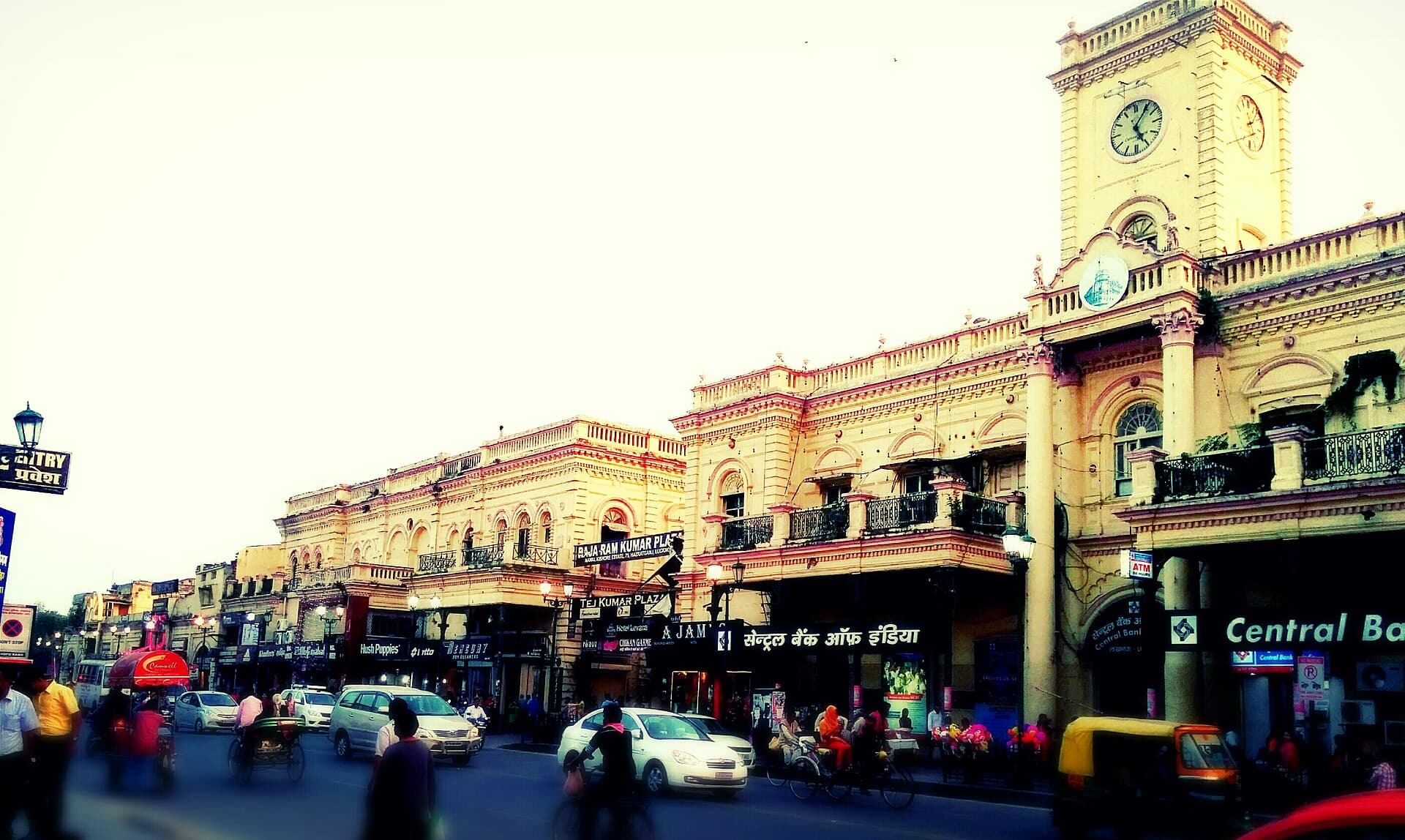 Mohit / CC BY-SA 4.0, via Wikimedia Commons
“Where every brick recounts tales of Nawabi grandeur and quiet resistance.”
Not the postcards. The stories even locals don't know — whispered in your ear, right where they happened.
Within the grand halls of Bara Imambara, a legend speaks of a secret passage leading to a distant city.
The bullet-scarred walls of The Residency hold more than just memories of a siege; they tell of a unique form of communication.
The lively Chowk market, a center for traditional crafts, once possessed a secret language for haggling.
Discover every secret of Lucknow
Every address, every reveal in full — in your ear, right where it happened.
You pick your stops. You walk. The voice reveals what the others miss.
No tours available yet. Check back soon — we're preparing them.
Lucknow, the capital of Uttar Pradesh, moves with a gentle grace, a striking contrast to the bustling energy of other Indian metropolises. Frequently called the 'City of Nawabs,' it embodies a refined culture known as Tehzeeb, a blend of courtesy, sophistication, and a deep appreciation for gracious living that permeates every facet of existence, from its exquisite cuisine to its classical arts. Resting on the banks of the tranquil Gomti River, Lucknow offers a journey through time, where Mughal, Persian, and British influences have intricately woven architectural splendor and cultural diversity.
Beyond its historical monuments, Lucknow stands as a living testament to a unique syncretic Hindu-Muslim culture, often referred to as Ganga-Jamuni Tehzeeb. This harmonious blend is evident in its language, customs, and particularly its culinary landscape, which is celebrated for its delicate flavors and aromatic spices. Visitors are invited to slow their pace, savor each moment, and uncover the layers of history and artistry that render Lucknow an unforgettable experience.
## From Ancient Roots to Nawabi Zenith Lucknow’s origins are deeply rooted in ancient lore, with tradition tracing its name to Lakshmana, the brother of Lord Rama from the Hindu epic Ramayana. The area was once identified as Lakshmanapuri or Lakshmanavati. Historically, by the 6th to 4th century BCE, it formed a part of the Kosala kingdom, one of the 16 Mahajanapadas.
The city’s prominence truly began to surface around the 13th century, achieving significant administrative status under the Mughal Emperor Akbar in the 16th century. However, it was the Nawabs of Awadh who ushered in Lucknow's 'Golden Age.' In 1722, Saadat Khan was appointed the first Nawab of Awadh, initially with Faizabad as the capital. The crucial shift occurred in 1775 when Nawab Asaf-ud-Daula moved the capital to Lucknow, transforming it into a major political and cultural center. Under his patronage, and that of successive Nawabs, Lucknow blossomed as a hub for arts, music, poetry, and refined living, earning it designations like 'Shiraz-i-Hind' and 'The Constantinople of the East.'
## The Tumult of 1857 and Beyond The British East India Company’s increasing influence led to the annexation of Awadh in 1856, with Nawab Wajid Ali Shah, the final ruler, exiled to Calcutta. This action fueled widespread resentment, making Lucknow a primary center of the Indian Rebellion of 1857. The British Residency became the site of a prolonged and dramatic siege, a defining moment in the uprising. Though the British eventually regained control, the rebellion left an enduring mark on the city’s history and architecture.
In the early 20th century, Lucknow continued to play a significant role in India’s independence movement. The historic Lucknow Pact was signed here in 1916, uniting the Indian National Congress and the Muslim League in their demand for autonomy. In 1920, Lucknow officially became the administrative capital of the United Provinces of Agra and Oudh, and upon India’s independence in 1947, it was confirmed as the capital of Uttar Pradesh. Today, Lucknow harmonizes its storied past with modern development, continuing to evolve while safeguarding its unique cultural identity.
Begin your exploration at the Bara Imambara, an architectural wonder constructed in 1784. Its central hall stands as one of the world's largest arched constructions without supporting beams, and above it lies the celebrated Bhul Bhulaiya, an intriguing labyrinth of interconnected passages. Nearby, the Rumi Darwaza, a 60-foot-high ornamental gateway, serves as an iconic symbol of the city, drawing inspiration from the Sublime Porte in Istanbul.
Just 1.5 kilometers to the west, the Chota Imambara, also known as the Palace of Lights, is an impressive mausoleum built in 1838 by Muhammad Ali Shah. Its intricate designs and elaborate decorations create a visual spectacle. The Husainabad Clock Tower, one of India's tallest at 221 feet, offers a striking example of Victorian and Gothic architecture.
For a poignant glimpse into the city's colonial past, visit The Residency. Its preserved ruins, still bearing bullet marks from the 1857 Rebellion, narrate a powerful story of the siege. The on-site museum provides further context with artifacts and historical accounts. Beyond these grand monuments, consider a walk through the Husainabad Picture Gallery to view an extraordinary collection of Nawabi portraiture. For a different pace, Kudiya Ghat offers a serene spot along the Gomti River for quiet contemplation or boating.
The ideal time to experience Lucknow is during the cooler months, from October to March. In this period, the weather is pleasantly cool and dry, with daytime temperatures generally ranging from 7°C to 24°C, making it perfect for sightseeing and outdoor activities. While December and January may bring some fog, the overall climate remains comfortable. Summers, from April to June, are exceedingly hot and dry, with temperatures often climbing above 40°C, and are generally not recommended for travel. The monsoon season, from July to September, brings moderate rainfall and cooler temperatures, but also high humidity and the possibility of disruptions due to heavy rains.
Lucknow is easily accessible by air, rail, and road. Chaudhary Charan Singh International Airport (LKO) handles domestic and some international flights. Lucknow Junction and Charbagh Railway Station are the primary railway hubs, connecting the city to major Indian cities. For navigating the city, the Lucknow Metro covers key areas, offering a convenient way to bypass traffic. Auto-rickshaws and ride-hailing applications like Ola and Uber are readily available, though it is advisable to agree upon auto-rickshaw fares beforehand.
Dress modestly, particularly when visiting religious sites, ensuring shoulders and knees are covered. Carry Indian Rupees (INR) for local markets and street food, though cards are widely accepted in larger establishments. While Lucknow is generally considered safe for visitors, especially in well-trafficked areas, it is wise to observe standard precautions such as avoiding isolated areas at night and safeguarding valuables. Stay hydrated, particularly during warmer months, and opt for bottled water.