The Walls of Lucca
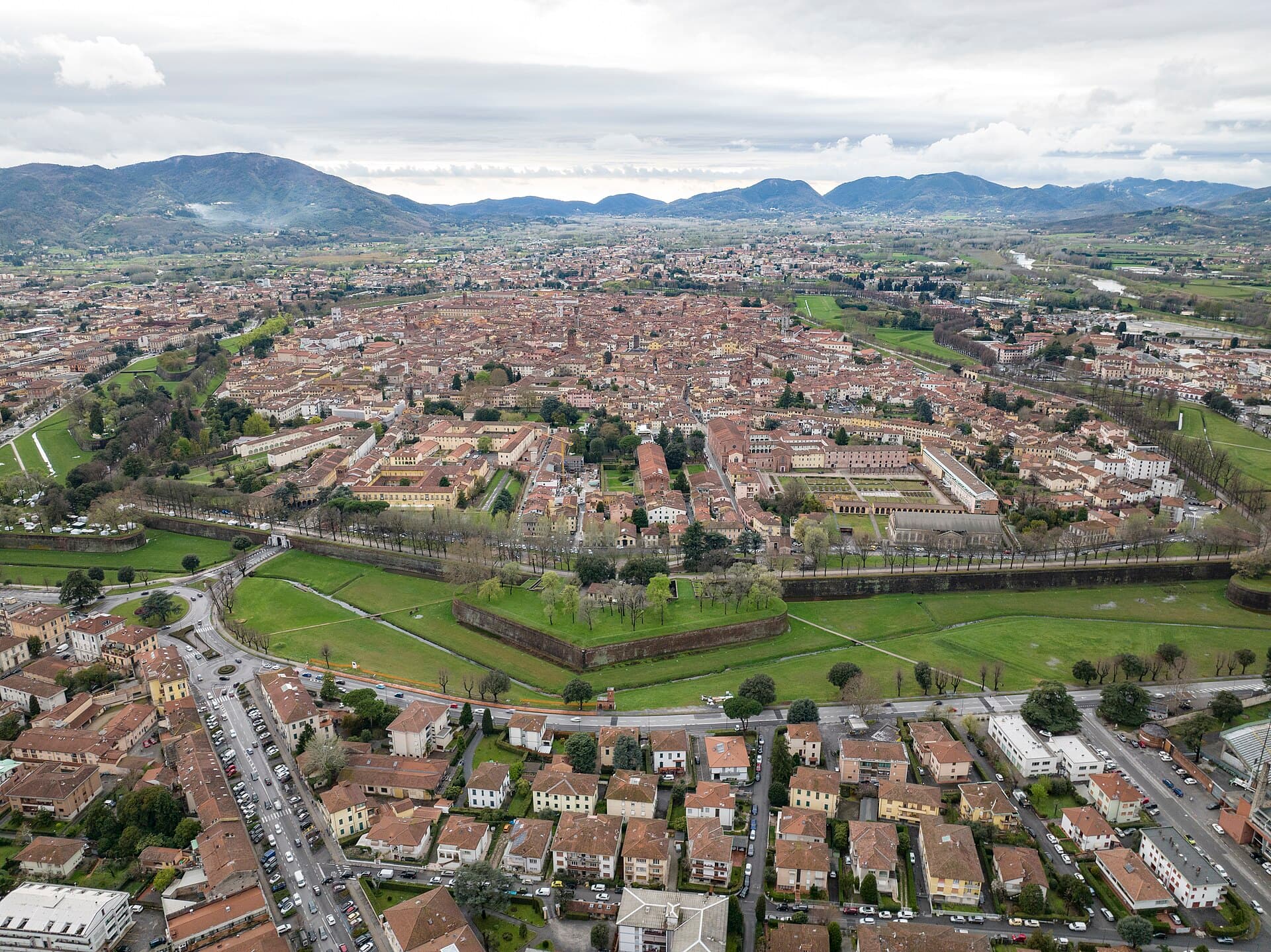
Lucca's iconic Renaissance walls, a defining feature of the city, were built for defense but never actually saw battle.
Full story unlocks in the tour
 Arne Müseler / CC BY-SA 3.0 de, via Wikimedia Commons
“Behind formidable Renaissance walls, a Tuscan city hums with quiet charm and unexpected stories.”
Not the postcards. The stories even locals don't know — whispered in your ear, right where they happened.
Lucca's iconic Renaissance walls, a defining feature of the city, were built for defense but never actually saw battle.
The distinctive oval shape of Lucca's Piazza dell'Anfiteatro isn't just a charming architectural choice; it reveals a much older, more brutal past.
One of Lucca's most recognizable landmarks, the Guinigi Tower, literally has trees growing out of its top.
Discover every secret of Lucca
Every address, every reveal in full — in your ear, right where it happened.
You pick your stops. You walk. The voice reveals what the others miss.
No tours available yet. Check back soon — we're preparing them.
Lucca, a city in Italy's Tuscany region, offers a quieter, more relaxed experience compared to its bustling neighbors like Florence and Pisa. Encircled by a remarkably preserved circuit of Renaissance walls, the city invites visitors to slow down and explore its historic core at an unhurried pace. These 16th and 17th-century fortifications, stretching over 4 kilometers, have been transformed into a tree-lined promenade, ideal for walking or cycling.
Within these formidable walls, Lucca reveals a network of narrow, cobbled streets that open onto sunlit piazzas, medieval towers, and numerous churches. It's a city where daily life remains rooted in tradition, evident in its local markets and quaint cafes. Lucca is also recognized as the birthplace of renowned opera composer Giacomo Puccini, and music continues to play a significant role in its cultural identity.
Lucca's origins trace back to the Etruscans, with evidence of a Ligurian settlement preceding it. It became a Roman colony around 180 BCE, and its central streets still preserve the rectangular Roman street plan. The city held strategic importance as a fortress during both the Roman Republic and Empire. In 56 BCE, Lucca even served as the meeting place for Julius Caesar, Pompey, and Crassus, where they reaffirmed their political alliance known as the First Triumvirate.
After the fall of the Roman Empire, Lucca was occupied by various groups, including the Goths, Byzantines, and Lombards. Under Lombard rule around 570 AD, it became the capital of the Duchy of Tuscia. Charlemagne's conquest in 773 led to a period of flourishing, with silk production and export making the city renowned across Europe. Lucca's location on the Via Francigena, a major pilgrim route to Rome, further boosted its prominence.
By the 9th and 10th centuries, Lucca emerged as the principal city in Tuscany. It maintained its independence as a republic for nearly 500 years, a unique status among Italian city-states alongside Venice and Genoa. This independence continued until 1799 when it fell under French rule during the Napoleonic era. Napoleon's sister, Elisa Bonaparte Baciocchi, governed Lucca as a principality from 1805 to 1814. The city was later assigned to Marìa Luisa by the Congress of Vienna in 1815, ceded to Tuscany in 1847, and finally united with the Kingdom of Italy in 1860.
Begin your exploration by walking or cycling along the Renaissance city walls, a 4.2-kilometer circuit offering elevated views of the city and surrounding countryside. Climb the Torre Guinigi, distinctive for the oak trees growing from its summit, for panoramic vistas over Lucca's red-tiled rooftops. Another excellent vantage point is the Torre delle Ore (Clock Tower), the highest tower in Lucca, also offering 360-degree views.
Immerse yourself in the unique oval shape of Piazza dell'Anfiteatro, a lively square built on the foundations of a Roman amphitheater, now home to cafes and shops. Visit the Duomo di San Martino (Lucca Cathedral), a Gothic church housing the revered 'Volto Santo,' an ancient wooden sculpture of Jesus. Explore the Church of San Michele in Foro, a Roman Catholic basilica built over the ancient Roman forum. Stroll along Via Fillungo, Lucca's main shopping street, offering a mix of designer fashion, Italian leather, and local goods. For a moment of tranquility, wander through the baroque gardens of Palazzo Pfanner. Don't miss the Puccini Museum, located in the composer's birthplace, to delve into Lucca's musical heritage.
The most comfortable months to visit Lucca are May, June, and September. During these periods, daytime temperatures are warm but not extreme, and crowds are generally more manageable. Spring (April to June) offers mild temperatures, blooming gardens, and ideal conditions for walking or cycling the city walls. Late summer into early fall (late August to early October) also provides excellent outdoor conditions after the peak summer heat. While July and August bring higher temperatures and a busy festival calendar, they also offer long daylight hours and a lively atmosphere.
Lucca's historic center is largely a restricted traffic zone (ZTL), making walking and cycling the best ways to get around. The city is well-connected by train, with frequent regional services from Pisa (around 30 minutes) and Florence (about 90 minutes). The train station is conveniently located just outside the southern city walls. The closest airports are Pisa Galileo Galilei International Airport (about an hour away by bus or train) and Florence Airport.
If arriving by car, it's advisable to park in paid lots just outside the walls, as driving within the historic center is restricted. Free parking is available in Piazzale Don Baroni (north), Tagliate (north), and Macelli (east) parking lots. For those staying overnight, consider accommodation inside the walls for easy access to the pedestrianized center. Taxis are available, though Uber may be less common.