Keroman Submarine Base
During the Second World War, Lorient's German U-boat base presented such an unyielding obstacle that Allied forces adopted a drastic strategy to neutralize it.
Full story unlocks in the tour
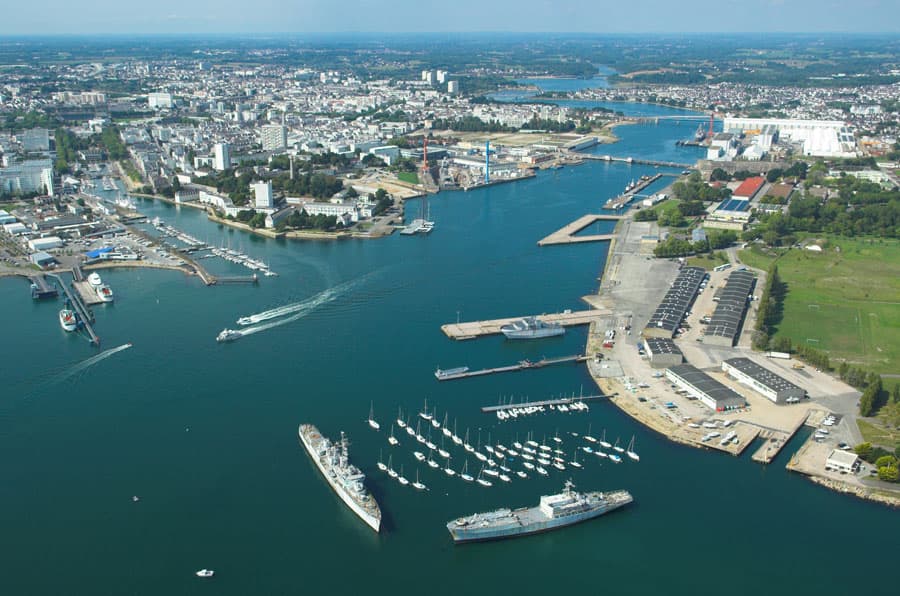 The original uploader was Jackmame at French Wikipedia. / CC BY-SA 2.5, via Wikimedia Commons
“Where the sea's enduring legacy shapes a spirited Celtic heart.”
Not the postcards. The stories even locals don't know — whispered in your ear, right where they happened.
During the Second World War, Lorient's German U-boat base presented such an unyielding obstacle that Allied forces adopted a drastic strategy to neutralize it.
The city's designation, Lorient, carries a significance beyond its compass bearing.
Lorient's Keroman fishing port, a lively hub for fresh seafood, once occupied a different position within the city.
Discover every secret of Lorient
Every address, every reveal in full — in your ear, right where it happened.
You pick your stops. You walk. The voice reveals what the others miss.
No tours available yet. Check back soon — we're preparing them.
Lorient, a city on Brittany's southern coast, offers a compelling narrative of resilience and maritime prowess. Rebuilt from the ashes of World War II, it has re-emerged as a vital port, a center for ocean racing, and a lively cultural crossroads. The city's deep connection to the sea is palpable, from its bustling fishing docks to its historic submarine base, now a site of memory and innovation.
Beyond its industrial and naval heritage, Lorient pulses with a distinct Celtic energy. The annual Interceltic Festival, a global celebration of Celtic cultures, transforms the city into a lively spectacle of music, dance, and tradition. This blend of seafaring grit and cultural exuberance defines Lorient, inviting visitors to explore its layered identity.
## From East India Company Outpost to Naval Power Lorient's origins are firmly rooted in maritime ambition. In the 17th century, the French East India Company established a shipyard here, seeking a strategic location for its voyages to Asia. The city's name, 'L'Orient' (The East), directly references this foundational purpose, specifically the Soleil d'Orient, the first major ship built for these distant expeditions.
## A Strategic Port in Turbulent Times Over centuries, Lorient evolved into a significant naval base, its deep-water harbor and strategic position making it invaluable for military operations. This importance, however, also made it a target. During World War II, the German forces constructed the formidable Keroman Submarine Base, an impenetrable complex of concrete pens designed to protect U-boats. The Allies, unable to destroy the base directly, resorted to a devastating strategy: they systematically leveled the city around it. Between January and February 1943, Lorient endured relentless bombing, with nearly 90% of its buildings destroyed. This tragic event, while preserving the U-boat pens, effectively starved the base of its supply lines.
## Rebirth and Renewal From the rubble, Lorient undertook a monumental rebuilding effort. The post-war era saw the city not only reconstruct but also redefine itself. The fishing port of Keroman expanded, becoming one of France's largest, and the city embraced its identity as a hub for ocean racing. The former submarine base, once a symbol of conflict, has been repurposed into a dynamic space housing museums, research centers, and businesses, reflecting Lorient's enduring spirit of innovation and adaptation. Today, Lorient stands as a testament to human resilience, a city that honors its complex past while looking firmly towards the future.
Explore the Cité de la Voile Éric Tabarly, an interactive museum dedicated to sailing and ocean racing, located within the former Keroman Submarine Base. Wander through the massive concrete U-boat pens, now repurposed for various uses, offering a tangible connection to World War II history. Visit the Keroman Fishing Port early in the morning to witness the bustling fish auction and the return of the trawlers. Stroll along the waterfront, observing the blend of historic vessels and modern racing yachts. Discover the Maison de la Mer, which delves into Lorient's maritime heritage and marine ecosystems. For a cultural immersion, time your visit with the Interceltic Festival of Lorient, a grand celebration of Celtic arts and traditions.
The ideal time to visit Lorient is during the summer months, particularly in August, when the city hosts the renowned Interceltic Festival. This period offers warm weather and a lively atmosphere. For those seeking a quieter experience, late spring (May-June) or early autumn (September-October) provide pleasant temperatures and fewer crowds, perfect for exploring the city's maritime sites.
Lorient is well-connected by train, with regular services from major French cities. The city center is walkable, and a local bus network serves wider areas, including the Keroman Submarine Base. Consider purchasing a 'Lorient Bretagne Sud Pass' for discounts on attractions and public transport. French is the primary language, but English is often understood in tourist areas. The local cuisine emphasizes fresh seafood, so be sure to sample some of the regional specialties at a local crêperie or seafood restaurant.