Phra Prang Sam Yot
The three striking towers of Phra Prang Sam Yot hold more than just historical significance.
Full story unlocks in the tour
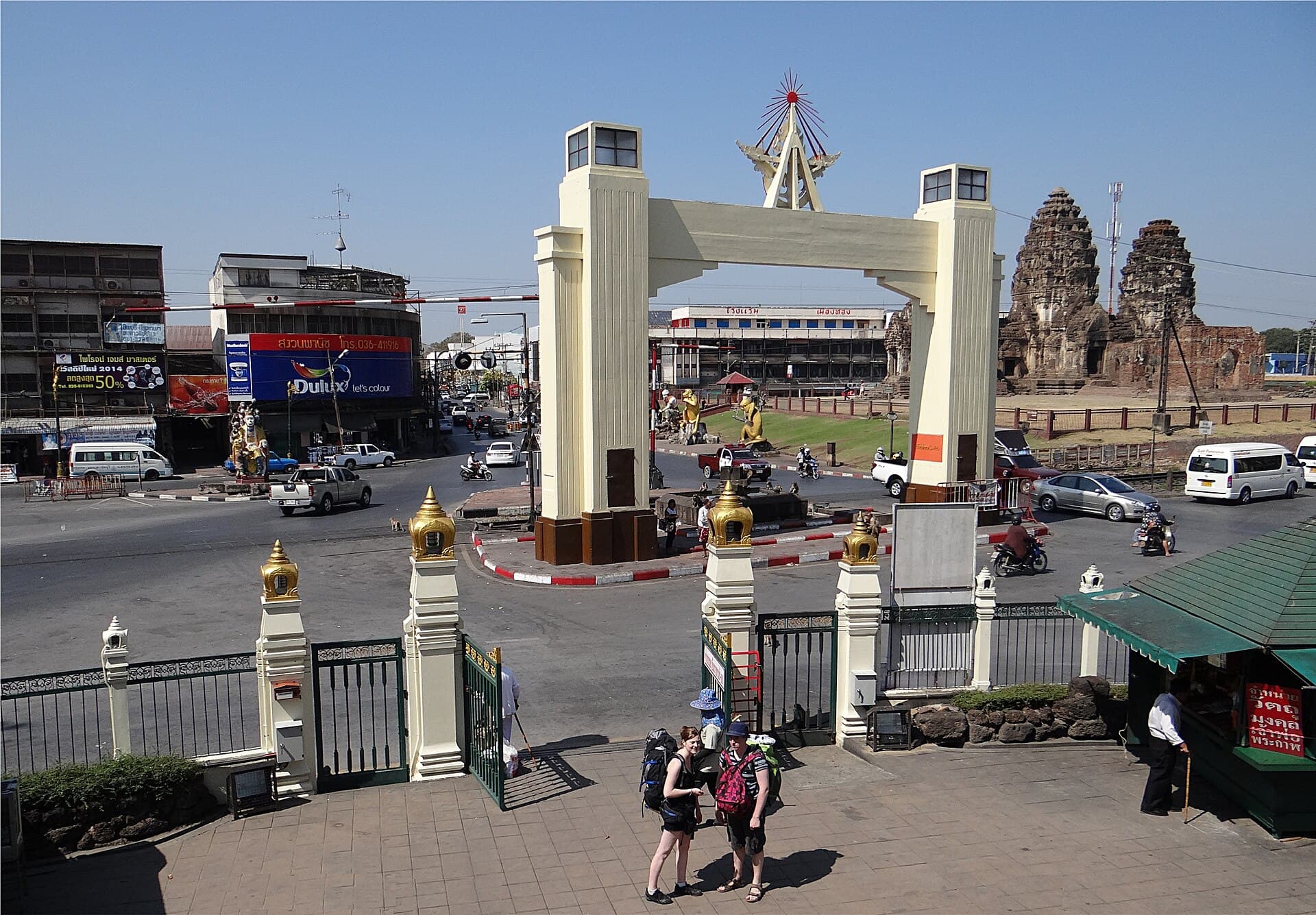 Wayne77 / CC BY-SA 4.0, via Wikimedia Commons
“Where ancient ruins meet a lively, untamed spirit.”
Not the postcards. The stories even locals don't know — whispered in your ear, right where they happened.
The three striking towers of Phra Prang Sam Yot hold more than just historical significance.
King Narai's Palace, a grand 17th-century royal residence, was designed with a unique blend of architectural influences.
Beyond its visible grandeur, Wat Phra Si Rattana Mahathat holds a surprising secret within its ancient walls.
Discover every secret of Lopburi
Every address, every reveal in full — in your ear, right where it happened.
You pick your stops. You walk. The voice reveals what the others miss.
No tours available yet. Check back soon — we're preparing them.
Lopburi, a city in Central Thailand approximately 150 kilometers north of Bangkok, offers a unique blend of ancient history and a lively, untamed atmosphere. Known as Thailand's "Monkey City," it's a destination where ancient Khmer ruins are shared with hundreds of free-roaming macaques. This compact city, easily explored in a day or two, provides a distinct experience away from the larger tourist crowds, inviting visitors to wander through its historic center where every street corner tells a story.
Once a significant capital, Lopburi's historical layers span from prehistoric times through the Dvaravati, Khmer, and Ayutthaya periods. The city's main attractions are conveniently located within walking distance of the train station, making it an accessible stop for those traveling between Bangkok and northern Thailand. Beyond the captivating ruins and their simian residents, Lopburi also offers local markets and a glimpse into authentic Thai daily life.
Lopburi, originally known as Lavo or Lavapura, holds a history stretching back over 3,500 years to the Bronze Age, making it one of Thailand's oldest continuously inhabited cities. Archaeological evidence indicates human settlement in the Chao Phraya River basin since prehistoric times. The city first rose to prominence as a major kingdom during the 6th century, influenced by Indian art and culture, marking the Dvaravati Period.
By the 10th century, Lavo came under the influence of the powerful Khmer Empire, based in Angkor. Many of Lopburi's most ancient structures, such as Phra Prang Sam Yot, date from this Khmer era, showcasing the Bayon style of architecture. The city served as an important western outpost for the Khmer and even sent independent embassies to China in the 12th and 13th centuries. This period, often called the Lopburi Period in Thai art history, saw a flourishing of art and culture.
Lopburi's importance waned as the Khmer Empire declined and new Thai kingdoms emerged. It was later incorporated into the Ayutthaya Kingdom. The city experienced a significant revival in the 17th century under the reign of King Narai the Great, who ruled Ayutthaya from 1656 to 1688. King Narai designated Lopburi as his second capital, building a grand palace, Phra Narai Ratchaniwet, in 1666. He spent a considerable part of his reign, often eight to nine months a year, in Lopburi, using it for relaxation, hunting, state affairs, and welcoming foreign dignitaries, including French ambassadors.
Following King Narai's death in 1688, Lopburi and its palace were largely abandoned and fell into ruin. The city remained in relative obscurity until the 19th century when King Mongkut (Rama IV) of the Rattanakosin Kingdom ordered the restoration of King Narai's Palace in 1856. He also built a new throne hall complex within the palace grounds. In 1937, Field Marshal Plaek Phibunsongkhram further expanded and modernized Lopburi, intending to establish it as a military center and even a potential new capital after World War II. His Art Deco architectural style is still visible along Narai Maharat Road. Today, Lopburi stands as a testament to these layered histories, with its ancient ruins and lively monkey population attracting visitors from around the world.
Lopburi's historical core offers several key sites, many within easy walking distance of each other. The most iconic is Phra Prang Sam Yot, a 13th-century Khmer temple distinguished by its three laterite prangs (towers). This ancient Hindu shrine, later converted to Buddhism, is famously home to hundreds of crab-eating macaques, earning Lopburi its nickname "Monkey City." Just next to it is the San Phra Kan Shrine, another significant site where monkeys congregate.
Across from the train station, you'll find Wat Phra Si Rattana Mahathat, a large royal temple complex dating back to the Khmer period in the 12th century. This site showcases a blend of architectural styles, including Khmer, Sukhothai, and Ayutthaya, and offers a more tranquil experience, generally free of monkeys.
King Narai's Palace (Phra Narai Ratchaniwet), constructed in the 17th century by King Narai, served as his second capital and now houses the Somdet Phra Narai National Museum. The palace grounds feature a mix of Thai and European architectural styles, with reception halls, a throne hall, and various exhibition rooms displaying artifacts from Lopburi's long history.
For a different kind of natural beauty, the Lopburi Sunflower Fields bloom from November to January, creating a lively landscape about 30-40 kilometers outside the city. Additionally, the Khao Phraya Doenthong Viewpoint, about 50 kilometers away, provides expansive views of the Pasak Dam and the surrounding landscape.
The most comfortable time to visit Lopburi is during the dry and cool season, which runs from late November to early March. During these months, temperatures are pleasant, averaging between 26.8°C and 28.5°C, and rainfall is minimal, especially in December and January. This period also coincides with the blooming of the sunflower fields (November to January) and the annual Monkey Festival, typically held on the last weekend of November, where a grand feast is prepared for the city's macaques.
The hotter season spans from mid-March to mid-May, with average daily highs above 35°C, which can make outdoor exploration challenging. The monsoon season, from early June to mid-November, brings abundant rainfall and high humidity, though it generally doesn't deter from visiting the historical sites.
Lopburi is easily accessible from Bangkok by train, bus, or minivan. Trains depart from Bangkok's Hua Lamphong or Krung Thep Aphiwat Central Terminal, with the journey taking between 1.5 to 3 hours. The Lopburi train station is conveniently located in the old town, directly opposite Wat Phra Si Rattana Mahathat, making it an ideal starting point for exploration. Minivans from Bangkok's Mo Chit terminal also provide a convenient option, taking approximately 2 to 2.5 hours.
Most of Lopburi's main attractions are concentrated in the old town and can be explored on foot or by bicycle. For sites further afield, such as the sunflower fields or Khao Phraya Doenthong Viewpoint, renting a car or arranging a taxi is recommended. When interacting with the monkeys, it's crucial to secure your belongings and avoid provoking them, as they are known to be curious and can snatch items. Dress modestly when visiting temples and historical sites. A combo ticket for four temples, including Wat Phra Si Rattana Mahathat, Prang Sam Yot, Wichayen House, and Kraison Siharat Palace, costs 150 baht and is a good value.