Co-Cathedral of Santa María de la Redonda
Gaze upward at the twin towers of Logroño's Co-Cathedral, and you might spot some unexpected residents.
Full story unlocks in the tour
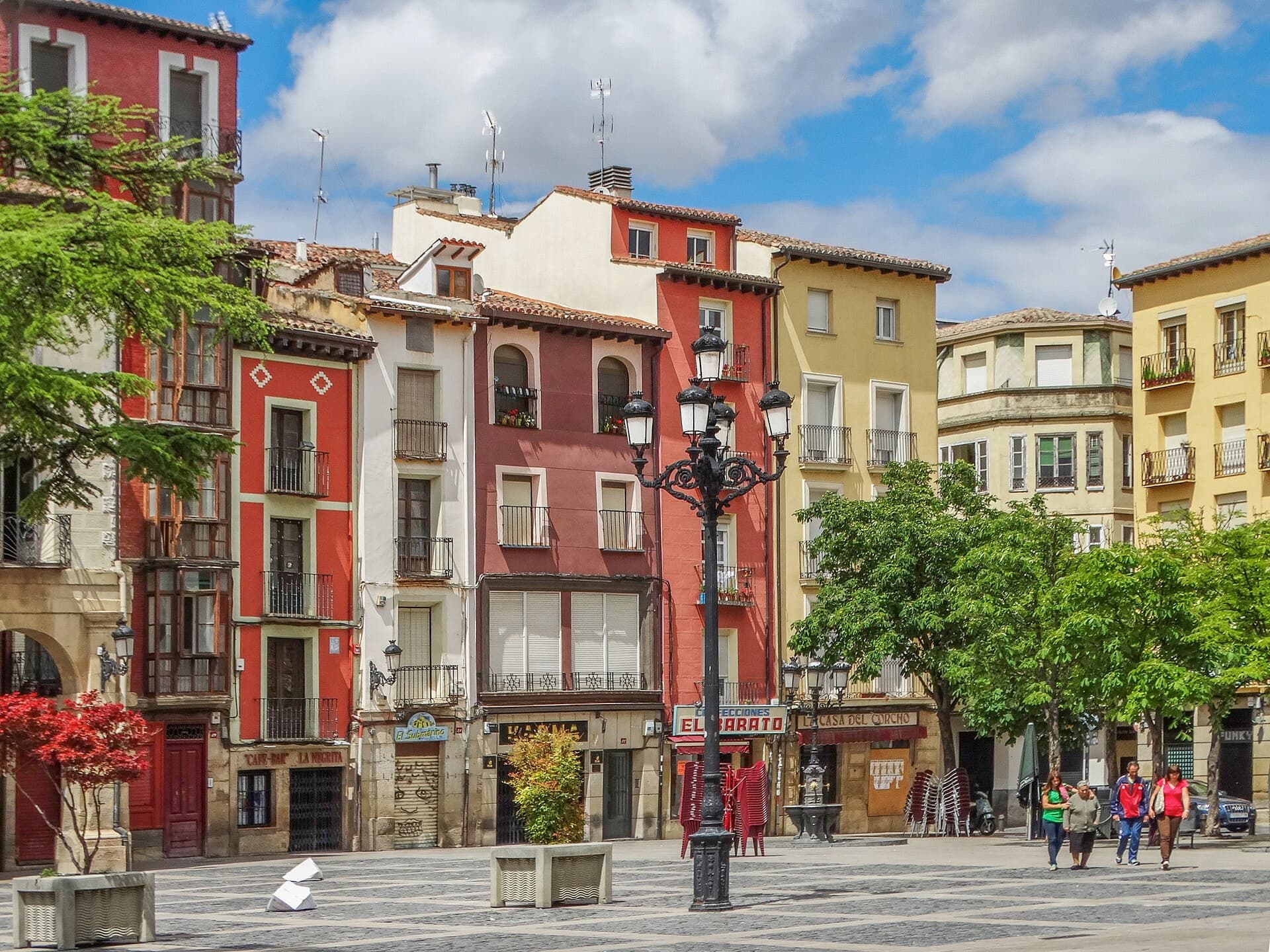 Adam Jones from Kelowna, BC, Canada / CC BY-SA 2.0, via Wikimedia Commons
“Logroño: Ancient paths converge with modern sips.”
Not the postcards. The stories even locals don't know — whispered in your ear, right where they happened.
Gaze upward at the twin towers of Logroño's Co-Cathedral, and you might spot some unexpected residents.
This celebrated street hums with pinchos bars, yet a specific local approach guides you through it like a true Logroñés.
Beneath the city's paved streets lies a concealed world, vital to Logroño's most renowned export.
Discover every secret of Logroño
Every address, every reveal in full — in your ear, right where it happened.
You pick your stops. You walk. The voice reveals what the others miss.
No tours available yet. Check back soon — we're preparing them.
Logroño, the capital of La Rioja, is a city that moves to its own rhythm—a blend of ancient pilgrimage, celebrated gastronomy, and a deep connection to Spain's most famous wine region. Situated on the Ebro River, it has historically been a significant crossroads, particularly for pilgrims on the Camino de Santiago. Unlike bustling metropolises, Logroño offers a more relaxed pace, where quality of life and genuine local experiences take precedence. The city's appeal lies in its ability to combine its enduring past with a lively present, inviting visitors to explore its historic streets, indulge in its acclaimed food and wine scene, and discover a side of Spain that feels both authentic and welcoming.
With a population of around 150,000, Logroño is large enough to offer diverse attractions yet small enough to navigate comfortably, often on foot. It serves as an entry point to the wider Rioja wine country, making it an essential stop for anyone interested in viticulture. Beyond the vineyards, the city itself is a center of cultural activity, from its impressive medieval architecture to its lively evening atmosphere, particularly around its famous pinchos streets.
Logroño's origins extend to Roman times, when it was known as Vareia, a commercial port near an older settlement of the Berones. Its strategic location on the Ebro River and as an important stop on the Camino de Santiago pilgrimage route profoundly influenced its development throughout the Middle Ages. This position made it a contested territory between the kingdoms of Navarre and Castile, eventually becoming part of Castile.
In 1095, Alfonso VI of Castile granted Logroño a charter of rights, known as a fuero, which served as a model for other Spanish cities. The city was granted city status in 1431 by King John II of Castile, and later the titles of 'very noble' and 'very loyal' in 1444. A significant historical event occurred in 1521 when Logroño heroically resisted a 17-day siege by 30,000 French troops. In recognition of this loyalty, Charles I ordered three fleurs-de-lis to be added to the city's emblem. Logroño also played a dark role in history as the main seat of the Basque witch trials in 1609 and 1610, part of the Spanish Inquisition.
The 16th century marked Logroño's emergence as a significant center for wine production, a legacy that continues to define the city and the wider La Rioja region today. The city's economy became heavily dependent on wine, with local ordinances prioritizing its cultivation and trade. The phylloxera epidemic in the late 19th century, which devastated French vineyards, ironically spurred the modernization and expansion of the Rioja wine industry, as French négociants turned to Rioja and brought new techniques like barrel aging. Logroño was established as the capital of the Province of Logroño in 1833, which was later renamed the Province of La Rioja and became an autonomous community in 1982.
Begin your exploration in Logroño's historic center, a maze of narrow streets and plazas. The Concatedral de Santa María de la Redonda is a prominent landmark, with its imposing baroque towers overlooking the Plaza del Mercado. Nearby, the Church of San Bartolomé displays exquisite sculpted Romanesque doorways, the only example of its kind in the city. The Church of Santiago el Real, built in the 16th century, features a formidable image of Santiago Matamoros on its façade. Fragments of the city's medieval past can be seen at the Muralla del Revellín, the remains of its 16th-century fortifications, including an ancient archway that once served as a city gate.
For a taste of local life, stroll down Calle Laurel and its surrounding alleys, renowned for their numerous pinchos bars. This lively area is perfect for a culinary crawl, sampling diverse small bites and local Rioja wines. Another notable street for pinchos is Calle San Juan, offering a more intimate local experience. The Paseo del Espolón is an emblematic city square, featuring landscaped areas and the equestrian statue of General Baldomero Espartero. For green spaces, the Ebro Park offers a relaxing riverside walk with views of the Puente de Piedra, an important bridge on the Camino de Santiago. The Museum of La Rioja, housed in the Palacio de Espartero, provides insights into the region's history and culture.
The best time to visit Logroño is during spring (April to early June) and autumn (mid-September to mid-October). During these periods, temperatures are comfortable, ranging between 15°C and 25°C, ideal for exploring the city's historic streets and vineyards. The summer months (June to August) can be warm to hot, with average highs in August reaching 29°C (84°F). If you enjoy lively festivals, consider visiting in September for the San Mateo Festival, also known as the Grape Harvest Festival, a week-long celebration of wine and local traditions.
Logroño is well-connected and easily accessible. The closest international airport is Bilbao (BIO), approximately 150 kilometers away, with bus services available to Logroño. Madrid is about 335 kilometers south, reachable by bus or a short flight to Logroño's small airport. Once in Logroño, the city is best explored on foot, especially the compact historic center. Public transport within the city is efficient, and taxis are readily available.
Accommodation options in Logroño cater to various budgets, from budget-friendly albergues popular with Camino pilgrims to well-located hotels. The city is generally considered less expensive than larger Spanish cities like Madrid or Barcelona, particularly regarding wine and food. Many establishments in the historic center offer affordable pinchos and wine, making it easy to enjoy the local gastronomy.