Cummerse
Locorotondo's distinctive pointed-roof houses might remind you of another famous Puglian dwelling, but they are not what you expect.
Full story unlocks in the tour
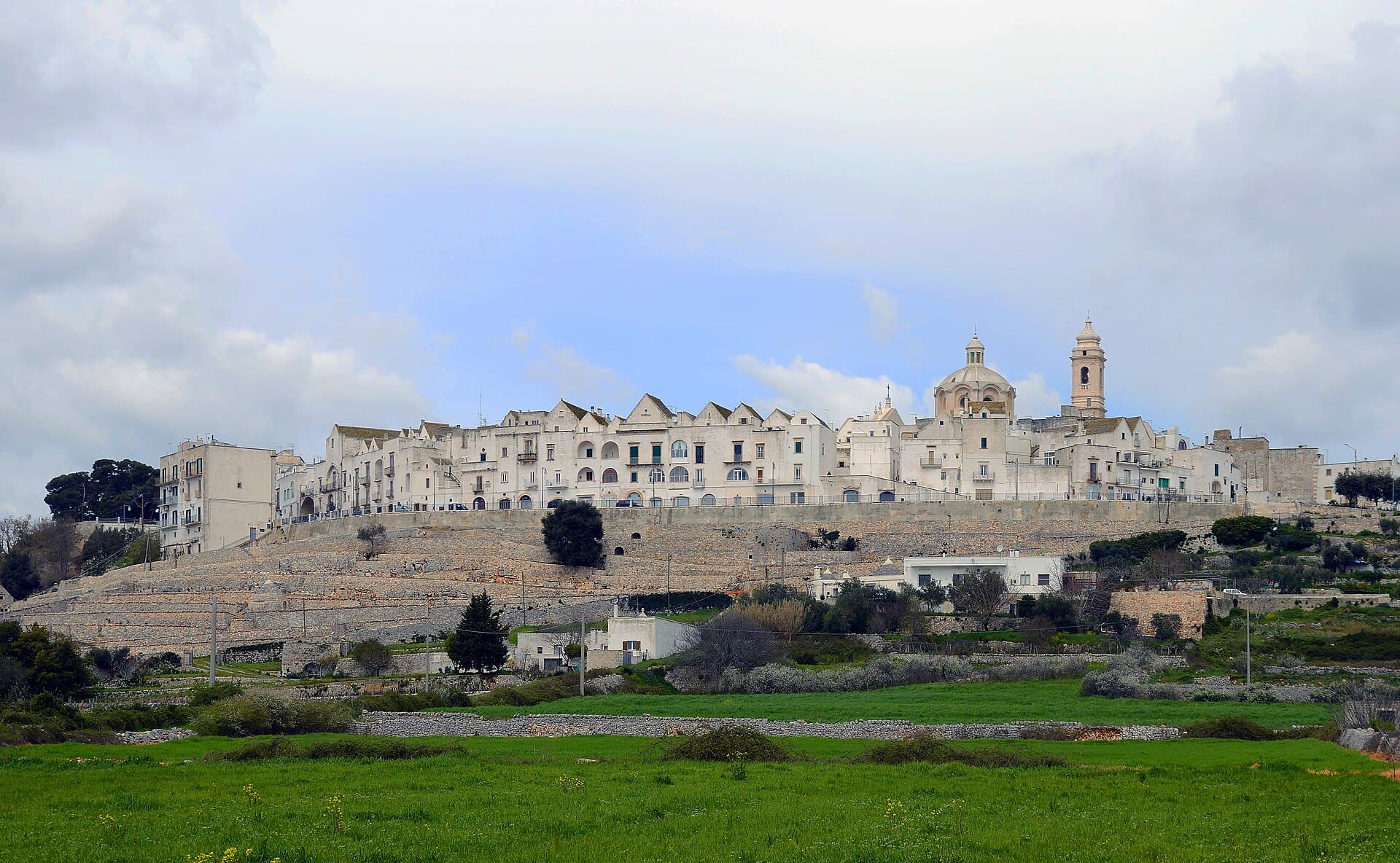 Livioandronico2013 / CC BY-SA 4.0, via Wikimedia Commons
“A circular embrace of whitewashed walls and conical roofs, where history breathes through sun-drenched alleys.”
Not the postcards. The stories even locals don't know — whispered in your ear, right where they happened.
Locorotondo's distinctive pointed-roof houses might remind you of another famous Puglian dwelling, but they are not what you expect.
Beneath the main church, a world unseen reveals a connection to numerous saints, extending far beyond its patron.
In a region celebrated for its ancient stone dwellings, one particular trullo stands as the oldest documented example.
Discover every secret of Locorotondo
Every address, every reveal in full — in your ear, right where it happened.
You pick your stops. You walk. The voice reveals what the others miss.
No tours available yet. Check back soon — we're preparing them.
Locorotondo, a captivating hilltop town in Puglia's Valle d'Itria, lives up to its name, which derives from the Latin "Locus Rutundus" meaning "round place," reflecting its perfectly circular historic center. This appealing settlement, recognized as one of "I Borghi più belli d'Italia" (Italy's most beautiful villages), offers expansive views of a landscape dotted with olive groves, vineyards, and the distinctive trulli houses.
The town's pristine whitewashed buildings, adorned with vivid flower boxes and wrought-iron balconies, create a striking contrast against the azure Apulian sky. Locorotondo invites visitors to wander its intricate network of narrow streets, where a serene atmosphere prevails, offering a genuine glimpse into Puglian culture.
While smaller than some of its more active neighbors, Locorotondo's understated elegance and unique architectural features, like the 'cummerse' houses with their steeply pitched roofs, render it a memorable destination. It is a place to slow down, absorb the atmosphere, and discover postcard-worthy views around every turn.
The area surrounding Locorotondo holds a long record of human settlement, with archaeological evidence suggesting inhabitants as far back as the 3rd millennium BCE. Byzantine groups established themselves in the Valle d'Itria in the 5th century AD, followed by Lombards in the 6th-7th centuries, who fortified these early farming settlements. The town's official foundation dates to approximately 1000 CE, when it emerged as an unfortified hamlet under the jurisdiction of the Benedictine monastery of St. Stephen.
The first documented mention of a village named "Rotondo" appears in an imperial privilege from King Henry VI of Swabia in 1195. By the 15th century, Locorotondo was under the control of the Del Balzo-Orsini family. Over the subsequent centuries, it transitioned through the hands of various feudal lords, including the Carafa, Loffredo, Figueroa, and Borrassa families. This period witnessed an increase in population, housing development, and the construction of defensive walls and a castle.
In 1645, Locorotondo was acquired by Francesco Caracciolo, Duke of Martina, and the Caracciolo family remained the last feudal lords until the early 19th century. The town's current name, Locorotondo, was officially adopted in 1834, having previously been known by names such as Casale San Giorgio and Luogorotondo. The 19th century also saw a significant expansion of large-scale wine production, driven by leases that encouraged widespread vineyard development across the Valle d'Itria. In 1932, the Cantina Sociale di Locorotondo was founded, becoming Puglia's first cooperative winery and instrumental in securing the Locorotondo DOC status in 1969.
Begin your exploration by wandering through the Centro Storico, the historic center, an engaging maze of narrow, winding streets lined with whitewashed buildings. Look up to admire the unique 'cummerse' houses, with their steeply pitched, stone-slab roofs that define Locorotondo's skyline.
For expansive views of the Valle d'Itria, head to the Belvedere di Locorotondo (also known as Villa Comunale or Locorotondo Panoramic Lookout). From here, you can take in the broad vistas of vineyards, olive groves, and distant trulli.
Visit the Chiesa Madre di San Giorgio Martire, the main church, notable for its Neoclassical facade and a subterranean crypt. Other significant churches include the Romanesque Chiesa Rettoria Madonna della Greca, one of the oldest churches in town, and the Chiesa di San Rocco.
Admire Palazzo Morelli, an elegant 18th-century Baroque palace with intricate stone carvings and ornate balconies. You can also experience a wine tasting at Sirose Bufano Wines, located on the edge of the historic center, offering local selections right by the vines.
The best times to visit Locorotondo are during the shoulder seasons: April to June and September to October. During these months, temperatures are comfortable, and the crowds are fewer, allowing for a more relaxed experience. July and August bring the warmest weather and the liveliest atmosphere, with numerous summer festivals, but also more tourists and higher accommodation prices. Winter offers a quieter, milder experience, with the town's white walls appearing stark against the winter sky.
Locorotondo is best explored on foot, especially its compact historic center. While the town has a train station, direct connections from major cities like Bari often require transfers, making the journey longer. Buses offer direct routes from Bari a few times a day. Renting a car provides the most flexibility for exploring Locorotondo and the surrounding Itria Valley, with parking available outside the town center. Taxis are not common; instead, private car services (NCC) are available but are typically more expensive.
Locorotondo is well-connected by train to nearby towns like Alberobello and Martina Franca, making day trips convenient. The town is generally considered a day-trip destination, with enough to see in half a day, though staying overnight allows for experiencing its particular charm in the quieter mornings and evenings.