Basilica de Santa María del Conceyu
This Gothic basilica, a prominent landmark in Llanes, holds a unique distinction regarding its ownership.
Full story unlocks in the tour
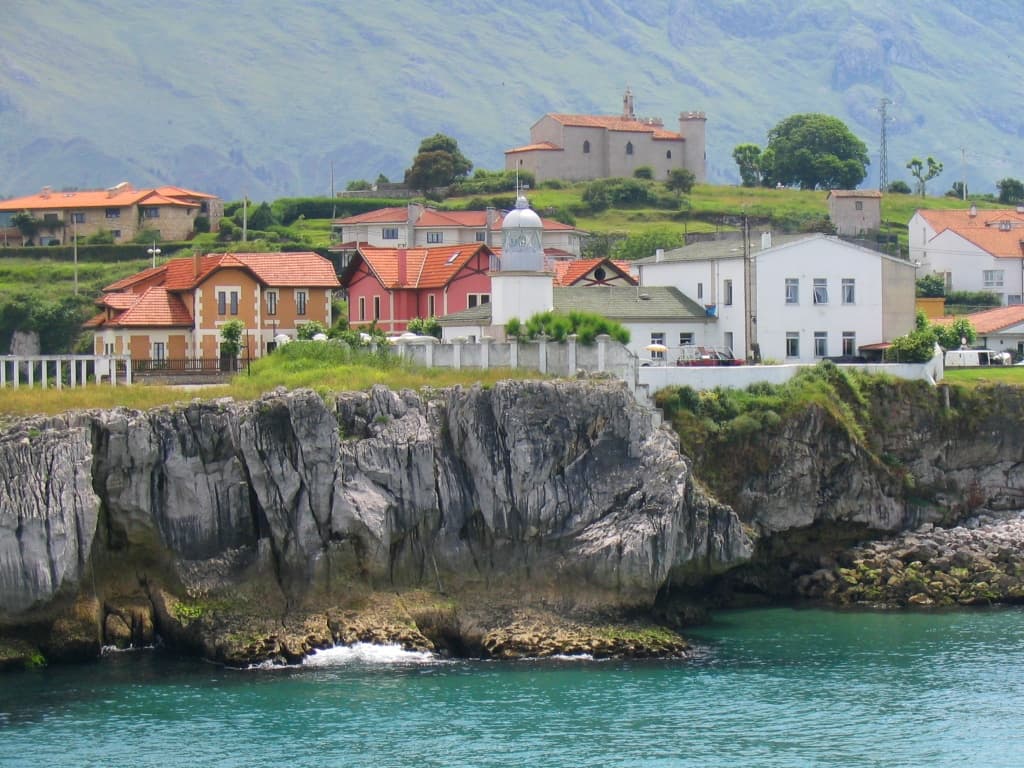 Tomas.senabre / CC BY-SA 2.5 es, via Wikimedia Commons
“Where emerald mountains meet the Cantabrian Sea, and history echoes on painted cubes.”
Not the postcards. The stories even locals don't know — whispered in your ear, right where they happened.
This Gothic basilica, a prominent landmark in Llanes, holds a unique distinction regarding its ownership.
This scenic clifftop promenade offers expansive views, but its origins are more practical than picturesque.
The colorful concrete blocks protecting Llanes' harbor are more than just a striking art installation.
Discover every secret of Llanes
Every address, every reveal in full — in your ear, right where it happened.
You pick your stops. You walk. The voice reveals what the others miss.
No tours available yet. Check back soon — we're preparing them.
Llanes, a captivating coastal town in Asturias, Spain, is a place where the dramatic beauty of the Cantabrian Sea converges with the verdant foothills of the Sierra del Cuera mountains. Known for its medieval character, this former whaling port has evolved into a beloved destination, attracting visitors with its appealing old town, diverse beaches, and a distinctive artistic flair. The town's atmosphere is a blend of historical depth and lively contemporary culture, making it an inviting place to explore at your own pace.
Stretching approximately 30 kilometers along the "Green Coast" of Spain, Llanes offers a unique landscape where you can experience both the coast and the mountains, sometimes within the same day. Its well-preserved historical and monumental heritage, alongside a variety of activities, ensures that every corner holds a new discovery. From ancient city walls to modern art installations, Llanes provides a rich array of experiences for those seeking a genuine Asturian encounter.
The history of Llanes stretches back to prehistoric times, with evidence of human presence dating to the Lower Paleolithic period. Archaeological findings, such as stone tools in La Riera and Balmori Cave, indicate continuous habitation through the Middle and Upper Paleolithic eras. The Idol of Peña Tú, a significant Paleolithic or Bronze Age trace, further attests to the region's ancient past.
By the 12th century, the area was known as "Puebla de Aguilar," part of the Lands of Aguilar, overseen by Soberrón Castle. Llanes gained prominence in the 13th century when King Alfonso IX of Castile granted it town status and privileges in 1225. This period marked the beginning of significant construction, including defensive walls and a formidable tower, aimed at protecting the town from noble families vying for control. The Basilica of Santa María del Conceyu, a blend of Romanesque and Gothic architecture, also began construction during this century, financed by the town's inhabitants.
Throughout the 15th to 18th centuries, Llanes prospered as an important fishing and whaling port, driven by the salt trade and abundant fish, including sardines, conger eel, mackerel, and whale. However, the 18th century saw an economic decline due to continuous wars and the conscription of sailors into the Royal Navy. The 19th century brought further challenges with the War of Independence, during which French troops repeatedly occupied Llanes, burning archives and palaces.
A significant cultural and architectural legacy emerged from the "Indianos"—locals who emigrated to the Americas in the 19th and early 20th centuries, made their fortunes, and returned to build luxurious villas and public buildings. These grand colonial-style mansions, found along Avenida de la Concepción and in nearby villages like Colombres, showcase a blend of colonial charm and Asturian traditions. Today, Llanes continues to honor its past through its well-preserved historic center, recognized as a historic and artistic heritage site.
The 20th century saw limited industrial activity in Llanes, though the Spanish Civil War brought major battles to the surrounding mountains. In more recent times, Llanes has embraced its artistic side with projects like Agustín Ibarrola's "Cubes of Memory," an outdoor artwork on the harbor breakwater that visually narrates the town's identity. The town's folklore, cuisine, and festivals continue to be a central part of its identity, with traditional costumes and popular bands participating in meticulously organized events.
Llanes offers a captivating blend of history, art, and natural beauty. Begin your exploration in the Historic Center, a medieval area with ancient gates and impressive stretches of the 13th-century town wall. Wander through narrow streets to discover the Basilica de Santa María del Conceyu, a Gothic church with Romanesque elements, built between the 12th and 15th centuries. Nearby, you'll find other significant historical buildings such as the Tower of Llanes, the oldest house of Juan Pariente (where Emperor Charles V once stayed), and the Palacio de Gastañaga.
Head to the Port of Llanes to witness the iconic Cubes of Memory (Los Cubos de la Memoria). This striking open-air artwork by Agustín Ibarrola features over 200 decorated concrete blocks that protect the harbor, each telling a visual story of the sea, history, and people of Llanes. From the port, ascend to the Paseo de San Pedro, a 19th-century clifftop promenade offering expansive views of Sablón Beach, the historic center, and the Sierra del Cuera mountains.
The coastline around Llanes is dotted with over 30 beaches, each with its own character. Playa del Sablón is conveniently located near the port, while Playa de Toró is known for its distinctive pointy rock formations. For a unique natural spectacle, visit the Bufones de Pría (or Bufones de Arenillas), geological formations where seawater is expelled through cliff openings, creating impressive geysers, particularly dramatic during high tide or after a storm. Do not miss the elegant colonial-style mansions, known as Indiano architecture, built by locals who returned wealthy from the Americas.
Llanes experiences a mild oceanic climate, characterized by warm summers and cool, wet winters. The most favorable weather for visiting is from June to October, with temperatures typically ranging from 18°C to 22°C. July and August offer the most sunshine and least rain, making them ideal for beach activities, though these months also see the highest number of domestic tourists. For a balance of pleasant weather and fewer crowds, consider visiting in June or September. These months are warm enough for swimming, and the surrounding landscapes are at their most lively. Spring (March-June) is excellent for hiking and experiencing the bufones, while autumn (September-November) offers golden landscapes and peak gastronomy. Even winter provides a dramatic experience with powerful waves and secluded walks.
Llanes is easily accessible, located approximately 80 kilometers west of Oviedo and 90 kilometers east of Santander. Santander Airport is the closest hub, with scenic one-hour drives by rental car recommended for flexibility. A train from Santander takes about two and a half hours, while a bus journey is around 1.5 hours. The town itself is very walkable, allowing you to explore the harbor, medieval walls, and nearby beaches on foot.
However, a car is highly recommended for venturing to the more secluded beaches, such as Gulpiyuri (20 minutes) and Barro (10 minutes), and for day trips to the Picos de Europa National Park (about 45 minutes to the Cares Gorge). Accommodation prices tend to increase significantly during July and August. The local cuisine centers on fresh Atlantic seafood, traditional Asturian fabada (bean stew), and local cheeses like Cabrales, often paired with Asturian cider. The Tourist Office, located in the old fish market building on Marqués de Canillejas street, provides maps and information in Spanish, English, and French.