Fortezza Vecchia
This ancient fortification, a quiet guardian by the Medici Port, holds a secret concerning Galileo Galilei's pioneering work.
Full story unlocks in the tour
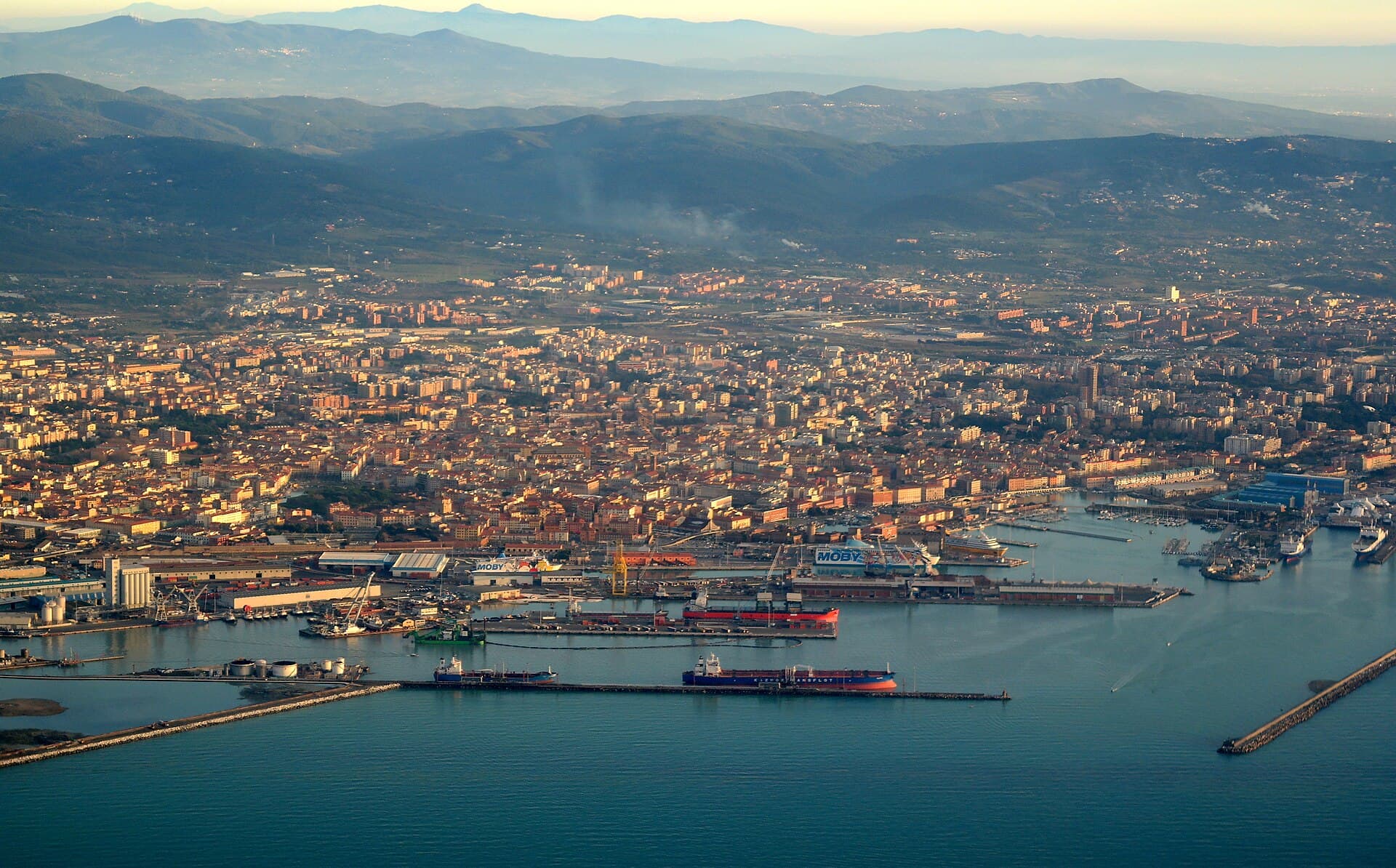 Luca Aless / CC BY-SA 4.0, via Wikimedia Commons
“Livorno: Canals murmur of commerce, and a checkered promenade greets the sea.”
Not the postcards. The stories even locals don't know — whispered in your ear, right where they happened.
This ancient fortification, a quiet guardian by the Medici Port, holds a secret concerning Galileo Galilei's pioneering work.
Beneath the lively stalls of Livorno's grand 19th-century market lies a connection to the Tuscan Navy.
The distinctive black and white checkerboard promenade along the seafront bears a name that shifted with Italy's political currents.
Discover every secret of Livorno
Every address, every reveal in full — in your ear, right where it happened.
You pick your stops. You walk. The voice reveals what the others miss.
No tours available yet. Check back soon — we're preparing them.
Livorno, a compelling port city on Tuscany's western coast, offers an experience distinct from the region's more traditional hill towns. While it may not display the quaint medieval appeal found elsewhere in Tuscany, Livorno's allure rests in its substantial maritime narrative, deliberate Renaissance architecture, and dynamic multicultural atmosphere. From its beginnings as a small fishing settlement, Livorno transformed into a significant port under the Medici family, becoming a nexus for international commerce and a convergence of cultures.
Often called 'Tuscany's Venice,' the city is distinguished by its intricate network of canals, particularly in the Venezia Nuova district, which evoke a sense of northern Italy's iconic canal city. This singular urban landscape, coupled with its historical defenses and a spirited contemporary culture, renders Livorno an intriguing destination for those seeking a different facet of Italian life.
Livorno's narrative stretches back to ancient times, with the area first mentioned as 'Livorno' in 1017. Initially a small fishing village, its strategic position on the Ligurian Sea prompted its early evolution. Throughout the Middle Ages, it was governed by the Republic of Pisa, then sold to Milan in 1399, Genoa in 1407, and finally to Florence in 1421, remaining under Medici dominion for the ensuing three centuries.
The city's true flourishing commenced in the 16th century under the Medici family. Grand Duke Francesco I entrusted architect Bernardo Buontalenti with the assignment of conceiving Livorno as an 'ideal city' in the late 16th century, featuring a grid-like structure, broad avenues, and functional canals. This innovative urban planning sought to embody humanist ideals of beauty, order, and practicality. In 1591, Ferdinando I de' Medici declared Livorno a free port, a pivotal moment that drew merchants and diverse communities—including Greeks, Jews, Armenians, and Dutch—contributing to its cosmopolitan character and economic prosperity.
The construction of substantial defenses marked this period of expansion. The Fortezza Vecchia (Old Fortress), built between 1521 and 1534, incorporated earlier medieval structures, including an 11th-century keep and a 14th-century Pisan fortress. The Fortezza Nuova (New Fortress), constructed between 1590 and 1607, further strengthened the city's defenses. These forts, along with the city's pentagonal walls and navigable Medicean moats, were integral to Buontalenti's vision.
Livorno prospered as a free port from 1675 until it became part of the Kingdom of Italy in 1860, though its mercantile significance diminished in the 19th century after losing this status. The city experienced considerable growth and prosperity in the 19th century, with the construction of new infrastructure like the Aqueduct of Colognole and the Cisternone.
Livorno sustained extensive damage during World War II bombings due to its strategic importance as a naval base and commercial port. Many historical buildings, including the Cathedral and the Synagogue, were destroyed or severely damaged. The city has since undergone considerable reconstruction and restoration, with the Cathedral being rebuilt and a new Synagogue erected in 1962. Today, Livorno continues to be a major Italian seaport and a vital commercial center in the Mediterranean.
Begin your exploration at the Fortezza Vecchia, the Old Fortress, which stands at the edge of the Medici Port. This impressive fortification, with origins dating back to the 11th century, offers a glimpse into Livorno's beginnings and provides views of the Tyrrhenian Sea. Nearby, the Venezia Nuova district, a 17th-century neighborhood constructed by Venetian artisans, invites unhurried walks along its canals and bridges, reflecting the city's mercantile past. Consider a boat tour through these waterways for a singular perspective.
For expansive sea views, visit the Terrazza Mascagni, a grand checkerboard promenade along the seafront. This vast square, adorned with 4,000 columns, is a favored location for locals and visitors alike, particularly at sunset. The Mercato Centrale (Central Market) is essential for food enthusiasts, an expansive 19th-century iron and glass structure housing over 200 stalls offering fresh seafood, local produce, and Tuscan specialties. Do not overlook the Museo Civico Giovanni Fattori, located in Villa Fabbricotti, displaying paintings by Giovanni Fattori and other artists. The Fortezza Nuova, or New Fortress, now a public park, is another historical fortification worth exploring.
Livorno experiences a mild marine climate without distinct dry seasons. The most favorable times to visit are late spring (May-June) and early autumn (September). During these months, the weather is agreeable for walking and cycling, and there are fewer crowds. Summer (July-August) is peak tourist season, with warm to hot temperatures averaging around 82-83°F (28°C) and comfortable sea breezes. While it can be warm, it's generally less extreme than inland Tuscany, making it suitable for beach activities. Rainfall is lowest in July.
Livorno is well-connected and readily accessible. The Livorno railway station offers good connections to Florence and Pisa, making it convenient for both brief visits and longer stays. If arriving by sea, you will sail directly into the historic Medicean port. The city's compact center and the Venezia Nuova district are best explored on foot. Public transportation is available for reaching attractions farther afield. For those planning day trips, Livorno is an excellent base for exploring nearby Tuscan highlights like Lucca and Pisa, both less than an hour away. The city also serves as a gateway for ferries to islands like Capraia. The local cuisine, particularly its seafood, is a highlight, with many restaurants offering fresh catches.