St John's Gardens
Beneath a tranquil city park, a vast number of former residents repose.
Full story unlocks in the tour
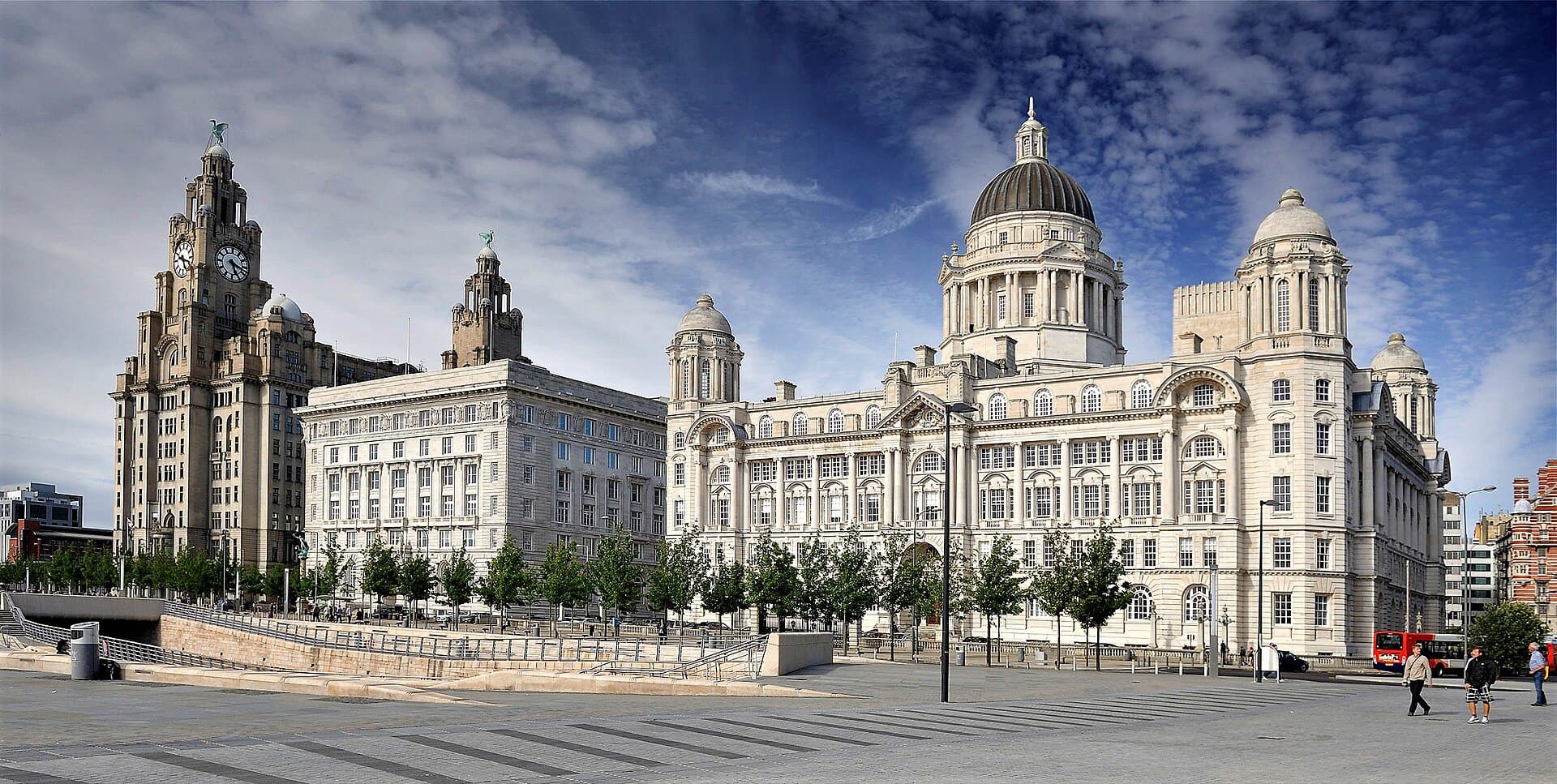 Peter Tarleton / CC BY-SA 2.0, via Wikimedia Commons
“Where melodies linger, chronicles unfold, and a spirited essence thrives.”
Not the postcards. The stories even locals don't know — whispered in your ear, right where they happened.
Beneath a tranquil city park, a vast number of former residents repose.
The renowned venue where The Beatles refined their artistry had some surprising early limitations.
The celebrated home of Liverpool FC was not always theirs, and its origins are rooted in a local disagreement.
Discover every secret of Liverpool
Every address, every reveal in full — in your ear, right where it happened.
You pick your stops. You walk. The voice reveals what the others miss.
No tours available yet. Check back soon — we're preparing them.
Liverpool, a city on the eastern bank of the Mersey River in northwest England, is a place where every street corner seems to resonate with narratives. From its early days as 'Liuerpul' in 1190, possibly meaning 'a pool or creek with muddy water,' to its current designation as a UNESCO City of Music, Liverpool has consistently reimagined itself. It is a city of undeniable character, recognized globally for its musical exports, fervent football culture, and a welcoming local dialect known as Scouse.
Beyond the familiar paths of Beatlemania and football enthusiasm, Liverpool offers a wealth of experiences. It holds more museums and galleries than any other UK city outside of London, alongside numerous parks and open spaces. The city's waterfront, a UNESCO World Heritage Site until 2021, reflects its profound maritime past, which shaped its diverse communities and economic strength. Whether you are drawn to its architectural grandeur, its innovative spirit, or the infectious cheerful atmosphere of its people, Liverpool offers a journey that is both historically resonant and vibrantly contemporary.
Liverpool's transformation from an industrial port to a major tourist destination stands as a testament to its resilience and cultural depth. Named the European Capital of Culture in 2008, the city has experienced substantial investment and regeneration, making it a dynamic and engaging place to discover. Its compact city center makes it ideal for walking, allowing visitors to easily uncover its world-class museums, celebrated nightlife, and the charm of its friendly locals.
Liverpool's recorded history dates back to 1190, with its official founding as a borough by King John in 1207. The initial settlement was modest, comprising just seven streets arranged in an 'H' shape. For centuries, it remained a relatively minor fishing and farming community with a population of no more than 1,000 in the mid-14th century. However, its strategic position where the River Mersey meets the Irish Sea would eventually propel it to global prominence.
The 17th century marked a turning point for Liverpool. The Port of Liverpool became deeply involved in the Atlantic slave trade, a somber but undeniable chapter that fueled its rapid expansion. The city's first commercial wet dock, constructed in 1715, was a groundbreaking innovation, allowing it to accommodate up to 100 ships and solidifying its role as a major trading hub. By the 18th century, Liverpool had become the second most important port in Britain, trading extensively with the Americas and the West Indies. This economic surge attracted immigrants from across Europe, particularly Ireland, with a quarter of the city's population being Irish-born by 1851, especially after the Irish Potato Famine.
The 19th century saw Liverpool at the forefront of the Industrial Revolution. It was home to the world's first inter-city railway, the Liverpool and Manchester Railway, which commenced operation in 1830. The city also pioneered the first non-combustible warehouse system at the Royal Albert Dock and an elevated electrical railway. Its immense prosperity led to it being called "the New York of Europe" and "the second city of the Empire." This period also saw significant civic advancements, including the appointment of the world's first public health officer.
During World War II, Liverpool was a crucial center for planning the Battle of the Atlantic and endured the second-most severe blitz in Britain, after London. However, the mid-20th century brought a period of decline as its docks and traditional manufacturing industries faltered with the advent of containerization. Despite economic hardship, Liverpool experienced a cultural explosion in the 1960s with the "Merseybeat" sound, led by The Beatles, transforming the city into an international music icon. In 2008, Liverpool was designated the European Capital of Culture, a recognition that spurred significant regeneration and cemented its status as a lively tourist destination.
Liverpool's compact city center makes exploring its diverse attractions straightforward. Begin at the Royal Albert Dock, a revitalized area that houses restaurants, bars, shops, and several key museums, including the Merseyside Maritime Museum, International Slavery Museum, and Tate Liverpool. Nearby, the Pier Head offers striking views of the Liver Buildings, best appreciated with a ferry trip across the Mersey.
For music enthusiasts, a visit to The Cavern Club on Mathew Street is essential to experience the birthplace of the Liverpool music scene. The British Music Experience provides an interactive journey through British music history. Football fans can take a stadium tour of Anfield, home to Liverpool FC, to delve into the club's storied past.
Beyond these iconic sites, wander through Bold Street, known for its independent restaurants and cafes, or explore the Georgian Quarter with its elegant architecture. St George's Hall, an impressive neoclassical building, stands as a testament to the city's Victorian grandeur. For a moment of quietude, Sefton Park offers walking trails, a lake, and waterfalls. Liverpool also contains Europe's oldest Chinatown, marked by a grand Chinese Arch, the largest outside of China. Many of Liverpool's museums, part of the National Museums Liverpool network, offer free admission.
The best time to visit Liverpool is generally from May to September. During these months, the weather is pleasantly warm, ideal for outdoor activities and exploring the city on foot. This period also coincides with numerous festivals, including International Beatle Week and the Liverpool International Music Festival. While summer is the busiest for tourism, leading to potentially higher accommodation costs, the city feels most energetic. For fewer crowds and mild weather, consider late spring (May) or early autumn (September), which also offer a good balance of cultural events and comfortable temperatures. Winters are cold with chances of rain or snow, but offer a cozy atmosphere and festive markets in December.
Liverpool is a highly walkable city, with many central attractions within a 20-minute stroll of each other. Merseyrail operates four city-center subway stations for longer distances. In summer, CityBike street stations offer bike rentals. Taxis and Uber are also readily available. If planning to visit multiple attractions, consider purchasing a Liverpool Pass for bundled access. Most museums in Liverpool are free, with the exception of Tate Liverpool. To avoid crowds and potentially higher room rates, consider visiting from Sunday to Thursday. The local dialect, Scouse, is a distinctive blend of Irish, Welsh, Scandinavian, and other influences, and Liverpudlians are known for being friendly and witty. Remember comfortable walking shoes, as you will likely be on your feet quite a bit.