Mural Harbor
Linz, a city forged by industry, has remade its working port into something quite unexpected.
Full story unlocks in the tour
 Radler59 (talk) / CC BY-SA 4.0, via Wikimedia Commons
“Where the Danube’s flow meets centuries of craft and digital dreams.”
Not the postcards. The stories even locals don't know — whispered in your ear, right where they happened.
Linz, a city forged by industry, has remade its working port into something quite unexpected.
A charming tram journey in Linz holds a distinction for its engineering marvel.
The city's celebrated culinary creation carries an astonishingly long lineage.
Discover every secret of Linz
Every address, every reveal in full — in your ear, right where it happened.
You pick your stops. You walk. The voice reveals what the others miss.
No tours available yet. Check back soon — we're preparing them.
Linz, the provincial capital of Upper Austria, is a city where the weight of history and the lightness of avant-garde modernity intertwine along the Danube River. As Austria's third-largest city, it presents a character distinct from Vienna or Salzburg, offering a more measured pace and an intriguing fusion of baroque architecture and forward-thinking structures.
Designated a UNESCO City of Media Arts, Linz actively shapes its identity through technological exploration and experimental art. The cityscape reveals pastel townhouses and ancient lanes alongside inventive museums and digital installations, crafting a dynamic urban experience.
Beyond its cultural offerings, Linz provides a serene setting for repose along the Danube Promenade, with opportunities for leisurely walks, cycling, and enjoying coffee at outdoor cafes. It serves as an excellent starting point for exploring the verdant hills of Upper Austria.
The origins of Linz reach back to Roman times, when it was established as a fort named Lentia in the 1st century CE. This strategic position at a bend in the Danube River made it a significant trading center. The name "Linz" itself was first recorded in 799, and the city was granted city rights in 1324.
During the Middle Ages, Linz thrived as a trading nexus, with the construction of Linz Castle and St. Martin's Church dating from this period. The city's economic importance grew, drawing nobility and scholars. In the 15th century, Holy Roman Emperor Frederick III made Linz his residence for several years, effectively positioning it as the heart of a vast empire.
The 19th century witnessed Linz's transformation into Austria's industrial core, specializing in textiles and steel, a development aided by Danube navigation and railway connections. This industrial heritage remains visible today, particularly with companies like Voestalpine. However, the 20th century brought darker chapters, including the period of National Socialism and the establishment of a concentration camp nearby. After World War II, Linz underwent substantial rebuilding and re-emerged as a contemporary cultural and economic center.
In recent decades, Linz has actively redefined itself. It was the European Capital of Culture in 2009 and earned the title of UNESCO City of Media Arts in 2014, reflecting its embrace of innovation and creativity. The city has diligently worked to recall its memory of the Nazi era, with projects like spray-painted texts on sidewalks recounting events that transpired under the Third Reich.
Begin your journey at Hauptplatz, one of Austria's grandest town squares, framed by baroque buildings and featuring the prominent white marble Trinity Column. From here, wander through the Old Town's ancient lanes.
Ascend to Linz Castle, which offers sweeping views of the city and the Danube. The Schlossmuseum Linz, within the castle, presents diverse collections from archaeological artifacts to contemporary art. A brief tram ride on the Pöstlingbergbahn, Europe's steepest adhesion railway, leads to Pöstlingberg Hill for expansive city views and the pilgrimage basilica.
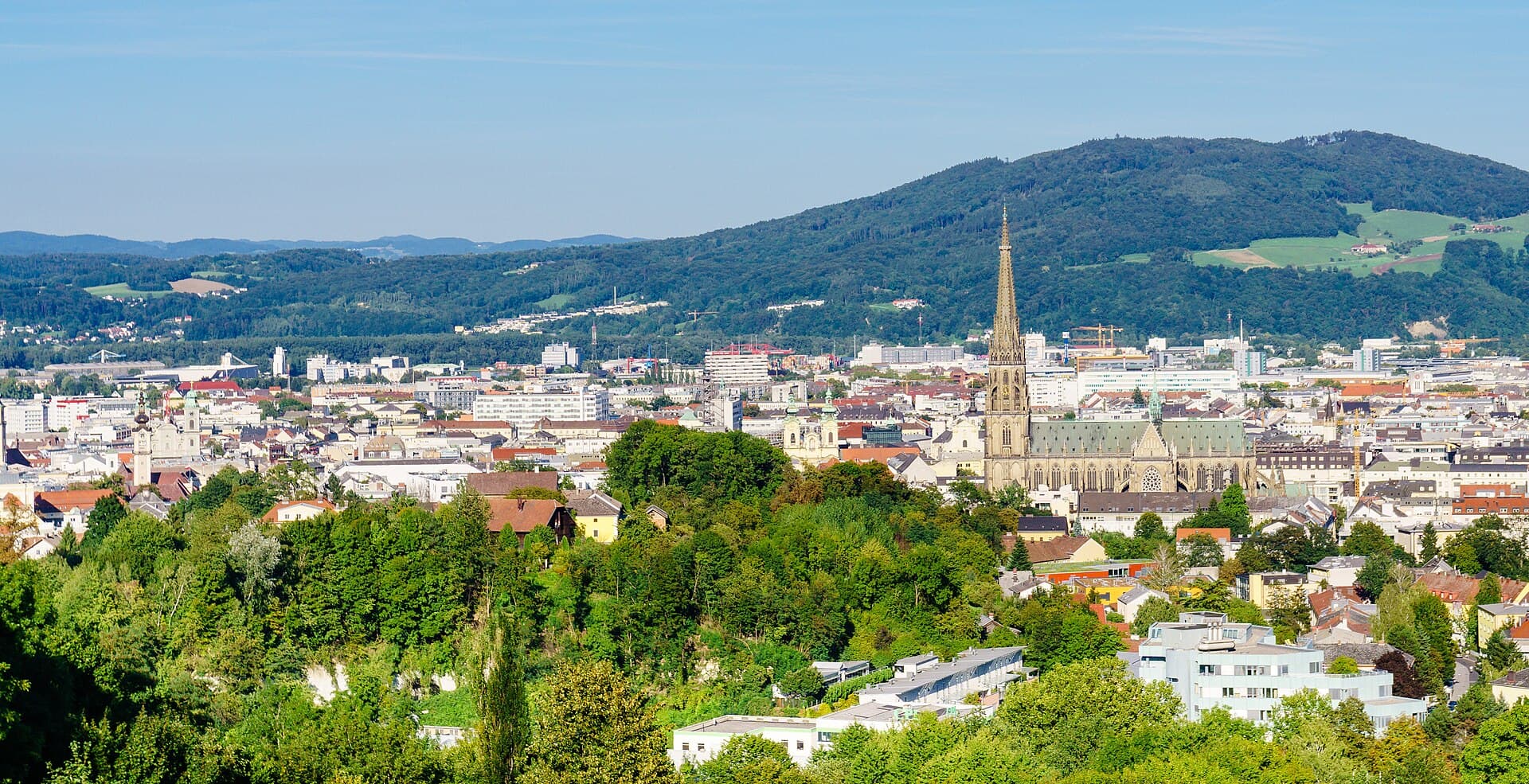
Immerse yourself in modern culture at the Ars Electronica Center, an interactive museum blending art, technology, and science. Nearby, the Lentos Art Museum, with its sleek glass facade, displays 20th and 21st-century art. Do not overlook the Mariendom, also known as the New Cathedral, Austria's largest church by capacity, a neo-Gothic masterwork. For a singular artistic encounter, take a guided tour of Mural Harbor, the industrial port remade into Europe's largest outdoor graffiti gallery.
The most agreeable times to visit Linz for pleasant weather and outdoor pursuits are late April through May, and September through early October. During these spring and autumn months, temperatures are comfortable for walking and exploring, and tourist crowds are generally lighter than in peak summer. Summer, from June to August, offers warmer, sunnier days with various festivals, but also sees an increase in visitors and occasional rainfall.
Linz is a city easily explored on foot, especially its Old Town and main attractions. Public transportation, including trams and buses, is efficient and simple to use, with Hauptplatz serving as a central hub. For those planning extensive sightseeing, the Linz Card offers transportation advantages and free or discounted entry to many attractions.
Linz Airport (Blue Danube Airport) is situated about 15 kilometers southwest of the city center, with bus connections to the city in approximately 25 minutes. The main train station, Linz Hauptbahnhof, provides excellent connections to other Austrian cities like Vienna and Salzburg, as well as international destinations. German is the national language, but many residents speak English. The currency used is the Euro.