The Treaty Stone
This unassuming block of limestone played a pivotal, yet controversial, role in Irish history.
Full story unlocks in the tour
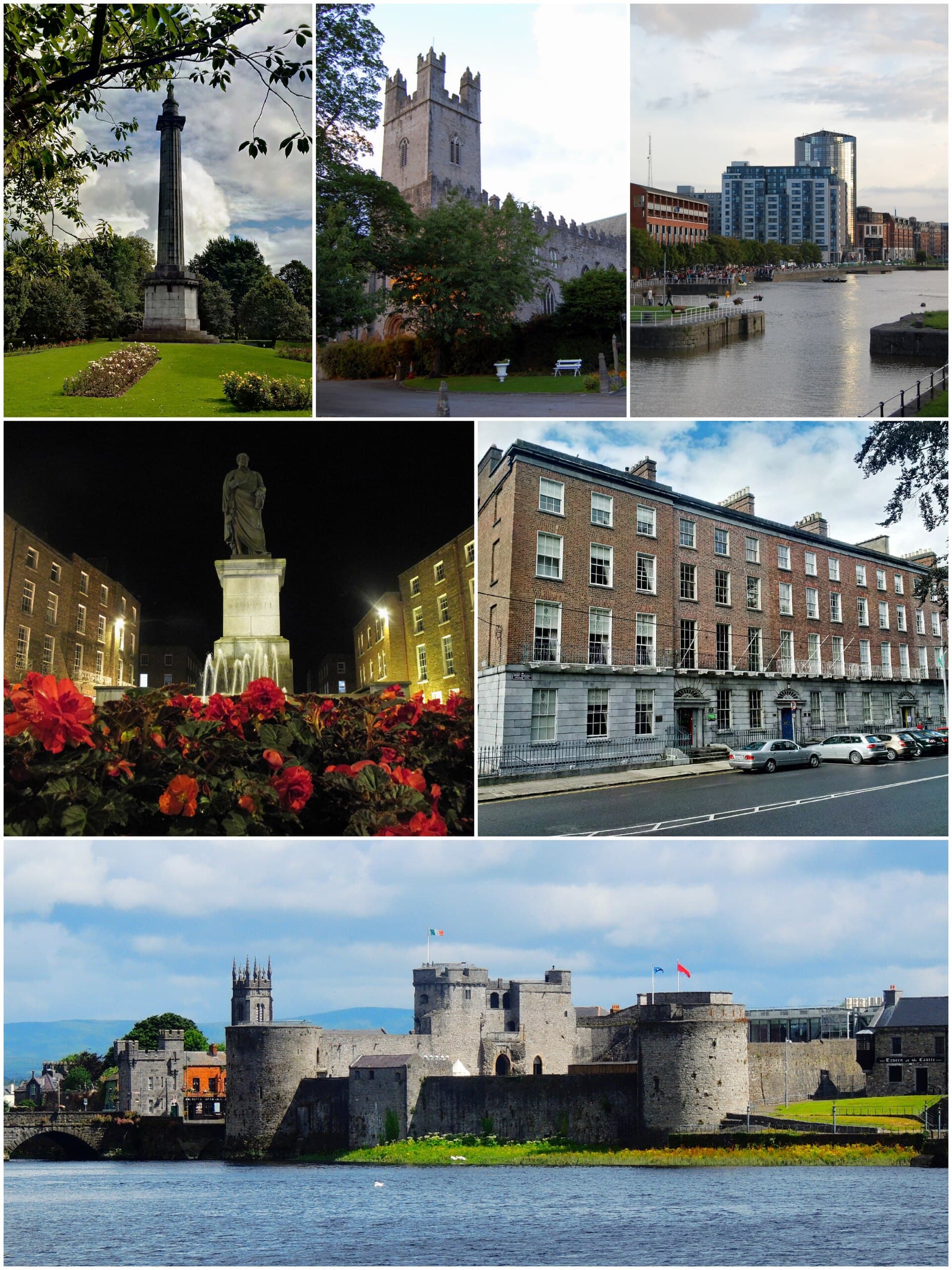 The author of these photos can be found in the links above. / CC BY-SA 4.0, via Wikimedia Commons
“Where ancient stones tell tales and the River Shannon flows with history.”
Not the postcards. The stories even locals don't know — whispered in your ear, right where they happened.
This unassuming block of limestone played a pivotal, yet controversial, role in Irish history.
Beyond its ancient facade, this cathedral holds a unique collection that speaks to a forgotten medieval practice.
This bustling market has a surprising connection to Ireland's longest receivership in commercial history.
Discover every secret of Limerick
Every address, every reveal in full — in your ear, right where it happened.
You pick your stops. You walk. The voice reveals what the others miss.
No tours available yet. Check back soon — we're preparing them.
Limerick, Ireland's third-most populous urban area, is a city with over a millennium of documented history, situated at the head of the Shannon Estuary. Founded by Scandinavian settlers in 812 AD, the city's strategic location on King's Island, bounded by the River Shannon and Abbey Rivers, made it a vital port and trading center. Its past is etched into its medieval walls, Georgian architecture, and the very fabric of its lively streets. Limerick is often called 'The Treaty City' due to the significant historical events that unfolded here.
Beyond its historical gravitas, Limerick today is a dynamic hub of culture and community. It was designated Ireland's first City of Culture, a testament to its array of museums, art galleries, and musical venues. Visitors can explore ancient castles, wander through lively markets, and experience the genuine welcome of its locals. The city's blend of ancient heritage and contemporary energy offers a compelling journey through Irish history and modern life.
Limerick's origins trace back to 812 AD when Viking settlers established a walled city on King's Island, an island in the River Shannon. This strategic location allowed Limerick to flourish as a port and trading center, with contacts across Europe.
In 1168, Donal Mór O'Brien, the last King of Munster, founded St. Mary's Cathedral on the site of his palace, which itself was built upon a Viking meeting place. Following O'Brien's death in 1194, the Anglo-Normans took control, and in 1197, Limerick was granted its city charter. King John of England ordered the construction of King John's Castle between 1200 and 1210, a formidable Anglo-Norman fortification designed to protect the city and subdue Gaelic chieftains.
By the 15th century, Limerick was divided into 'English Town' on King's Island, which was walled first, and 'Irish Town' on the south bank, which was walled later. The 17th century proved to be a tumultuous period, with Limerick enduring four sieges. The most famous of these culminated in the signing of the Treaty of Limerick on October 3, 1691, which ended the Williamite War in Ireland. This treaty, signed on the Treaty Stone near Thomond Bridge, was intended to offer protections to defeated Jacobites, including religious freedom, but its terms were largely dishonored. This betrayal earned Limerick the moniker 'the City of the Broken Treaty.'
From the 1760s, the city's medieval walls were gradually removed to allow for expansion, leading to the development of Newtown Pery, a new Georgian city built on land south of medieval Limerick. This period brought economic expansion and the creation of Limerick's distinctive Georgian Quarter, one of the largest in Ireland outside Dublin. The 19th and early 20th centuries saw significant emigration from Limerick, particularly during the Famine, but also played a role in Ireland's fight for independence. Today, Limerick continues to evolve, embracing its deep past while looking towards a multicultural future.
Begin your exploration at King John's Castle, a 13th-century Anglo-Norman fortress on King's Island. Its massive gatehouse, battlements, and corner towers offer expansive views of the city and the River Shannon. Archaeological excavations beneath the visitor center reveal pre-Norman houses and evidence of siege mines.
A short walk from the castle leads to St. Mary's Cathedral, founded in 1168 on the site of a Viking stronghold and royal palace. This oldest building in Limerick still in continuous use features unique medieval misericords and a pre-Reformation high altar recovered from the River Shannon.
Across Thomond Bridge from King John's Castle, you'll find the Treaty Stone, a piece of limestone marking the signing of the Treaty of Limerick in 1691. While simple in appearance, it represents a pivotal moment in Irish history.
For a taste of local life, visit the Milk Market, an historic market operating since at least the early 19th century. It offers a diverse range of local artisan food, street food, and handmade crafts, particularly lively on Saturdays.
The Hunt Museum, housed in the former customs house, showcases an eclectic collection of approximately 2,000 works of art and antiquities, including pieces by Picasso, Renoir, and Yeats, alongside significant Irish relics.
Consider a stroll along the Three Bridges Walk, a scenic route that offers different perspectives of the city and the Shannon. For a day trip, the heritage town of Adare, with its thatched cottages and ancient monastery ruins, is a short drive away.
Limerick has a mild Atlantic climate, making it a year-round destination. The most agreeable time to visit for pleasant weather and outdoor activities is from May through September. These months offer warmer temperatures, with July being the warmest at an average of 17°C (61°F), and more sunshine. Spring (March-May) and autumn (September-November) are considered shoulder seasons, with comfortable temperatures and fewer crowds. While winter (December-February) is colder and wetter, it can be enjoyable for city breaks with festive activities in December.
Limerick city is largely walkable, especially its central attractions. Public transport within the city is primarily served by Bus Éireann and a few routes by Euro Bus Limerick, covering areas like the city center, University of Limerick, and various suburbs. For more economical travel on Bus Éireann city services, consider purchasing a Leap Card, which can save you up to 30% on fares and can be topped up at ticket machines or Payzone agents. Weekly and monthly tickets are also available. The city also operates a bike-share scheme in the city center, offering free travel for the first 30 minutes. For regional and national travel, Irish Rail operates three suburban lines from Limerick railway station. Shannon Airport is the nearest airport, connecting Limerick to transatlantic routes.