Academiegebouw (Academy Building)
Leiden University's founding came with a rather unusual 'thank you' gift from William of Orange.
Full story unlocks in the tour
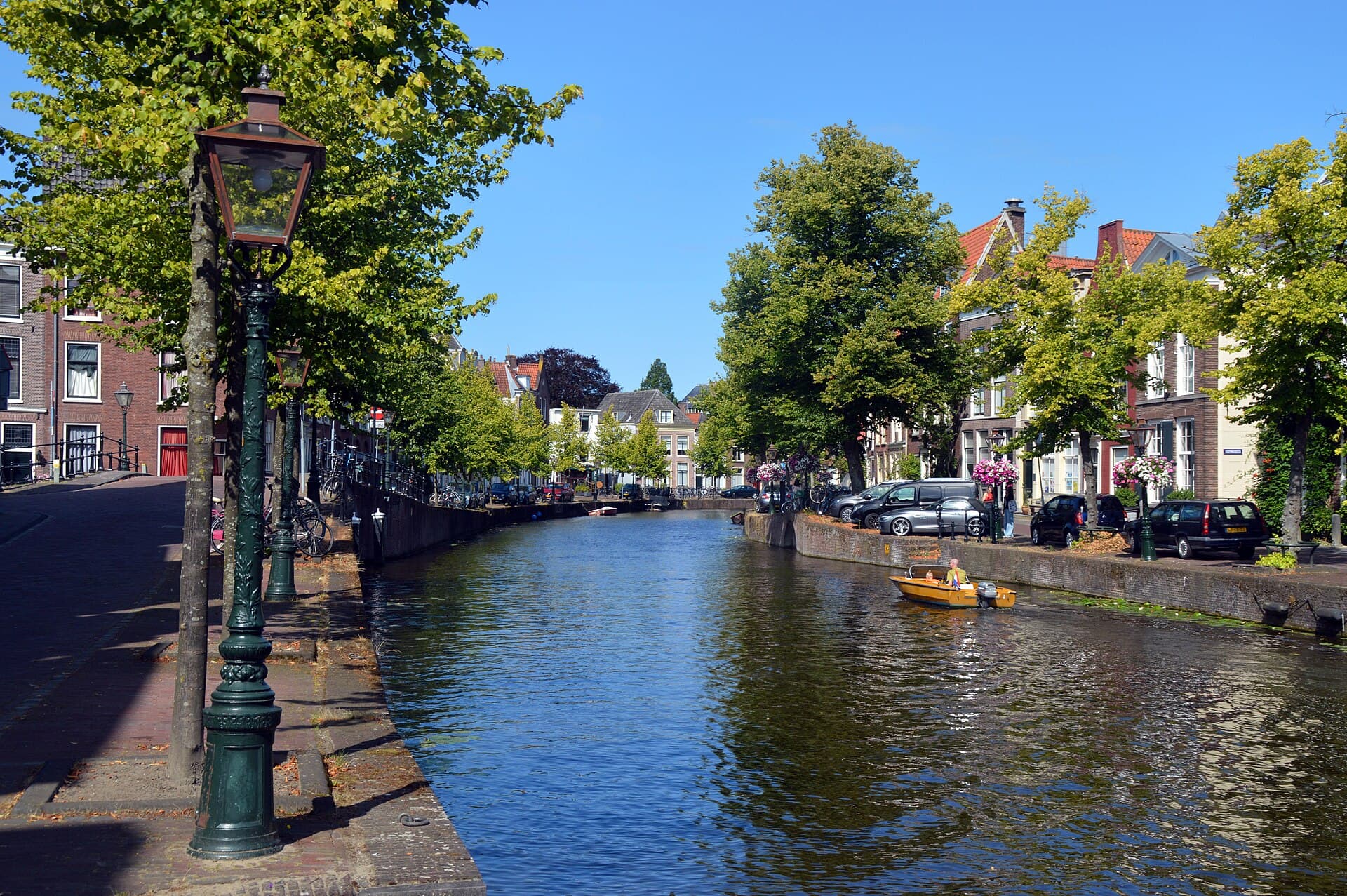 Roger Veringmeier / CC BY 4.0, via Wikimedia Commons
“Leyde: Where intellect and rebellion flow through ancient canals.”
Not the postcards. The stories even locals don't know — whispered in your ear, right where they happened.
Leiden University's founding came with a rather unusual 'thank you' gift from William of Orange.
This grand church holds a surprising connection to a pivotal moment in American history.
One of Europe's oldest botanical gardens introduced a now-ubiquitous flower to the Western world.
Discover every secret of Leyde
Every address, every reveal in full — in your ear, right where it happened.
You pick your stops. You walk. The voice reveals what the others miss.
No tours available yet. Check back soon — we're preparing them.
Leyde, or Leiden as it's known in Dutch, is a city where the past feels remarkably present. Canals meander past gabled houses and leafy courtyards, echoing centuries of scholarship and trade. It’s a place that wears its intellectual heart openly, home to the oldest university in the Netherlands, a legacy that continues to shape its character. Beyond the academic gravitas, Leyde offers a relaxed atmosphere with a network of museums, historic churches, and lively markets.
Walk along the Rapenburg canal, often cited as one of Europe's most beautiful, and you'll understand the city's enduring appeal. This isn't a city that clamors for attention; rather, it invites you to slow down, to explore its quiet corners, and to uncover the stories etched into its ancient brickwork. From Rembrandt's birthplace to the Pilgrim Fathers' refuge, Leyde holds a unique position in both Dutch and international history.
## From Roman Outpost to Academic Powerhouse Leyde's origins stretch back to a Roman settlement, though its documented history truly begins around the 9th century. Positioned at the confluence of the Oude Rijn (Old Rhine) and Nieuwe Rijn (New Rhine) rivers, it quickly became a strategic trading post. By the 14th century, Leyde was a prominent textile center, its prosperity evident in the grand architecture that still lines its canals. The city's wealth, however, was not without its challenges.
One of the most defining moments in Leyde's history was the Spanish siege of 1574 during the Eighty Years' War. The city endured a brutal five-month blockade, with its citizens facing starvation. The legendary relief of Leyde, achieved by flooding the surrounding polders to allow ships to reach the city with provisions, is still celebrated annually. As a reward for their resilience, William of Orange offered the city a choice between tax exemption and a university. The citizens, remarkably, chose the university, leading to the founding of Leiden University in 1575. This decision irrevocably shaped Leyde's future, transforming it into a renowned center of learning.
The 17th century, the Dutch Golden Age, saw Leyde flourish as an intellectual and cultural hub. Scholars like Hugo Grotius and René Descartes studied and taught here, and the city became a refuge for religious exiles, including the Pilgrim Fathers before their journey to America. The university attracted students and thinkers from across Europe, solidifying Leyde's reputation as a beacon of knowledge. While the textile industry eventually declined, the university's influence only grew, ensuring Leyde's continued prominence on the world stage.
Begin your exploration at the Burcht van Leiden, a 12th-century shell keep offering wide views of the city. Descend to the Pieterskerk, a grand Gothic church with connections to the Pilgrim Fathers. Stroll along the Rapenburg canal, admiring the elegant canal houses and university buildings. Visit the Rijksmuseum van Oudheden (National Museum of Antiquities), home to an extensive collection of Egyptian artifacts and Roman finds. For art enthusiasts, the Museum De Lakenhal displays Dutch Masters, including works by Leyde native Rembrandt van Rijn. Be sure to visit the Hortus Botanicus Leiden, one of the oldest botanical gardens in the world, celebrated for its diverse plant collections. Explore the narrow alleys and courtyards, known as 'hofjes,' for a quiet glimpse into Leyde's character.
The ideal time to visit Leyde is during the spring (April to May) when the tulip fields surrounding the city are in bloom and the weather is mild. Summer (June to August) offers pleasant temperatures for canal cruises and outdoor dining, though it can be busier. Autumn (September to October) brings colorful foliage and fewer crowds.
Leyde is easily accessible by train from Amsterdam Schiphol Airport and other major Dutch cities. The city center is compact and best explored on foot or by bicycle. Public transport within Leyde consists of buses. Consider purchasing a Leiden City Card for discounts on museums and attractions. Many restaurants and shops accept major credit cards, but it's always useful to have some euros for smaller purchases. Tipping is not obligatory but appreciated for good service.