Lévis Forts National Historic Site
These substantial 19th-century fortifications were constructed with a specific, unspoken threat in mind.
Full story unlocks in the tour
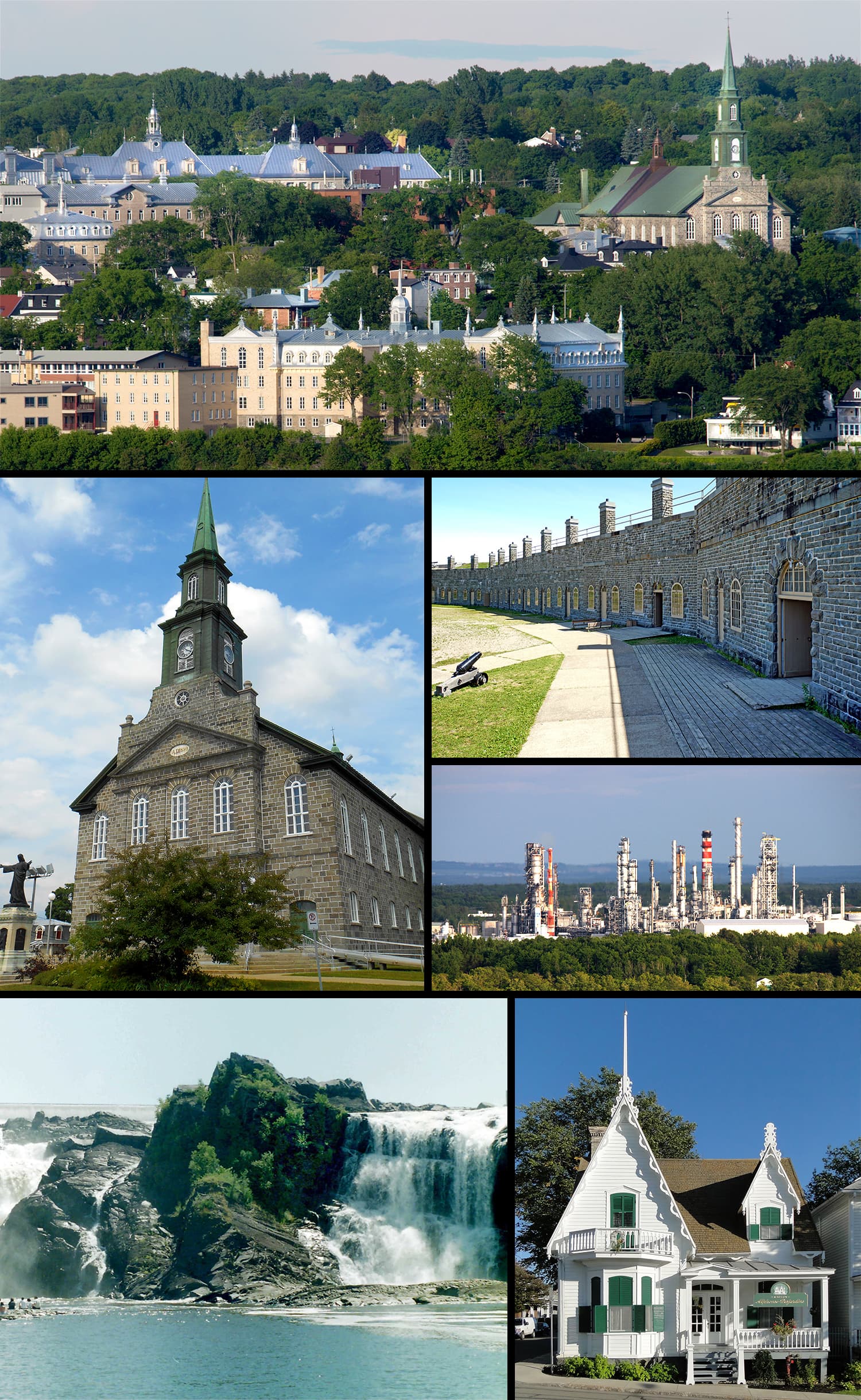 Judicieux / CC BY-SA 4.0, via Wikimedia Commons
“Across the river, a different perspective on Quebec's enduring narrative.”
Not the postcards. The stories even locals don't know — whispered in your ear, right where they happened.
These substantial 19th-century fortifications were constructed with a specific, unspoken threat in mind.
Before bridges spanned the St. Lawrence, crossing the river in winter involved a rather unconventional method.
The unassuming home of Alphonse Desjardins cradles the origins of a financial movement that reshaped North America.
Discover every secret of Lévis
Every address, every reveal in full — in your ear, right where it happened.
You pick your stops. You walk. The voice reveals what the others miss.
No tours available yet. Check back soon — we're preparing them.
Lévis, Quebec, rests on the south shore of the St. Lawrence River, directly across from historic Quebec City, with which it shares a deep connection and a distinct identity. While often perceived as Quebec City's quieter counterpart, Lévis unfolds its own blend of history, culture, and natural beauty. The city's topography, marked by steep streets and older homes, hints at its long past.
Connected to Quebec City by a scenic ferry service and two bridges, Lévis offers wide views of the iconic Château Frontenac and the fortified walls of Old Quebec. Beyond its strategic location, Lévis is a dynamic urban center that has grown through a series of mergers with surrounding communities, expanding its footprint and diversifying its offerings. It balances urban amenities with accessible natural spaces, making it an appealing destination for those seeking both historical exploration and outdoor activities.
The settlement that would become Lévis was established in 1647 and was originally known as Aubigny, a name bestowed in honor of the Duke of Richmond. Its strategic position across the St. Lawrence River from Quebec City made it a significant location in colonial conflicts. In 1759, during the Seven Years' War, British General James Wolfe utilized the heights above Aubigny to bombard and partially destroy Quebec City.
The community's name was officially changed to Lévis in 1861, honoring François Gaston, Duke de Lévis, who led French forces in Canada after the death of the Marquis de Montcalm. While Quebec City developed as the colonial capital, Lévis remained largely rural until the mid-19th century.
The arrival of the Grand Trunk Railway in the 19th century was a pivotal moment for Lévis, transforming it into a crucial transportation hub. Before the construction of bridges across the St. Lawrence, Lévis served as the terminal point for railway lines from the Atlantic Provinces and the United States, stimulating significant trade. The Lévis station, originally built in 1864 as a meeting room for the city council, was purchased by the Intercolonial Railway in 1884 and served as a major railway station for decades.
Lévis also developed into a significant industrial center, particularly in shipbuilding. The Davie Shipbuilding company, founded in 1828 in Lauzon (which later merged with Lévis), is Canada's oldest and largest shipbuilding company. Its dry docks are capable of accommodating large vessels, and it continues to build ships, including for the Royal Canadian Navy.
Modern Lévis is the result of several municipal mergers. In 1989, it merged with the industrial city of Lauzon, and in 1990, with Saint-David-de-l'Auberivière. A major reincorporation occurred in 2002, when Lévis absorbed ten additional neighboring communities, including Charny, Saint-Jean-Chrysostome, and Saint-Romuald, significantly expanding its area to 444 square kilometers. Today, Lévis supports a diverse economy based on commercial, service, and industrial sectors, manufacturing goods such as food, beverages, and plastic and metal products.
Begin your exploration at the Lévis Forts National Historic Site, an impressive 19th-century defensive complex offering insight into Canada's military past and commanding views of Quebec City. Stroll along Quai Paquet, an urban park on the St. Lawrence River, featuring a fountain with 169 water jets and offering clear panoramas of Quebec City's skyline and the Château Frontenac. The Parc des Chutes-de-la-Chaudière is a natural highlight, with a 35-meter waterfall, hiking and cycling trails, and a 113-meter suspension bridge that provides views of the falls and the hydroelectric plant.
For a glimpse into local history and cooperative finance, visit the Maison Alphonse-Desjardins, the birthplace of North America's first credit union. The Lévis ferry itself is an experience, offering a 12-minute crossing that provides some of the best photographic opportunities of Old Quebec City. Consider exploring the historic district of Saint-Romuald, which dates back over 8,000 years and features charming streets, historic buildings, and riverside views. The Charny Railway Station and Joffre Yard, with its historic roundhouse, are points of interest for those curious about the city's railway heritage.
The most favorable time to visit Lévis for warm-weather activities extends from late June to early September. During these summer months (June to August), temperatures are comfortable, averaging around 20°C (68°F), with daytime highs often exceeding this. This period is ideal for walking and outdoor exploration. While there is some rainfall, it is generally balanced throughout the year.
Spring and autumn offer transitional weather, with April still chilly and May and September becoming warmer, around 11-14°C (52-57°F). October brings cooler, breezy conditions, with temperatures ranging from 3-11°C (38-52°F). Winters are cold and snowy, with January being the coldest month, averaging around -10°C (14°F).
Lévis is easily accessible by car via Autoroute 20 (Trans-Canada Highway), with downtown exits at 325 or 327. The Pierre-Laporte Bridge (Autoroute 73) and Quebec Bridge (Route 175) connect Lévis with Quebec City. The Quebec City–Lévis ferry operates year-round, with crossings every 20 to 30 minutes during the day and hourly in the evening, providing a scenic and convenient link between the two cities. The Lévis ferry terminal also houses a tourist information center and bicycle rental facilities.
Within Lévis, public transportation is provided by the Société de transport de Lévis (STLévis) city buses. For visitors arriving by air, Jean-Lesage International Airport (YQB) is approximately 30 kilometers from Lévis. Many attractions, such as the Lévis Forts National Historic Site, offer parking and picnic areas. The city's topography includes steep streets, so comfortable walking shoes are recommended for exploring on foot.