High Level Bridge
The High Level Bridge, an imposing steel structure, holds a surprising secret about its construction that speaks to the ingenuity and daring of early 20th-century engineering.
Full story unlocks in the tour
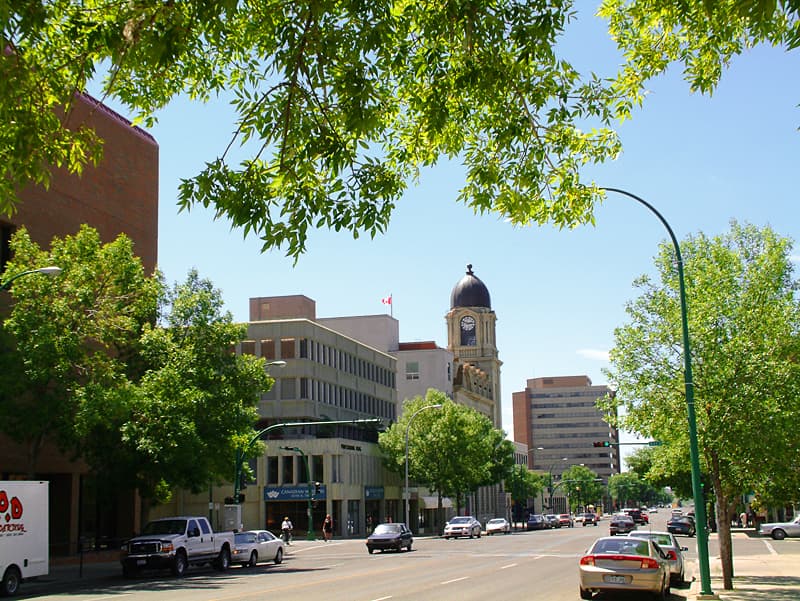 Kmsiever / Public domain, via Wikimedia Commons
“Where the prairies meet the mountains, and the wind tells tales.”
Not the postcards. The stories even locals don't know — whispered in your ear, right where they happened.
The High Level Bridge, an imposing steel structure, holds a surprising secret about its construction that speaks to the ingenuity and daring of early 20th-century engineering.
Beneath the surface of Lethbridge lies a testament to its industrial past, specifically one mine that faced a unique and constant battle.
This tranquil garden, a symbol of international friendship, has a deeper connection to its namesake country than many visitors realize.
Discover every secret of Lethbridge
Every address, every reveal in full — in your ear, right where it happened.
You pick your stops. You walk. The voice reveals what the others miss.
No tours available yet. Check back soon — we're preparing them.
Lethbridge, Alberta, is a city where the vast expanse of the Canadian prairies converges with the distant peaks of the Rocky Mountains. It is a place defined by its dramatic coulees, carved by the Oldman River, and its reputation as one of Canada's windiest cities, thanks to the frequent Chinook winds that bring sudden temperature changes. This southern Alberta hub, with a population of over 111,000 as of 2024, serves as a commercial, educational, and cultural center for the region.
The city's identity is inextricably linked to its natural environment, offering a unique blend of urban amenities and outdoor adventure. From its extensive urban park system within the Oldman River valley to its proximity to several UNESCO World Heritage Sites, Lethbridge invites exploration. It is a place where history, industry, and diverse cultures have shaped a resilient and welcoming community.
Whether you are drawn by the engineering marvel of its iconic High Level Bridge, the serene beauty of its Japanese garden, or the compelling stories of its coal mining past, Lethbridge offers a distinctive Canadian experience.
The land that is now Lethbridge has been the traditional territory of the Niitsitapi (Blackfoot) people for centuries, who referred to the area as 'Sikoohkotoki,' meaning 'black rock,' due to the visible coal seams along the Oldman River. European settlement began in the mid-19th century, initially driven by the whiskey trade and the establishment of posts like Fort Whoop-Up in 1869, which eventually led to the presence of the North-West Mounted Police in 1874.
The modern history of Lethbridge truly began in 1874 when Nicholas Sheran opened the first commercial coal mine in the coulees of the Oldman River. This initial settlement was known as Coalbanks. In 1882, Sir Alexander Galt's North Western Coal and Navigation Company opened a second mine, and the growing coal industry spurred the need for railway transportation. The first rail line opened in 1885, connecting Lethbridge to Dunmore. The town was officially renamed Lethbridge in 1885, honoring William Lethbridge, the first president of the North Western Coal and Navigation Company.
The rail industry's reliance on coal and the Canadian Pacific Railway's (CPR) efforts to encourage settlement in southern Alberta fueled Lethbridge's economic growth. The CPR moved its Crowsnest Line's divisional point to Lethbridge in 1905, solidifying the city's role as a regional center. Lethbridge was incorporated as a town in 1890 and became a city in 1906. During World War I, the coal mining industry reached its peak, with 10 mines employing 2,000 miners and producing one million tons of coal annually. However, the industry declined after the war due to the rise of oil and natural gas, with the last mine closing in 1957.
A significant engineering feat of this era was the construction of the High Level Bridge between 1907 and 1909. This railway trestle bridge, crossing the Oldman River, remains the longest and highest of its type in the world. The city's motto, "Gateway to Opportunity," adopted in 1907, reflects its history of leveraging natural resources, from bison hunting by the Blackfoot people to the growth of coal and agriculture.
In the post-World War II era, Lethbridge continued to develop, with the establishment of the University of Lethbridge in 1967 and Lethbridge College in 1957. The Nikka Yuko Japanese Garden was also created in 1967 to commemorate Canada's Centennial and to acknowledge the contributions of Japanese Canadians to southern Alberta. Today, Lethbridge is Alberta's fourth-largest city by population, continuing to grow and evolve as a vital center in the province.
Lethbridge offers a variety of attractions that blend its natural landscape with its history and cultural contributions. The High Level Bridge, a railway trestle spanning the Oldman River, is a prominent landmark. Completed in 1909, it stands as the longest and highest bridge of its type globally, offering impressive views of the river valley. Paths along the river allow for easy access to view this engineering marvel.
For a tranquil experience, the Nikka Yuko Japanese Garden is a place of quiet contemplation. Established in 1967, this authentic Japanese garden symbolizes friendship between Canada and Japan and recognizes the contributions of Japanese Canadians to the region. It features traditional Japanese architecture and serene landscapes, offering a peaceful retreat.
Explore the city's past at the Galt Museum & Archives, which provides insights into Lethbridge's history, including its coal mining era. Nearby, Indian Battle Park commemorates the last major battle between the Blackfoot and Cree nations in 1870 and features a replica of Fort Whoop-Up, a 19th-century whiskey trading post. The Helen Schuler Coulee Centre provides an opportunity to learn about the prairie environment and offers self-guided nature walks within a 200-acre nature reserve.
Beyond the city limits, Lethbridge serves as a gateway to several UNESCO World Heritage Sites, including Head-Smashed-In Buffalo Jump and Writing-on-Stone/Áísínai'pi Provincial Park, both offering deep dives into Indigenous history and culture.
The best time to visit Lethbridge for warm-weather activities is from early July to mid-August. During these months, the average daily high temperature is above 71°F (21°C), with July being the warmest month, averaging 79°F (26°C). The city experiences long days and warm breezes in the summer, making it ideal for outdoor exploration. Lethbridge has a semi-arid climate, known for its bright sunshine (over 320 days per year), warm summers, and mild winters, influenced by Chinook winds. Precipitation is highest in June, with an average of 2.4 inches (61 mm).
Lethbridge is easily accessible by domestic flights to Lethbridge Airport (YQL) or by intercity bus from Calgary. The city has a public transit system with buses covering most areas, and renting a car is a convenient option, especially for exploring the surrounding region. The city is divided into north, south, and west geographical areas by the Oldman River.
Lethbridge is known for its wind, particularly the Chinook winds which can bring strong gusts, so it is advisable to be prepared for fluctuating temperatures and wind conditions, especially in winter. When staying in Lethbridge, a variety of accommodations are available, including hotels and summer housing at Lethbridge Polytechnic and the University of Lethbridge.