Oldehove
This Frisian city holds a tower that leans even more dramatically than the famous one in Pisa.
Full story unlocks in the tour
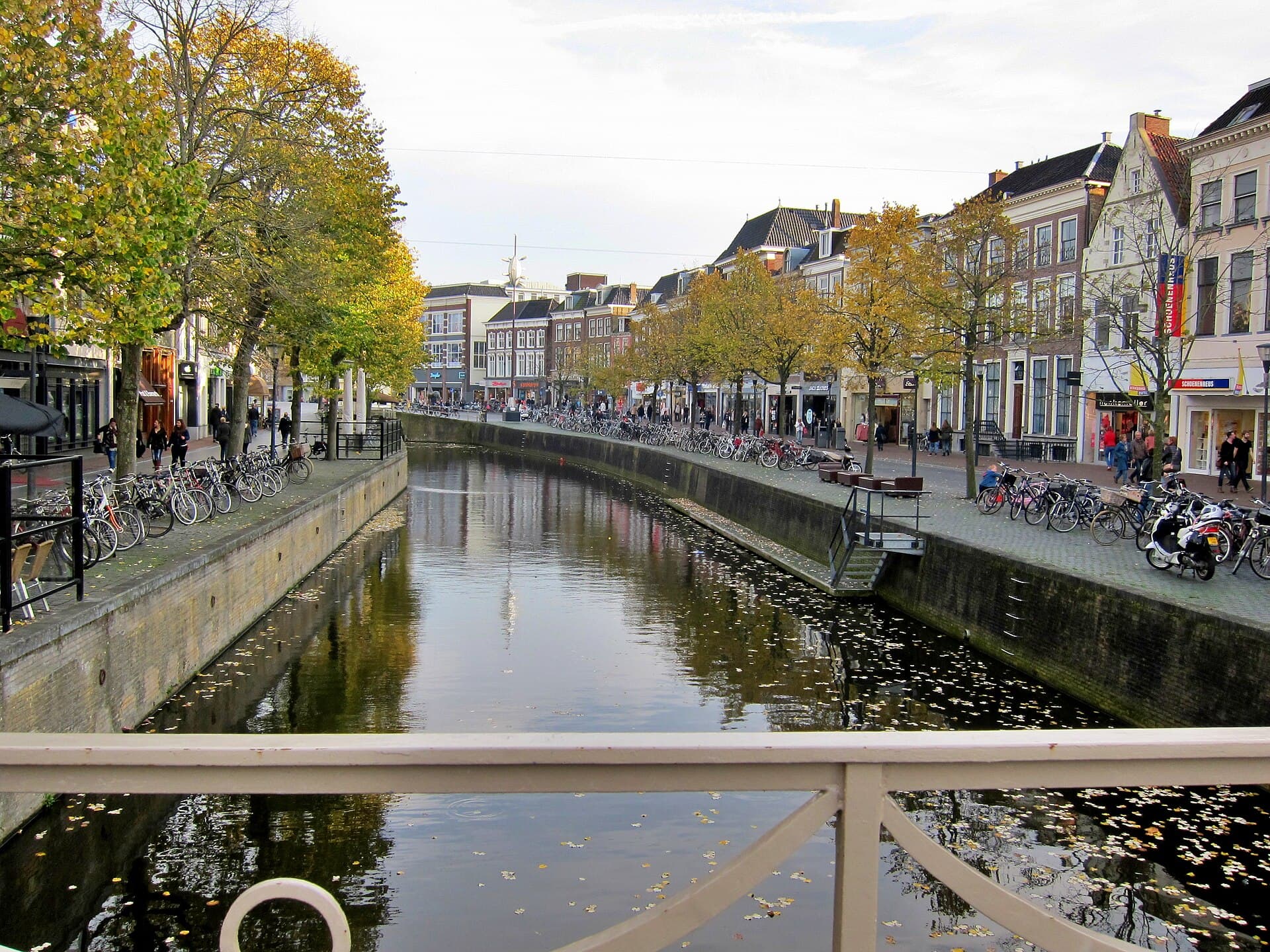 Baykedevries / CC BY-SA 4.0, via Wikimedia Commons
“Leeuwarden: Where a crooked tower tells a long tale, and history flows through every canal.”
Not the postcards. The stories even locals don't know — whispered in your ear, right where they happened.
This Frisian city holds a tower that leans even more dramatically than the famous one in Pisa.
A lively cultural center once served as a formidable prison.
One of the Netherlands' most appealing streets is not always found on the main thoroughfare.
Discover every secret of Leeuwarden
Every address, every reveal in full — in your ear, right where it happened.
You pick your stops. You walk. The voice reveals what the others miss.
No tours available yet. Check back soon — we're preparing them.
Leeuwarden, the capital of Friesland in the northern Netherlands, offers a captivating blend of enduring history and modern vitality. Continuously inhabited since the 10th century, this city was granted privileges in 1435 and has since evolved into a significant economic and cultural hub.
Often overlooked by international travelers, Leeuwarden presents an authentic Dutch experience with its appealing canals, historic gabled houses, and a relaxed atmosphere. It was recognized as the European Capital of Culture in 2018 and has been a UNESCO City of Literature since 2019, reflecting its commitment to arts and storytelling. The city is also unique for actively preserving and using the Frisian language alongside Dutch, adding a distinctive cultural layer to your visit.
From its famous leaning tower to its repurposed prison-turned-cultural center, Leeuwarden invites exploration, promising a journey through centuries of stories and a taste of northern Dutch hospitality.
## From Terps to Trade: Leeuwarden's Early Beginnings Leeuwarden's origins trace back to the 2nd century AD, with the oldest remains of houses discovered near the Oldehove. The area has been continuously inhabited since the 10th century, with the city itself forming from the merger of three artificial dwelling mounds, or 'terps,' named Oldehove, Nijehove, and Hoek, in the early 9th century. The name "Leeuwarden" itself first appeared around 825 AD. The city was formally granted its city privileges in 1435.
## Maritime Hub and Shifting Fortunes Initially, Leeuwarden thrived as an active center of maritime trade due to its strategic location along the Middelzee, a shallow estuary that provided direct access to the sea. This allowed the city to export agricultural goods and import luxury items, contributing to its prosperity during the Dutch Golden Age. However, the Middelzee began to silt up in the 13th century, leading to a dramatic decline in trade by the 15th century.
## Royal Connections and Cultural Flourishing Leeuwarden became the capital of Friesland in 1504. From 1582 to 1747, it served as the residence for the Frisian stadtholders of the House of Orange-Nassau, ancestors of the current Dutch royal family, lending the city a royal allure. Notable figures like William IV, Prince of Orange, were born here. The city was also a significant center for goldwork and silverwork during the 16th to 18th centuries.
## Modern Recognition and Resilience In more recent history, Leeuwarden endured occupation during World War II, which ended dramatically on April 15, 1945, when the Royal Canadian Dragoons liberated the city. The city's cultural significance was highlighted when it was named the European Capital of Culture in 2018, followed by its designation as a UNESCO City of Literature in 2019. Today, Leeuwarden continues to blend its historical appeal with an innovative spirit, making it a compact cultural center.
Begin your exploration at the Oldehove, Leeuwarden's leaning and unfinished 16th-century tower. You can climb its 183 steps for expansive city views, or take the elevator to the first floor. Just a short walk away, discover the Kleine Kerkstraat, an appealing shopping street recognized for its unique boutiques.
Delve into the city's past at the Blokhuispoort, a former prison transformed into a lively cultural center with shops, a library, and even a hostel. For art and history enthusiasts, the Fries Museum offers extensive cultural exhibits, including a permanent exhibition on the life of Leeuwarden-born spy Mata Hari. The Princessehof National Museum of Ceramics, housed in a 17th-century palace, showcases ceramics from various eras and was also the birthplace of graphic artist M.C. Escher.
Walk along the city's canals, which reflect its past as a trading port, or take an electric sloop for a different perspective. Seek out the 'Love' fountain by Jaume Plensa near the train station, part of the 11Fountains art project. For a unique scavenger hunt, follow the Miniature People route, with over 60 tiny figures placed throughout the city center.
The most pleasant time to visit Leeuwarden for warm-weather activities is from late June to late August. During these summer months, average daytime temperatures range from 16°C to 22°C, providing comfortable conditions for exploring. While precipitation is possible year-round, these months also offer longer daylight hours and more sunshine. Spring (May) and early autumn (September) also offer favorable weather with mild temperatures, though September can be slightly breezy.
Leeuwarden is easily accessible by public transport, with direct train connections from Amsterdam taking approximately 2 to 2.5 hours. The city center is compact and walkable, making it ideal for exploration on foot. Alternatively, bicycles can be rented from the tourist office or Fietspoint Leeuwarden at the train station for around €7.50 a day. Electric sloops are also available for canal tours.
Given the temperate maritime climate, Leeuwarden's weather can be changeable, so packing layered clothing, including a light jacket or sweater, and an umbrella or raincoat, is advisable regardless of the season. Comfortable walking shoes are essential for navigating the city's streets and attractions. The official tourist information center (VVV) provides maps, sightseeing tips, and information on tours.