Company's Garden
The squirrels moving through Cape Town's Company's Garden are not native, their presence a curious result of one man's peculiar dislike for acorns.
Full story unlocks in the tour
 Der Berzerker from Washington, DC, USA / CC BY-SA 2.0, via Wikimedia Commons
“Where two oceans converge, and a mountain stands guardian over a city of narratives.”
Not the postcards. The stories even locals don't know — whispered in your ear, right where they happened.
The squirrels moving through Cape Town's Company's Garden are not native, their presence a curious result of one man's peculiar dislike for acorns.
Almost every day for over two centuries, a loud report echoes across Cape Town at precisely noon, a tradition that once caused quite a stir when it misfired.
Before modern skyscrapers defined Cape Town's skyline, the city's most prominent vertical structure served a very different, yet equally vital, purpose.
Discover every secret of Cape Town
Every address, every reveal in full — in your ear, right where it happened.
You pick your stops. You walk. The voice reveals what the others miss.
No tours available yet. Check back soon — we're preparing them.
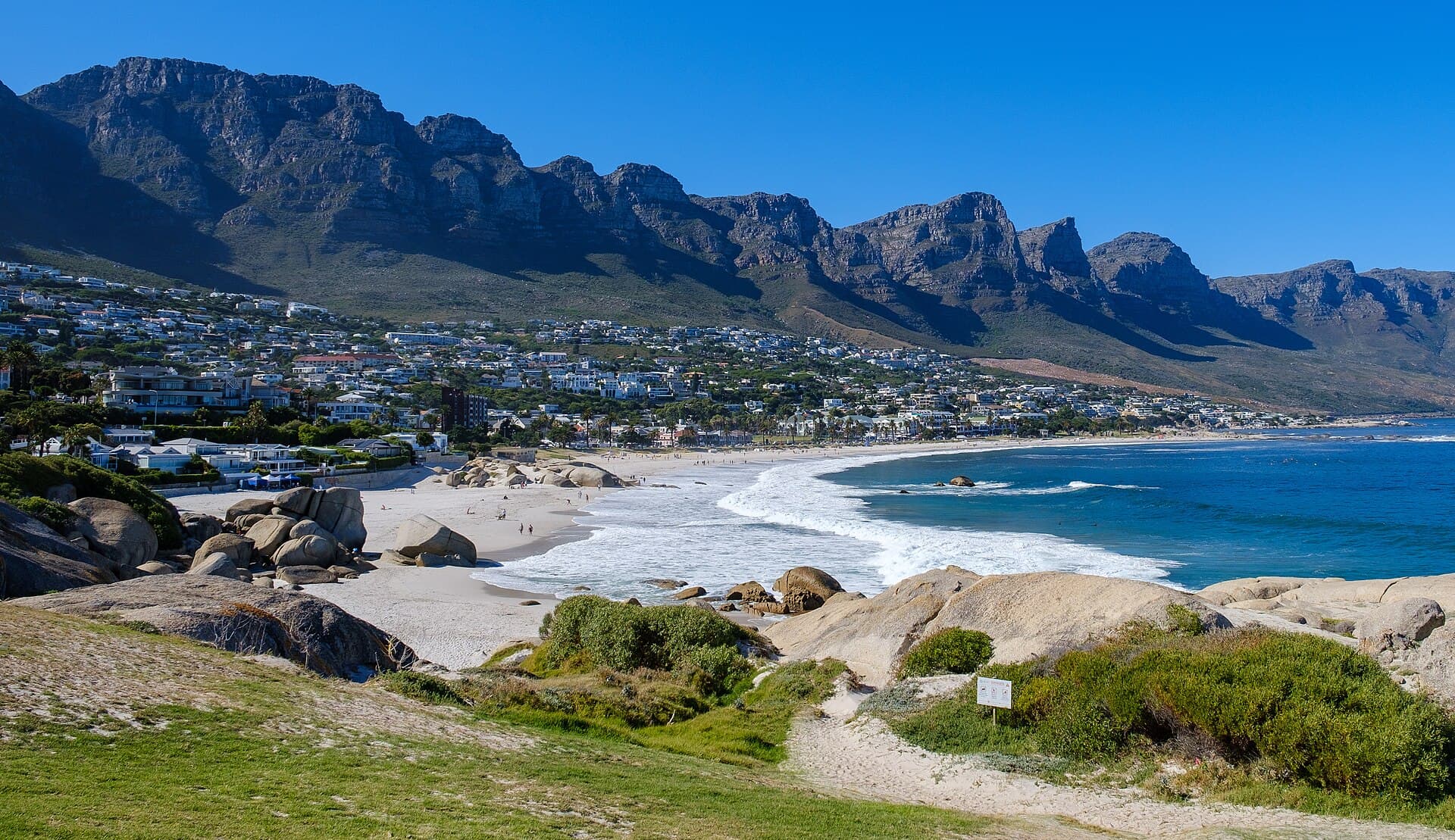
Cape Town, often called the "Mother City," is a metropolis at Africa's southern tip, where dramatic landscapes meet a blend of cultures. Dominated by the iconic flat-topped Table Mountain, the city extends between the Atlantic Ocean and its surrounding peaks, offering a singular blend of natural beauty and urban energy. Its Mediterranean climate, with warm, dry summers and mild, wet winters, makes it an appealing destination year-round, though the weather can famously shift through all four seasons in a single day.
This legislative capital of South Africa is a convergence of experiences, from world-class dining and active markets to pristine beaches and historical sites. Whether you seek outdoor adventure, cultural immersion, or simply a striking backdrop for relaxation, Cape Town presents a captivating journey into a city that openly embraces its past while looking toward the future.
The history of the Cape Peninsula stretches back millennia, with the Khoe and San peoples inhabiting the region in a semi-nomadic lifestyle. The area's original Khoe name was 'ǁHui ǃGais,' meaning "where clouds gather." The first Europeans to sight the Cape were Portuguese explorers; Bartholomeu Dias in 1488 and Vasco da Gama in 1497. Table Mountain received its current name, 'Taboa do Cabo' (Table of the Cape), in 1503 from Portuguese admiral António de Saldanha.
Formal colonisation began in 1652 when Jan van Riebeeck and the Dutch East India Company (VOC) established a permanent refreshment station at Table Bay. This outpost was crucial for ships traveling between Europe and Asia, providing fresh water, vegetables, and meat. The VOC imported slaves from East Africa, Madagascar, and the Bay of Bengal, who brought with them their cultures and, notably, the Islamic faith, contributing to the development of the distinctive Cape Malay cuisine. By the 1690s, the settlement, then known as De Kaapsche Vlek, had grown to include a diverse European population alongside its African and Asian residents and slaves. The 18th century saw the gradual evolution of the Afrikaner people as the settlement expanded into Kaapstad (Cape Town).
Control of the Cape shifted between the Dutch and the British during the late 18th and early 19th centuries, with Britain ultimately taking permanent possession in 1806. Between 1814 and the formation of the Union of South Africa in 1910, the Cape was a separate British colony. The city's municipal government was established in 1840, and by 1913, the City of Greater Cape Town was formed by combining Cape Town with several adjacent towns. Cape Town became the legislative capital of South Africa as a compromise during the formation of the Union in 1910.
The 20th century saw Cape Town deeply affected by apartheid, a system of institutionalised racial segregation. Areas like District Six, once a multi-ethnic community, were forcibly cleared and declared 'whites only' in 1950, leading to the displacement of thousands of people of color. Robben Island, a UNESCO World Heritage Site in Table Bay, served as a prison for political prisoners, most famously Nelson Mandela, who was incarcerated there for 27 years. Today, Cape Town is a symbol of resilience and diversity, a city that continues to grapple with its complex past while embracing its role as a major global destination.
The city offers many attractions, starting with the iconic Table Mountain. Take the Aerial Cableway for expansive views, or hike one of its many trails. Nearby peaks like Lion's Head and Devil's Peak also offer rewarding climbs and memorable vistas. Explore the Bo-Kaap neighborhood with its colorful houses and paved streets, a testament to Cape Town's Cape Malay heritage. The V&A Waterfront is an active center with shops, restaurants, and the Zeitz MOCAA Museum, showcasing contemporary African art. From here, you can also embark on a ferry to Robben Island, a poignant historical site where Nelson Mandela was imprisoned.
For nature enthusiasts, a drive along the Cape Peninsula is essential, leading to the dramatic Cape of Good Hope and Cape Point. Along the way, visit Boulders Beach to see a colony of endangered African penguins in their natural habitat. Kirstenbosch National Botanical Garden, on the eastern slopes of Table Mountain, is a sanctuary for indigenous plant species. The Cape Winelands, with their scenic vineyards and historic estates, are just a short drive from the city, offering tastings of world-class wines.
Cape Town's peak summer season runs from December to February, offering warm, dry weather ideal for beaches and outdoor activities. However, this coincides with local school holidays, so booking accommodations in advance is recommended. The shoulder seasons of autumn (March to May) and spring (September to November) provide pleasant temperatures with fewer crowds, perfect for hiking and exploring the winelands. Winter (June to August) brings cooler, wetter weather but also offers lower prices and opportunities for indoor activities like museum visits and wine tasting, with occasional crisp, clear days.
The South African Rand (ZAR) is the official currency, with credit cards widely accepted and ATMs readily available. While generally safe for tourists, it is wise to exercise caution, particularly at night and in crowded areas, and avoid displaying valuables. Tap water in Cape Town is safe to drink. English is widely spoken, along with Afrikaans and Xhosa. Public transport includes the MyCiTi bus system, which is safe and efficient for city travel. For getting around, ride-sharing services like Uber and Bolt are also available. It is advisable to carry a light sweater or windbreaker, as Cape Town's weather can change quickly.