Saint-Saphorin Church
Beyond its 15th-century Gothic facade, this village church holds a surprising secret from a much older empire.
Full story unlocks in the tour
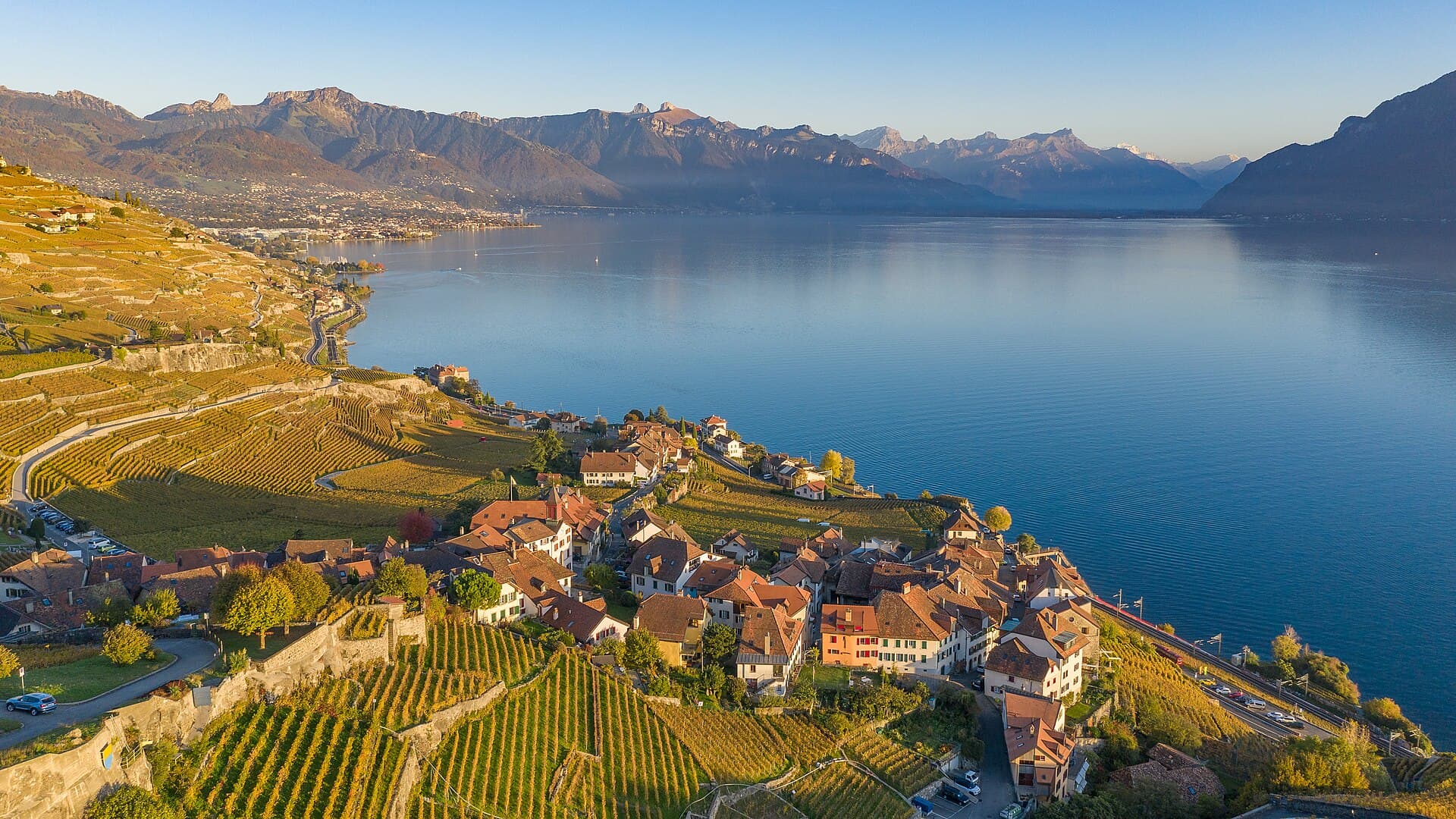 Lorenz Poffet / CC BY-SA 4.0, via Wikimedia Commons
“Where ancient terraces meet shimmering waters, and the sun ripens stories in every grape.”
Not the postcards. The stories even locals don't know — whispered in your ear, right where they happened.
Beyond its 15th-century Gothic facade, this village church holds a surprising secret from a much older empire.
Scattered throughout the terraced vineyards are small, unassuming stone structures, once vital to the winemakers but now serving a different purpose.
Local lore claims the grapes of Lavaux are kissed by not one, but three suns, a unique phenomenon contributing to their distinct character.
Discover every secret of Lavaux
Every address, every reveal in full — in your ear, right where it happened.
You pick your stops. You walk. The voice reveals what the others miss.
No tours available yet. Check back soon — we're preparing them.
Lavaux, a UNESCO World Heritage site, is a region of dramatic beauty where human ingenuity and nature have collaborated for centuries. Stretching for approximately 30 kilometers along the northern shores of Lake Geneva in the canton of Vaud, these terraced vineyards are a testament to a winemaking tradition dating back to the 11th century. The landscape, with its impossibly steep slopes, intricate stone walls, and picturesque wine-growing villages, offers sweeping views of Lake Geneva and the distant Alps.
More than just a scenic vista, Lavaux is a living cultural landscape, recognized by UNESCO in 2007 for its enduring interaction between people and their environment. The region encompasses 830 hectares of vineyards, meticulously cultivated and maintained by generations of winegrowers. The predominant grape variety, Chasselas, thrives in this unique terroir, producing crisp, mineral-driven white wines that are largely enjoyed within Switzerland, making a tasting experience here particularly special.
The story of Lavaux begins long before human hands shaped its slopes. Over 15,000 years ago, the retreating Rhône glacier sculpted the Rhône Valley, Lake Geneva, and the steep hillsides that would one day become Lavaux. While there's some evidence of Roman-era viticulture, the terraced landscape we see today truly began to take shape in the 11th century. Benedictine and Cistercian monks were the pioneers, clearing the hillsides and constructing the initial dry-stone walls to create arable land for vines. This monumental effort intensified in the 12th century, laying the foundation for the approximately 10,000 terraces and 450 kilometers of stone walls that define the region.
Over the centuries, the winemaking industry in Lavaux grew in significance. The Bernese authorities, during their rule of the Vaud canton, recognized its importance and helped spread its popularity beyond Switzerland's borders. The local villagers and winegrowers continued the work of their monastic predecessors, diligently preserving the landscape, its traditional buildings, pathways, and ancestral winemaking techniques. This continuous cultivation and the unique interaction between humans and the environment led to Lavaux's inscription as a UNESCO World Heritage site in 2007. The region's commitment to sustainable practices is further highlighted by its move in 2016 to no longer treat its vineyards with synthetic pesticides.
Today, Lavaux remains a testament to nearly a millennium of viticultural heritage, with many wineries having been owned by the same families for generations, some with histories stretching back to the 1300s. This deep-rooted history, combined with the region's natural beauty, continues to make Lavaux a cherished and protected landscape.
The primary draw of Lavaux is its expansive terraced vineyards, a UNESCO World Heritage site that invites exploration. Wander through the engaging wine-growing villages like Saint-Saphorin, Rivaz, Epesses, Cully, and Lutry, each offering a glimpse into traditional Swiss life and winemaking culture. Saint-Saphorin, with its narrow alleys and 16th to 19th-century winemaker homes, is particularly notable, featuring a 15th-century church.
For an immersive experience, consider visiting the Lavaux Vinorama in Rivaz, a dedicated museum showcasing the history of winemaking in the region and offering tastings of over 250 local wines. Beyond wine, the region offers culinary delights such as local artisan cheeses and fresh lake fish, like perch. Do sample the local Chasselas wine, as very little of it is exported. Many wineries offer tastings and tours, though it's often best to reserve in advance. The picturesque Château de Chillon, located near Montreux, is also a worthy excursion from Lavaux.
Lavaux offers distinct beauty throughout the year, but the best times to visit are late spring (May to June) and autumn. In late spring, the weather is mild and sunny, the vineyards are lush and green, and you might catch “Open Cellar” days, allowing direct tastings from producers. Autumn, particularly from September to October, brings changing foliage as the leaves turn, and the weather is ideal for walking. While vintners are busy with harvest then, the scenery is exceptional. Summer (July to August) is warmest, suitable for combining vineyard visits with Lake Geneva activities, though morning or evening visits are recommended for photography.
Lavaux is easily accessible, making it a convenient day trip from cities like Geneva, Lausanne, and Montreux. Public transportation is efficient, with trains being a popular and environmentally friendly option. Regional trains like the Train des Vignes run hourly from Vevey to Puidoux-Chexbres, offering scenic views. Motorized train-shaped vehicles like the Lavaux Express and Lavaux Panoramic also provide tours through the vineyards from Lutry, Cully, and Chexbres-Village.
For those who prefer active exploration, numerous walking and cycling trails wind through the vineyards. The “Terrasses de Lavaux” walking trail, from Saint-Saphorin to Lutry, is a popular choice, taking about 3 hours and 15 minutes to complete. Electric bikes are recommended for navigating the steep gradients of the terraced hillsides. While driving offers flexibility, narrow, winding roads and limited parking can be challenging, especially during peak season. The local currency is the Swiss Franc (CHF).