Lappeenranta's Coat of Arms
The city's official emblem features a figure that might seem out of place in modern Finland.
Full story unlocks in the tour
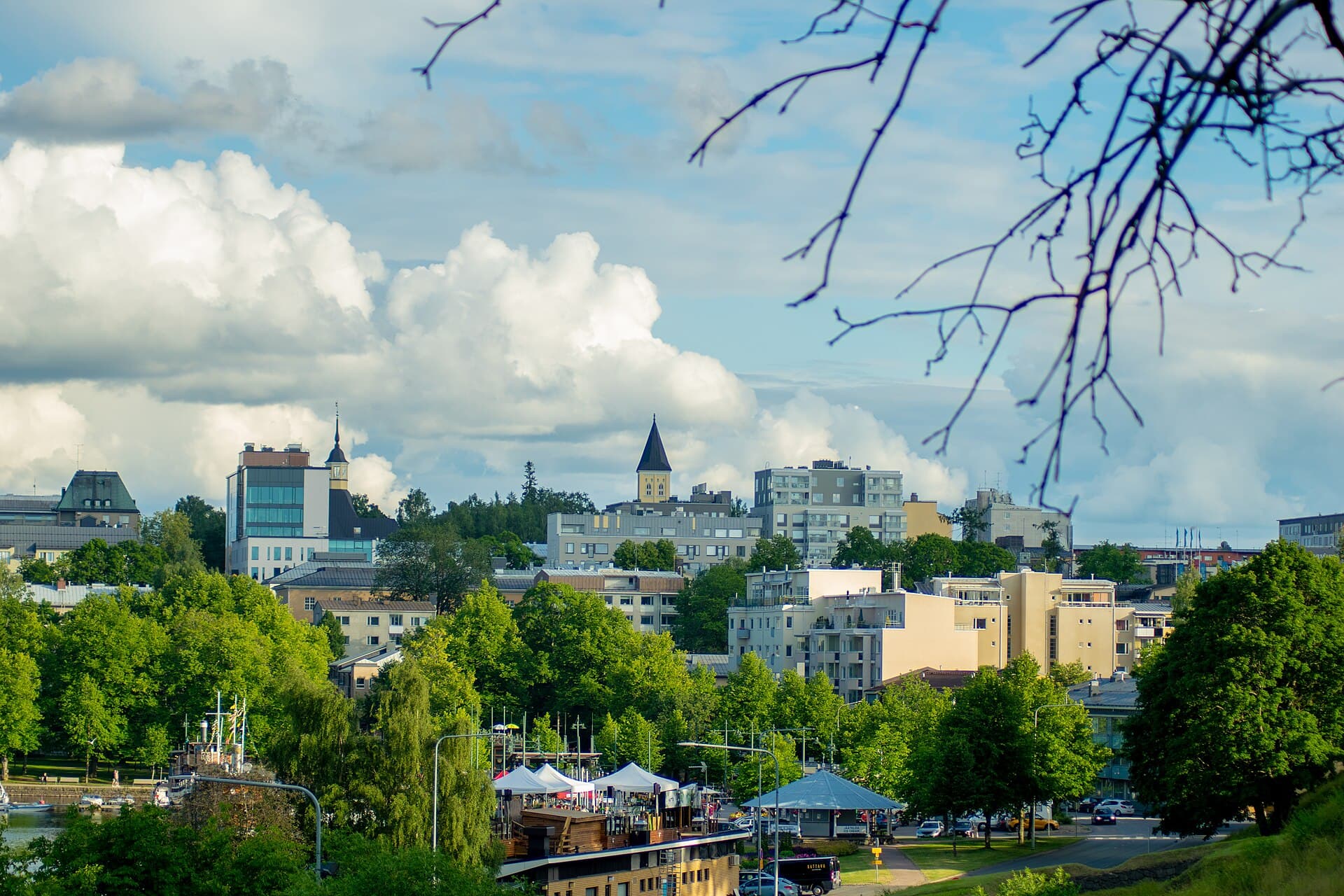 Toni / CC BY-SA 4.0, via Wikimedia Commons
“Where Finnish Lakeland meets Karelian spirit, a border city with tales etched in stone and water.”
Not the postcards. The stories even locals don't know — whispered in your ear, right where they happened.
The city's official emblem features a figure that might seem out of place in modern Finland.
One of Lappeenranta's historical buildings holds a secret about its original purpose and a darker chapter of Finnish history.
Finland's oldest continuously operating airport has a surprising connection to the country's aviation history.
Discover every secret of Lappeenranta
Every address, every reveal in full — in your ear, right where it happened.
You pick your stops. You walk. The voice reveals what the others miss.
No tours available yet. Check back soon — we're preparing them.
Lappeenranta, the regional capital of South Karelia, rests on the southern shore of Lake Saimaa, Finland's largest lake system. This city, with a population of approximately 73,000, stands as a significant urban center in the Saimaa region, a gateway to the expansive Finnish Lakeland. Situated just 30 kilometers (19 miles) from the Russian border, Lappeenranta has long been a crossroads of Eastern and Western cultures, a heritage deeply embedded in its character and architecture.
The city's singular blend of enduring history and natural splendor makes it an appealing destination throughout the year. From the commanding Lappeenranta Fortress that anchors its old town to the animated harbor, full of activity, the city presents a diverse array of experiences. It is a place where one can delve into centuries of history, enjoy the calm blue waters of Lake Saimaa, and immerse oneself in a lively local atmosphere.
Lappeenranta's origins trace back to the Middle Ages, when it was known as Lapvesi, a flourishing trading post on the shores of Lake Saimaa. The city officially received its charter in 1649 from Queen Christina of Sweden, a move proposed by Governor-General Per Brahe the Younger, recognizing its importance as a tar port. The city's original core settlement formed around a headland that now hosts the Lappeenranta Fortress.
Between 1721 and 1743, Lappeenranta served as the capital of Kymmenegård and Nyslott County. During this period, the Swedes began constructing the fortress in stages to secure Finland's eastern border. However, its strategic location also made it a battleground. In 1741, the Battle of Villmanstrand took place here during the Russo-Swedish War, resulting in a Russian victory. The town was subsequently plundered, and many wooden structures were consumed by fire.
Following the Treaty of Turku in 1743, Lappeenranta became a Russian possession. The fortress was rebuilt and further developed in the 1750s, and in the 1790s, it came under the command of General Alexander Suvorov, who strengthened it as part of the defense system for St. Petersburg. A significant addition during the Russian period was the construction of the Orthodox Church of Lappeenranta in 1785, which remains Finland's oldest Orthodox church. In 1812, as a gesture of goodwill from Alexander I, Old Finland, including Lappeenranta, was rejoined with the newly formed Grand Duchy of Finland.
Throughout the 19th century, the city continued to evolve. The Saimaa Canal, connecting Lake Saimaa to the Gulf of Finland, opened in 1856, transforming Lappeenranta into an inland seaport and significantly boosting its trade and shipping. The fortress, losing its strategic importance after 1809, was handed over to the town in 1835, and restoration efforts began in 1976. Today, the Lappeenranta Fortress stands as a testament to centuries of Finnish, Russian, and Swedish cultural heritage, housing museums, shops, and cafes.
Begin your exploration at the Lappeenranta Fortress, the historical heart of the city. This 18th-century fortified area, once a crucial border defense, now houses several museums, cafes, and handicraft shops. Within the fortress, you will find the South Karelia Museum, offering insights into the history of Lappeenranta and the former Finnish city of Vyborg, including a detailed model of Vyborg as it was in 1939. The South Karelia Art Museum and the Cavalry Museum, located in the fortress's oldest building, also invite discovery.
Just a short walk from the fortress is the animated Lappeenranta Harbour, a center of activity, especially in summer. From here, you can embark on scenic cruises across Lake Saimaa or along the historic Saimaa Canal, which connects the lake to the Gulf of Finland. Do not miss the impressive Sandcastle, a massive sand sculpture created annually at the harbor, with a different theme each year, open from early June to late August.
For a relaxing break, head to Myllysaari Recreation Area, the city's main beach on Lake Saimaa, offering opportunities for swimming, beach volleyball, and enjoying a traditional Finnish sauna. The Orthodox Church of Lappeenranta, completed in 1785, is another significant historical site, notable as the oldest Orthodox church in Finland.
The most pleasant time to visit Lappeenranta for warm-weather activities is from late June to mid-August. Summers are comfortable, with average daily high temperatures above 62°F (17°C), peaking in July with an average high of 71°F (22°C). While there might be some rain, the temperatures are ideal for outdoor exploration. Winters are long, freezing, and snowy, with average daily high temperatures below 32°F (0°C) from late November to mid-March. January is the coldest month, with an average low of 14°F (-10°C). However, winter offers unique activities like ice skating, cross-country skiing on the frozen lake, and snowshoeing.
Lappeenranta is primarily a Finnish-speaking municipality, with about 87.9% of the population speaking Finnish as their first language. However, English and Swedish are compulsory school subjects, and functional bilingualism or trilingualism is common. At least 50 different languages are spoken in the city, with Russian, Chinese, and English being the most common foreign languages. While it is possible to navigate with English, learning some basic Finnish phrases can enhance interactions with locals.
The city offers a variety of transportation options. Public buses serve the city, and Lappeenranta is also an excellent city for cycling, with well-maintained paths. City bikes are available for rent via a mobile app during warmer months. Taxis are readily available, and for a unique summer experience, consider a ride on the charming street train, Pikku-Jussi. Lappeenranta is a safe city and accustomed to foreign visitors.