Lamu Old Town's slender passageways
You will observe an unusual quiet in Lamu's intricate alleys.
Full story unlocks in the tour
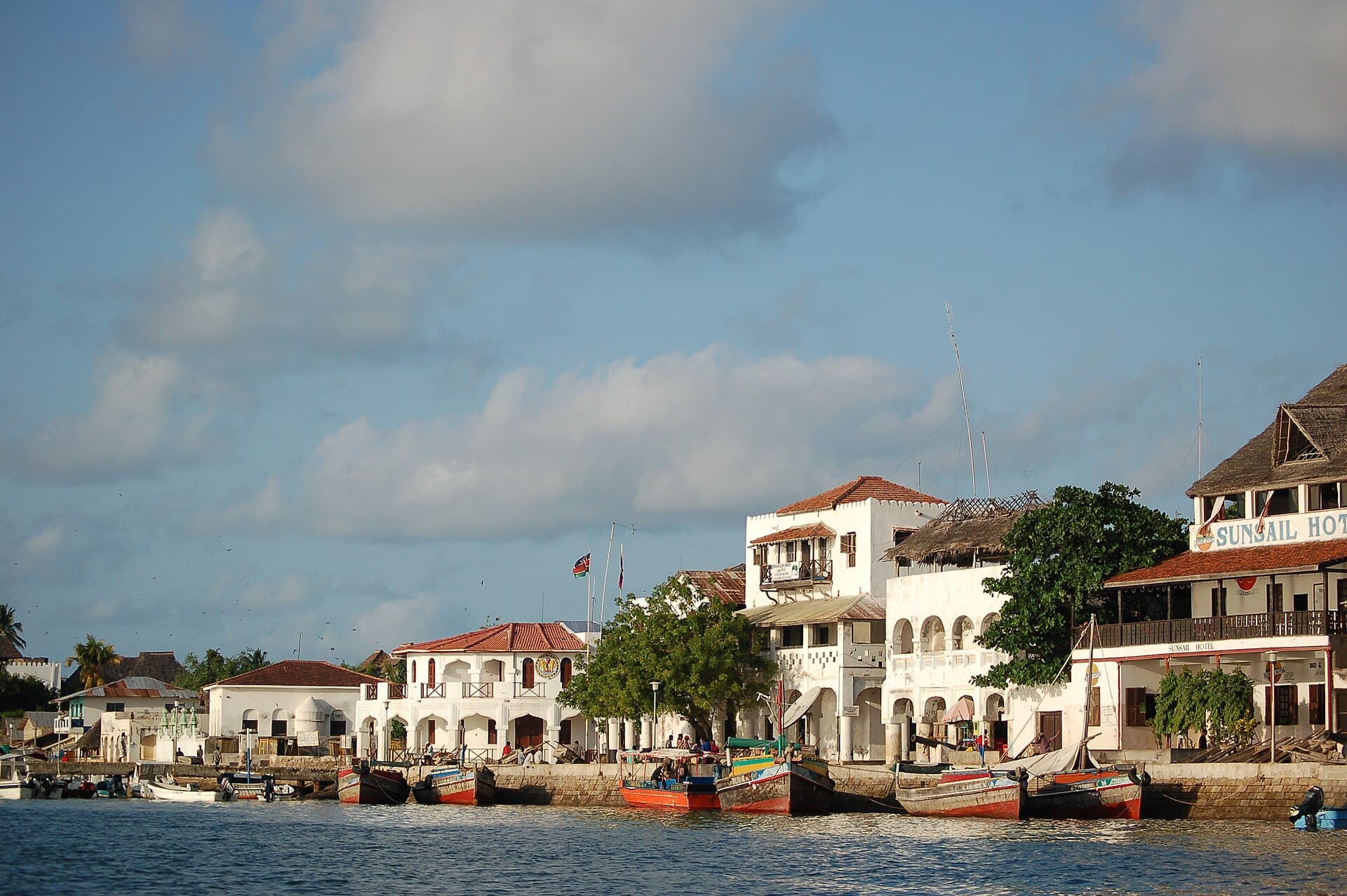 Erik (HASH) Hersman from Orlando / CC BY 2.0, via Wikimedia Commons
“Where ancient Swahili voices meet the Indian Ocean breeze.”
Not the postcards. The stories even locals don't know — whispered in your ear, right where they happened.
You will observe an unusual quiet in Lamu's intricate alleys.
Step inside a typical Lamu home, and its design may surprise you.
This commanding fort at the heart of Lamu Old Town carries a surprising past beyond its military beginnings.
Discover every secret of Lamu
Every address, every reveal in full — in your ear, right where it happened.
You pick your stops. You walk. The voice reveals what the others miss.
No tours available yet. Check back soon — we're preparing them.
Lamu, a small town on Lamu Island in Kenya, is a place where the rhythm of life slows. It stands as Kenya's oldest continuously inhabited town and one of East Africa's most carefully preserved Swahili settlements, recognized as a UNESCO World Heritage Site in 2001. The town's architecture and urban structure plainly display a blending of cultural influences from Europe, Arabia, and India across centuries, all constructed with traditional Swahili methods using coral stone and mangrove timber.
Walking through Lamu Old Town's narrow, winding streets, designed to offer shade and coolness, feels like a journey into the past. The absence of motorized vehicles contributes to its peaceful atmosphere, with donkeys and boats serving as the main forms of transport. Lamu continues to be a significant center for Islamic and Swahili culture and education, upholding its traditional values and a profound sense of community.
## Early Foundations and Trade Lamu's origins stretch back to at least the 12th century, with some historians suggesting an even earlier emergence. It was one of the original Swahili settlements along the East African coast, and unlike many others that were abandoned, Lamu has been continuously inhabited for over 700 years. Its strategic position at the crossroads of important maritime routes, combined with a deep, sheltered harbor, made it an ideal trading center for dhows traveling between Africa, Arabia, and India. Early inhabitants exchanged ivory, mangrove poles, and tortoise shells for textiles, spices, and Chinese porcelain.
## The Golden Age and Omani Influence From the late 17th to the early 19th century, Lamu experienced a "Golden Age" under Omani protection, flourishing as a hub for poetry, politics, arts, crafts, literature, scholarship, and commerce. During this period, many of the town's distinctive buildings were erected in a classical Swahili style. The Omani presence also introduced elements of fortification and grandeur to the architecture.
## Colonial Period and Modern Era In the mid-19th century, Lamu came under the political sway of the Sultan of Zanzibar. Later, it was granted to Germany as a protectorate before falling under British colonial rule in 1890. Kenya achieved independence in 1963, and Lamu has largely managed its own affairs since. In 2001, Lamu Old Town received designation as a UNESCO World Heritage Site, acknowledging its singular cultural and architectural importance. Today, it remains an active center for Swahili and Islamic culture, where traditional crafts like wood carving and dhow building are still practiced.
Begin your exploration in Lamu Old Town, a UNESCO World Heritage Site, by wandering its slender, winding streets. Admire the coral stone buildings with their intricately carved wooden doors, which historically conveyed the owner's affluence and standing. Visit the Lamu Fort, constructed between 1813 and 1821, which now houses an environmental museum and a public library, and serves as a venue for community gatherings. The Swahili House Museum provides a glimpse into an 18th-century Swahili home, displaying traditional architecture and domestic life.
Explore the Lamu Museum, situated in an old Swahili warehouse, which exhibits the island's ceremonial horn (siwa) and other artifacts related to Swahili culture. Take a dhow trip to Manda Island, home to Manda Airport, and the ruined 9th-century ports of Takwa and Manda town, which were abandoned due to lack of water. You can also relax on Shela Beach, known for its white sands, or take a dhow trip to explore the surrounding archipelago.
Lamu experiences dry seasons from July to October, offering cooler weather, and from January to March, which can be quite warm. The island hosts several cultural events throughout the year. The Maulidi Festival, a four-day Islamic celebration of Prophet Mohammed's birth, typically occurs in June or July (its date depends on the Islamic lunar calendar). The Lamu Cultural Festival takes place in November, displaying traditional dhow races, donkey races, poetry, henna art, and Swahili cuisine.
Lamu is primarily reached by air, with flights landing at Manda Airstrip from Nairobi or Mombasa. From Manda, a brief boat ride will carry you to Lamu Island. Once on the island, expect to move around on foot, by donkey, or by boat, as cars are largely absent in Lamu Old Town. Motorcycle taxis (boda-bodas) are also available for transport between Lamu Old Town and Shela, particularly during low tide. Always agree on prices for boat and donkey rides in advance.
The local currency is the Kenyan Shilling (KES). While some hotels and restaurants in Shela may accept credit cards, cash is preferred in Lamu Old Town. ATMs are available in Lamu Town. Lamu is a predominantly Muslim community, so modest dress is advisable, especially for women (covering knees and shoulders) and men (no shirtless attire) when outside of hotel properties. While generally considered safe, it is wise to be aware of your belongings.