Mokuʻula
This seemingly ordinary patch of land was once a private island, a sacred royal residence, and home to a powerful shapeshifting deity.
Full story unlocks in the tour
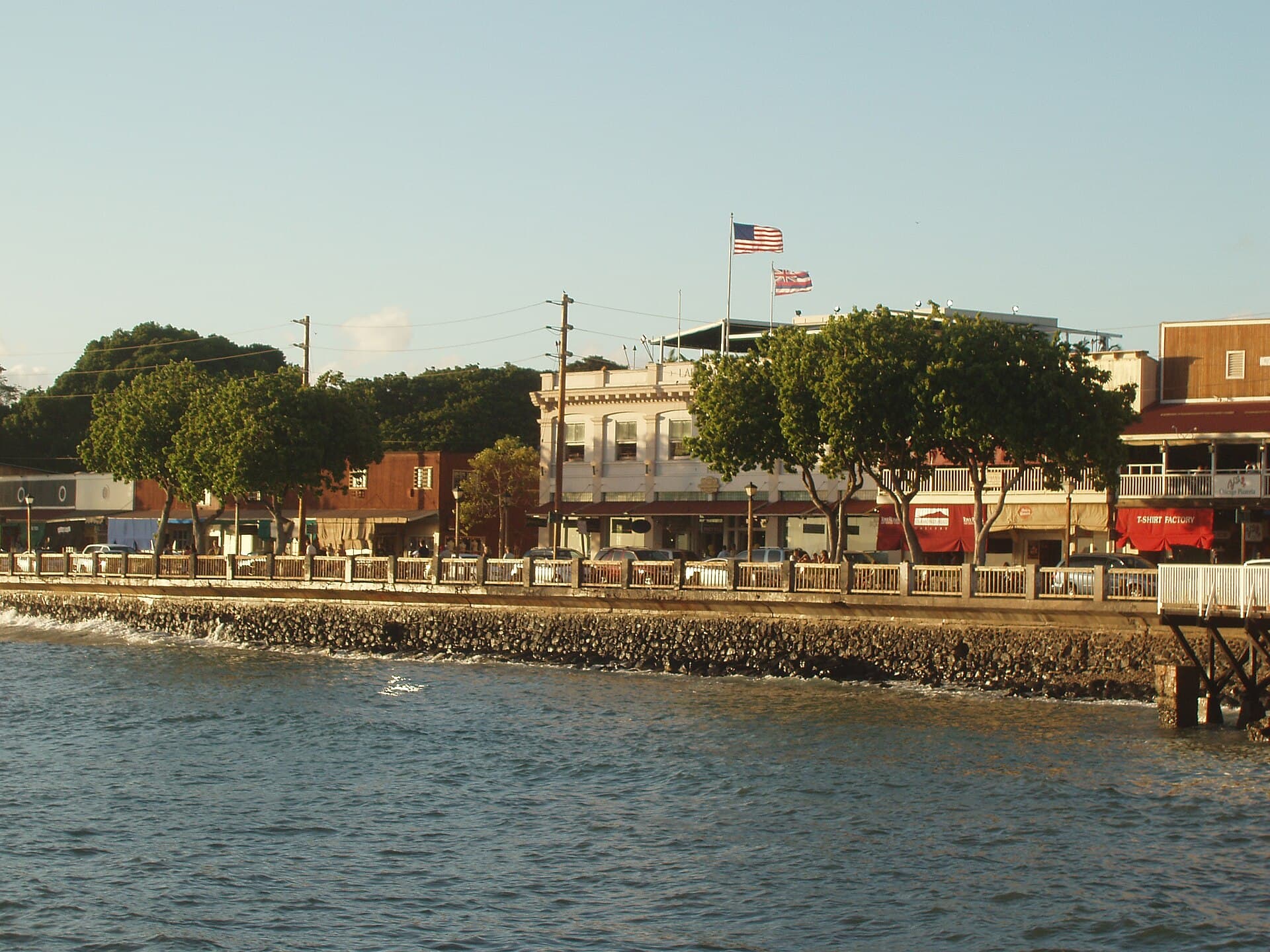 en:User:Calbear22 / Public domain, via Wikimedia Commons
“Where the past echoes in the shade of a banyan, and the ocean murmurs stories of old Hawaii.”
Not the postcards. The stories even locals don't know — whispered in your ear, right where they happened.
This seemingly ordinary patch of land was once a private island, a sacred royal residence, and home to a powerful shapeshifting deity.
The first lighthouse on the entire Pacific coast of the United States wasn't where you might expect it.
The walls of Lahaina's historic jail were deliberately kept low, not for ease of escape, but for a rather ingenious reason.
Discover every secret of Lahaina
Every address, every reveal in full — in your ear, right where it happened.
You pick your stops. You walk. The voice reveals what the others miss.
No tours available yet. Check back soon — we're preparing them.
Lahaina, on the western coast of Maui, is a town where the echoes of Hawaiian royalty and a lively maritime past converge with the rhythm of contemporary island life. Once the capital of the Hawaiian Kingdom and a significant whaling port, Lahaina's streets and harbor recount narratives of unification, trade, and cultural exchange. Its name, meaning 'cruel sun' or 'brilliant' in Hawaiian, speaks to the intense sunshine that bathes its shores. While parts of the historic commercial core were profoundly affected by wildfires in August 2023, the town is in a phase of recovery and rebuilding, with sections open to visitors and a resilient spirit enduring.
Today, Lahaina remains a dynamic center of culture, art, and entertainment, offering a unique blend of historical sites, local businesses, and ocean activities. From the iconic Lahaina Banyan Tree, which spans nearly an entire city block, to the re-opened harbor offering boat tours, the town continues to invite exploration and connection with its enduring heritage.
## From Royal Seat to Whaling Hub Lahaina's recorded history begins with its conquest by Kamehameha I around 1795, as he worked to unify the Hawaiian Islands. By 1802, King Kamehameha I had established Lahaina as his royal residence and the capital of the Hawaiian Kingdom, constructing the "Brick Palace," one of the first Western-style buildings in the islands. Lahaina served as the center of Hawaiian government from 1820 to 1845 under Kamehameha I's successors, Kamehameha II and Kamehameha III.
The early 19th century also marked the arrival of American whaling ships in 1819, transforming Lahaina into a major Pacific port for the North Pacific whaling fleet. At its peak in the 1850s, over 400 whaling ships visited Lahaina annually, leading to a boom in shops, hotels, and taverns to serve the sailors. This era also saw the arrival of Christian missionaries in 1820, who established the First Christian Mission and introduced the printing press to Hawaii, creating a unique cultural dynamic with the boisterous whaling community.
## A Shifting Economy and Enduring Legacy In 1845, the capital of the Hawaiian Kingdom relocated to Honolulu. By the 1860s, the whaling industry declined, and Lahaina transitioned into a plantation town with the establishment of a sugar mill in 1861. Chinese immigrants, among others, came to work on these plantations, contributing to Lahaina's diverse community. In 1873, the famous Lahaina Banyan Tree was planted to commemorate 50 years of missionaries in Lahaina, growing to cover nearly an acre and becoming a significant landmark.
Lahaina continued to evolve, becoming a U.S. territory in the early 1900s and a popular tourist destination after Hawaii achieved statehood in the late 1950s. The Lahaina Historic District was designated a National Historic Landmark in 1962, preserving many of its buildings. While the town faced immense challenges from wildfires in 2023, its spirit of resilience and its enduring history as a royal capital, whaling port, and cultural melting pot continue to define its identity.
Lahaina offers a blend of historical sites, natural beauty, and cultural experiences. The iconic Lahaina Banyan Tree, planted in 1873, offers an expansive canopy that creates a natural gathering space. While Banyan Tree Park is currently closed, its significance remains. Explore Front Street, where you can find restaurants and shops on the north end. The Lahaina Harbor has reopened for limited boat tours, including whale watching during season (mid-December to mid-May), snorkeling excursions, and sunset cruises. You can also visit the Old Lahaina Courthouse and the Old Lahaina Jail (Hale Pa'ahao) to delve into the town's past. The Wo Hing Museum, housed in a restored 1910 temple, tells the story of early Chinese immigrants. For beach relaxation, Baby Beach and 505 Beach offer shallow waters. Nearby Ka'anapali Beach provides opportunities for swimming and snorkeling. Consider attending a luau, such as the Old Lahaina Luau or Myths of Maui Luau, for a traditional Hawaiian feast and entertainment.
Lahaina enjoys a warm, tropical climate year-round, with average temperatures ranging from 64°F to 86°F. The period from January to May and December offers the most comfortable weather, with mild temperatures, moderate humidity, and lower precipitation. This also coincides with whale watching season, which runs from mid-December to mid-May, with February and March being prime months for spotting humpback whales. Spring (April through June) and autumn (September through November) are also excellent times to visit, offering fewer crowds and pleasant weather, with hurricane season rarely impacting Maui directly. Summer months, particularly July, bring peak heat and larger crowds.
Lahaina is located on West Maui, approximately a 45-minute drive from Kahului Airport (OGG). Renting a car is recommended for exploring the island. Lahaina itself is compact and walkable, especially along Front Street. Parking is available, with some free options and others charging a nominal fee. While parts of Lahaina's historic commercial core remain under reconstruction and are not open for general tourist access, the north end of Front Street, the harbor, and nearby resort areas like Ka'anapali and Kapalua are operational. Visitors are encouraged to approach West Maui with respect, avoid restricted zones, and support local businesses to aid in the community's recovery. Pack light, breathable clothing, swimwear, a hat, sunglasses, and high-SPF sunscreen due to the strong Hawaiian sun. Lahaina is generally considered safe for evening walks in busy tourist areas, but it's always wise to take standard precautions.