Naval Technical Museum
Among the significant collection of maritime artifacts, one display is thought to possess a compelling, almost supernatural, presence.
Full story unlocks in the tour
 Zucchero82 / CC BY-SA 4.0, via Wikimedia Commons
“The Ligurian Sea murmurs secrets beyond the Cinque Terre.”
Not the postcards. The stories even locals don't know — whispered in your ear, right where they happened.
Among the significant collection of maritime artifacts, one display is thought to possess a compelling, almost supernatural, presence.
This lively pedestrian thoroughfare, the core of La Spezia's old quarter, takes its name from a remarkably substantial historical detail.
At a critical juncture in World War II, this strategic port became a covert passage to liberty for thousands.
Discover every secret of La Spezia
Every address, every reveal in full — in your ear, right where it happened.
You pick your stops. You walk. The voice reveals what the others miss.
No tours available yet. Check back soon — we're preparing them.
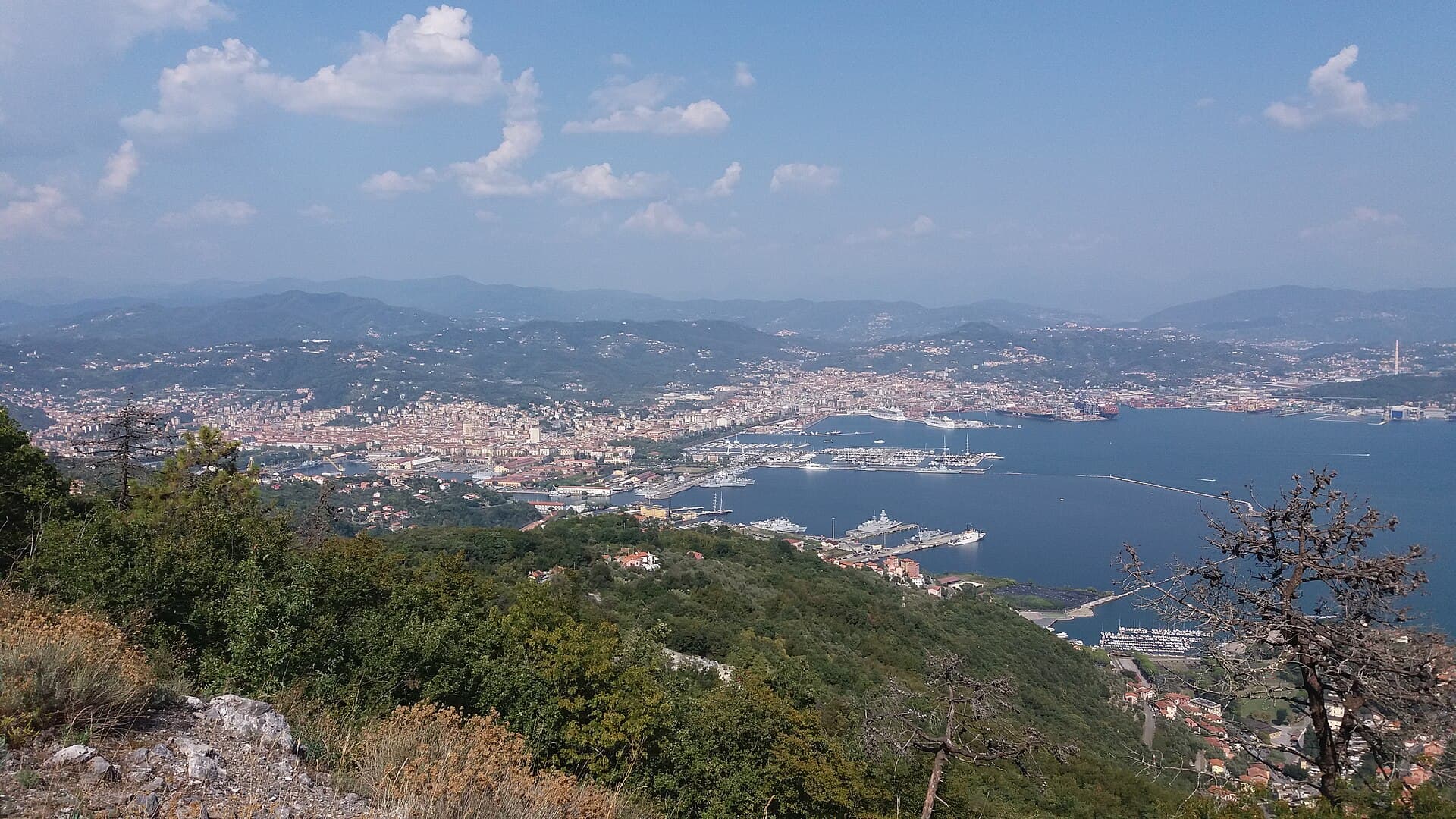
La Spezia, a port city on the Ligurian coast, offers a different rhythm from its more famous neighbors. It serves as a significant naval base and commercial harbor, providing a genuine glimpse into daily Italian life by the sea. The city's layout, with its wide boulevards and Liberty-style architecture, reflects a period of prosperity and expansion in the late 19th and early 20th centuries.
Walk through its central streets, and you'll encounter a blend of old-world charm and modern activity. The city is a gateway to the Gulf of Poets, an area celebrated by writers and artists for its serene beauty and dramatic landscapes. While many visitors pass through on their way to other destinations, La Spezia itself rewards those who linger, revealing a character that is both grounded and engaging.
The area now known as La Spezia has a long history, with archaeological findings suggesting human presence since prehistoric times. Roman settlements were established along the coast, recognizing the strategic importance of the natural harbor. However, the city as we know it today began to take shape much later.
During the Middle Ages, La Spezia was a contested territory, falling under the influence of various powerful families and city-states, including Genoa. The Republic of Genoa, a formidable maritime power, recognized the harbor's potential and invested in its development. Defensive structures were erected, and the port gradually grew in importance for trade and naval operations within the Ligurian Sea.
The Napoleonic era brought significant changes to La Spezia. Napoleon Bonaparte himself envisioned transforming the Gulf into a major military port, though his plans were never fully realized. Following the fall of Napoleon, the region became part of the Kingdom of Sardinia, which would later lead the unification of Italy. This period marked a turning point for La Spezia.
The true catalyst for La Spezia's modern development was the decision in 1862 to establish the Royal Italian Navy's primary arsenal here. This massive undertaking transformed the city, drawing workers from across Italy and leading to rapid urban expansion. The construction of the arsenal, designed by Domenico Chiodo, included extensive docks, workshops, and fortifications. La Spezia quickly became a vital center for shipbuilding and naval defense, a role it maintains to this day. This industrial growth also brought cultural and architectural development, shaping the city's present appearance.
Explore the Castle of San Giorgio, a medieval fortress offering views over the city and the Gulf. Its origins trace back to the 13th century, providing a tangible link to La Spezia’s past. The Naval Technical Museum presents a comprehensive collection of maritime history, from ancient navigation tools to modern naval technology. It stands as a testament to the city's deep connection with the sea. Stroll through the Public Gardens, a green expanse ideal for a quiet break, adorned with statues and fountains. The Amedeo Lia Museum houses an impressive collection of medieval and Renaissance art, including works by Italian masters, within a former Franciscan convent. Wander along the Via del Prione, a pedestrian street in the old town, lined with shops and cafes, offering a glimpse into daily life.
The mild Mediterranean climate makes La Spezia pleasant for much of the year. Spring (April-May) and early autumn (September-October) are particularly agreeable, with comfortable temperatures and fewer crowds. Summers are warm and sunny, ideal for coastal activities, though the city can be busier.
La Spezia is well-connected by train, making it an excellent base for exploring the Ligurian coast. The main train station is centrally located. Public buses serve the city and surrounding areas. For travel to the Cinque Terre, local trains run frequently. Ferries depart from the harbor for destinations within the Gulf of Poets and the Cinque Terre. The city center is walkable, with many attractions within easy reach. Consider purchasing a 'Cinque Terre Card' if you plan extensive travel within the national park, as it includes train travel and access to hiking paths.